Narrated by Dan Aykroyd, Defend, Conserve, Protect, pits the marine conservation group, Sea Shepherd, against the Japanese whaling fleet, in an epic battle to defend the majestic Minke whales.
22nd of August, 1945. Japan lost the war and they loaded an 8,000 person Joseon laborer force onto a ship called the Ukisima to take them to the Busan Port. However, the ship sunk into the water due to an unknown blast. This is the story of thousands of Joseon people who dreamed of returning to their families and how they died.
Tokyo is a fascinating city of extremes, blending the old traditions with visions of the future and an extraordinary pace of life. A shock of skyscrapers and neon, it's a gleaming example of Japan's post World War II success. Traveller Ian Wright begins his stay by experiencing the spiritual side of Tokyo at the peace loving Senso-ji temple. After a gentle introduction he throws himself into the pace of the city and discovers some incredible technology and fashion! He then heads to Mount Fuji for a crowded climb to the summit, before ending his trip experiencing the infamous Tokyo nightlife.
Hiroshima and Nagasaki: 75 Years Later is told entirely from the first-person perspective of leaders, physicists, soldiers and survivors.
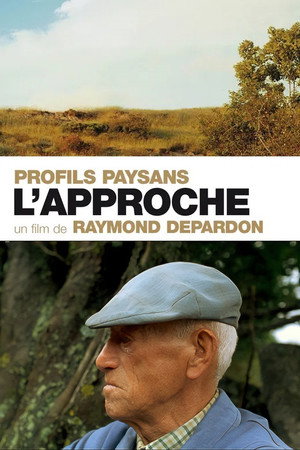
For ten years, Raymond Depardon has followed the lives of farmer living in the mountain ranges. He allows us to enter their farms with astounding naturalness. This moving film speaks, with great serenity, of our roots and of the future of the people who work on the land. This the last part of Depardon's triptych "Profils paysans" about what it is like to be a farmer today in an isolated highland area in France. "La vie moderne" examines what has become of the persons he has followed for ten years, while featuring younger people who try to farm or raise cattle or poultry, come hell or high water.
Documentary which exposes the truth of how 'human guinea pigs' were used in government-funded radiation experiments without their knowledge or consent. It uncovers a series of breaches of ethical codes as scientists pursued military, scientific or medical knowledge. Includes archive footage.
In this tape, Ko Nakajima and Video Earth Tokyo interview a homeless man. The subject is initially angry and frustrated, but gradually opens up and shares stories about his life. Under A Bridge was later broadcast on cable television.
A group of uniformed Japanese schoolchildren make their way to class. But what they will be taught when they get there is a subject increasingly under government scrutiny. EDUCATION AND NATIONALISM traces growing government intervention in Japanese history and social science education over the last decade — a process embraced by the late Japanese Prime Minister Shinzo Abe.
Documentary which follows the construction of a trailblazing 36,000-tonne steel structure to entomb the ruins of the nuclear power plant destroyed in the 1986 Chernobyl disaster.
With unprecedented access to the nuclear industry in France, Russia, and the United States, Nuclear Now explores the possibility for the global community to overcome the challenges of climate change and energy poverty to reach a brighter future through the power of nuclear energy. Beneath our feet, Uranium atoms in the Earth’s crust hold incredibly concentrated energy. Science unlocked this energy in the mid-20th century, first for bombs and then to power submarines. The United States led the effort to generate electricity from this new source. Yet in the mid-20th century as societies began the transition to nuclear power and away from fossil fuels, a long-term PR campaign to scare the public began, funded in part by coal and oil interests.
A documentary centered on the union formed by Bolivian farmers in response to their government's (which was urged by the U.S.) effort eradicate coca crops, and the man who would come to represent them, Evo Morales.
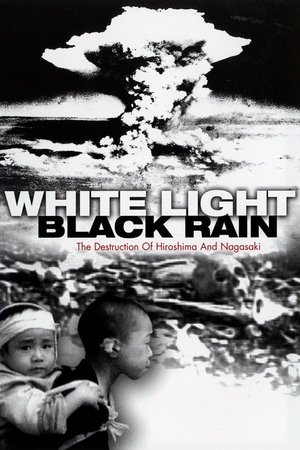
Steven Okazaki presents a deeply moving look at the painful legacy of the first -- and hopefully last -- uses of nuclear weapons in war. Featuring interviews with fourteen atomic bomb survivors - many who have never spoken publicly before - and four Americans intimately involved in the bombings, White Light/Black Rain provides a detailed exploration of the bombings and their aftermath.
Japan's Imperial system is said to have over 2,000 years of history. A closer look at the history reveals how the Imperial institution has shifted with the times, and with the people. At a time when there are only three heirs to the throne, a look is taken at what this could mean for the people of Japan and their Imperial system.
In April 1977, the small coastal town of Seabrook, New Hampshire became an international symbol in the battle over atomic energy. Concerned about the dangers of potential radioactive accidents, over 2,000 members of the Clamshell Alliance, a coalition of environmental groups, attempted to block construction of a nuclear power plant. 1,414 people were arrested in that civil disobedience protest and jailed en masse in National Guard armories for two weeks.
By mid-1945, Hitler is dead and the war has ended in Europe. Halfway around the world, however, the fighting is still going strong on a small island in the Pacific. Okinawa was the site of the last battle of the last great war of the 20th century, with a casualty rate in the tens of thousands. Through it all, military cameramen risked their lives to film the conflict, from brutal land combat to fierce kamikaze attacks at sea. See the footage they captured and experience this intense battle the way the soldiers saw it -- in color.
Eerie images of landscapes after the Fukushima nuclear disaster shot on black and white 8mm.
In the last fifty years the culture of Zen has spread far beyond Japan. Zen centers and zen retreats have sprung up throughout America and Europe. When Dogen, the founder of Soto Zen, brought Zen to Japan from China 800 years ago, it quickly took root and became an integral part of Japanese life. Yet what do we know about zen practice in Japan today? The Zen Mind is a fascinating journey across Japan to explore zen in its natural habitat.
Channel 4 Equinox documentary about the mystery of crop circles, broadcast shortly before Dave Chorley and Doug Bower revealed themselves to have started the craze.
Sake is a traditional alcoholic beverage from Japan and is otherwise known as rice wine. Women were prohibited from entering the many large and small sake breweries dotting Japan for centuries. However, times have changed and women are present on the sake scene today. In several cases, they are integral to the Japanese brewery business. The documentary depicts women who are not only enthusiasts, but also leaving their marks on the evolution of this Japanese mainstay.
Using never-before-seen footage, Japan's War In Colour tells a previously untold story. It recounts the history of the Second World War from a Japanese perspective, combining original colour film with letters and diaries written by Japanese people. It tells the story of a nation at war from the diverse perspectives of those who lived through it: the leaders and the ordinary people, the oppressors and the victims, the guilty and the innocent. Until recently, it was believed that no colour film of Japan existed prior to 1945. But specialist research has now unearthed a remarkable colour record from as early as the 1930s. For eight years the Japanese fought what they believed was a Holy War that became a fight to the death. Japan's War In Colour shows how militarism took hold of the Japanese people; describes why Japan felt compelled to attack the West; explains what drove the Japanese to resist the Allies for so long; and, finally, reveals how they dealt with the shame of defeat.