A documentary that focuses on Hayao Miyazaki’s deep connection to nature and the environmental themes expressed through his films.
Documentary about the life and career of a comic genius, Peter Sellers.
A documentary on the life and career of the legendary British exploitation film director Norman J. Warren, who gained a name for himself in the sexploitation business in the late 1960s before moving into low budget horror pictures in the 1970s and 1980s. Produced for the American release of "Inseminoid", which debuted on Blu-Ray in the USA on March, 10th 2020, this extensive documentary draws on hours of footage of Warren and also some of his best known collaborators such as the screenwriter David McGillivray.
In 1981, a film about the misadventures of a German U-boat crew in 1941 becomes a worldwide hit almost four decades after the end of the World War II. Millions of viewers worldwide make Das Boot the most internationally successful German film of all time. But due to disputes over the script, accidents on the set, and voices accusing the makers of glorifying the war, the project was many times on the verge of being cancelled.
He went from street-wise tough to art-collector liberal-activist, from circus-acrobat hunk to Academy Award winner. Burton Stephen Lancaster — later Burt Lancaster — was one of five children of a New York City postal worker. By eighteen, Burt was 6'2" and blessed with the athletic physique and dynamic good looks that helped make him famous. A stint in the Army introduced Burt to acting and led him to Hollywood where his first release, "The Killers" (1946), propelled him to stardom at age 32. He took control of his own career and seldom faltered.
One year after the death of Simone de Beauvoir (14 april 1986) Delphine Seyrig pays homage by visiting her grave. which she finds still covered with flowers and letters from all over the world.
As the first "blonde bombshell," Mae West reigned supreme and changed the nation's view of women, sex and race — on stage, in films, on radio and television.
Known for his personification of the Western Hero, it was Montana-born Gary Cooper's horse-riding skills that first brought him bit parts in movies. And he never lost his love of the great American outdoors. Though he rarely played a villain and was an adept comedian, Cooper is best remembered for his strong, silent heroes. With his lanky country boy looks and shy hesitancy he created a unique screen presence, though his real life was one of sophisticated elegance.
Delphine Seyrig reads passages from a Valerie Solanas’s SCUM manifesto.
Documentary about the legendary American film director from his introduction to the film industry in its early years to his death in 1959.
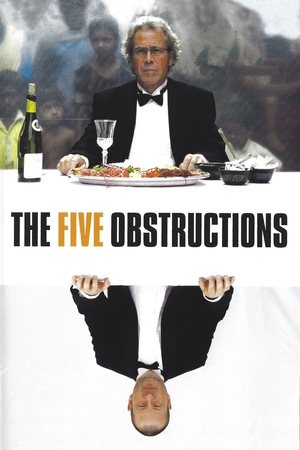
In 1967, experimental filmmaker Jorgen Leth created a striking short film, The Perfect Human, starring a man and women sitting in a box while a narrator poses questions about their relationship and humanity. Years later, Danish director Lars von Trier made a deal with Leth to remake his film five times, each under a different set of circumstances and with von Trier's strictly prescribed rules. As Leth completes each challenge, von Trier creates increasingly further elaborate stipulations.
A film portrayal of a pioneering aviator and best-selling author whose extraordinary public life had a deep impact on her inner world.
Conrad Brooks discusses "Hellborn," his unfinished movie with Ed Wood, and other projects
Denise, Hannah and Leticia are three ordinary women with extraordinary stories to tell. As transgender people, they talk about the challenges of finding their true identities within an intolerant and prejudiced society.
The Movie Movie shows how the camera, editing techniques, make-up and sound can be used in film and video to deliberately manipulate our perceptions and emotions. Drama, action and slapstick humour are combined in a simple, family-oriented plot. There is no dialogue, but there is an explanatory song. Behind-the-scenes vignettes highlight the message that in a movie everything is not quite as it seems.
Brought to life through archival material and the reflections of over 40 colleagues, friends and fans, BLOOD & FLESH is much more than the story of a moviemaking life most unusual. It beautifully captures the worlds of outsider filmmaker communities that existed in California in the ’70s, and the weird ways they intersected with Hollywood mainstream and union indies. On Adamson shoots, regular Orson Welles crew and cinematographers like Gary Graver, Vilmos Szigmond and Lazlo Kovaks worked alongside Bud Cardos — and at one point, Charles Manson! Director David Gregory (founder of Severin Films, director of LOST SOUL: THE DOOMED JOURNEY OF RICHARD STANLEY’S ISLAND OF DR. MOREAU) spent years making this film, speaking to everyone down to the cops who investigated Adamson’s murder, vividly encapsulating both a bold life and tragic demise, with alien conspiracies, go-go dancers and Colonel Sanders coming in along the way. If you’ve got even a passing interest in cinema, you want to see this
A Nepali mountaineer risks everything on a record-breaking Mount Everest climb to secure a brighter future for her daughters.
A 60-minute salute to American International Pictures. Entertainment lawyer Samuel Z. Arkoff founded AIP (then called American Releasing Corporation) on a $3000 loan in 1954 with his partner, James H. Nicholson, a former West Coast exhibitor and distributor. The company made its mark by targeting teenagers with quickly produced films that exploited subjects mainstream films were reluctant to tackle.
An insider's account of Jack Warner, a founding father of the American film industry. This feature length documentary provides the rags to riches story of the man whose studio - Warner Bros - created many of Hollywood's most classic films. Includes extensive interviews with family members and friends, film clips, rare home movies and unique location footage.
As Australian cinema broke through to international audiences in the 1970s through respected art house films like Peter Weir's "Picnic At Hanging Rock," a new underground of low-budget exploitation filmmakers were turning out considerably less highbrow fare. Documentary filmmaker Mark Hartley explores this unbridled era of sex and violence, complete with clips from some of the scene's most outrageous flicks and interviews with the renegade filmmakers themselves.