Original 35mm nitrate negative film shot by naturalist David Fleay at Beaumaris Zoo, Hobart in December 1933. Colorized by Samuel François-Steininger at the Paris-based, Composite Films, from a 4K scan of the negative by the National Film and Sound Archive Australia.
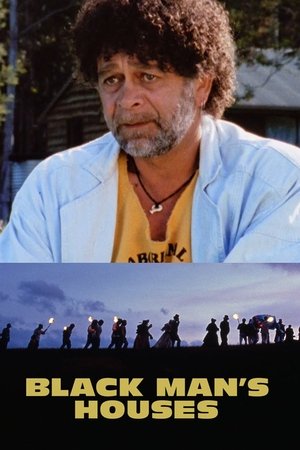
In 1832 the government of Van Diemen’s Land sent the last Aboriginal resistance fighters into exile at Wybalenna on Flinders Island, bringing an end to the Black War and opening a new chapter in the struggle for justice and survival by Tasmanian Aboriginal people. Black Man’s Houses tells a dramatic story of the quest by Aboriginal people to reclaim the graves of their ancestors against a background of racism and denial. Documenting a moving memorial re-enactment of the funeral of the great chief Manalargenna, the film also charts the cultural strength and resilience of his descendants as they are forced to fight for recognition in a society that is not ready to remember the terrible events of the past.
Glorious Bustards
In a time of hardship, Hobart resident Peter Walsh turns to the secretive platypus for solace, only to discover it is the platypus that need his help to survive in a habitat under threat.
Eight men escape from the most isolated prison on earth. Only one man survives and the story he recounts shocks the British establishment to the core. This story is the last confession of Alexander Pearce.
There are about 250 people with a unique ancestry. Livonians – one of the smallest and most endangered nations. Each of Livonians has a duty to preserve their identity and the great history of their ancestors. Trillium follows the footsteps of a poet and researcher Valts Ernštreits, who is one of 20 people able to speak fluent Livonian – an indigenous language related to Estonian and Finnish – in his efforts to look after the language and culture of these ancient settlers of the Baltic Sea coast.
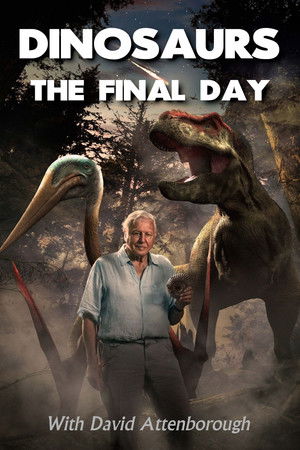
David Attenborough brings to life, in unprecedented detail, the last days of the dinosaurs. Palaeontologist Robert DePalma has made an incredible discovery in a prehistoric graveyard: fossilised creatures, astonishingly well preserved, that could help change our understanding of the last days of the dinosaurs. Evidence from his site records the day when an asteroid bigger than Mount Everest devastated our planet and caused the extinction of the dinosaurs. Based on brand new evidence, witness the catastrophic events of that day play out minute by minute.
This is the story of a charismatic family of endangered animals and one man’s extraordinary devotion. It unfolds in a distant wilderness, in a land forgotten by time. But change is coming. In less than a year, this magical place, along with those who live here, may be lost forever. Welcome to Quoll Farm.
Follows amateur botanist Antonius Moscal's raft journey down the Franklin River (Tasmania, Australia).
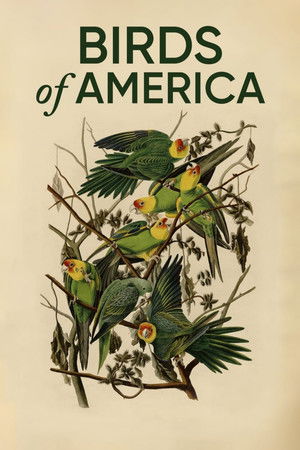
In the first half of the 19th century, the French ornithologist Jean-Jacques Audubon travelled to America to depict birdlife along the Mississippi River. Audubon was also a gifted painter. His life’s work in the form of the classic book ‘Birds of America’ is an invaluable documentation of both extinct species and an entire world of imagination. During the same period, early industrialisation and the expulsion of indigenous peoples was in full swing. The gorgeous film traces Audubon’s path around the South today. The displaced people’s descendants welcome us and retell history, while the deserted vistas of heavy industry stretch across the horizon. The magnificent, broad images in Jacques Loeuille’s atmospheric, modern adventure reminds us at the same time how little - and yet how much - is left of the nature that Audubon travelled around in. His paintings of the colourful birdlife of the South still belong to the most beautiful things you can imagine.
The director explores the birth origins of actress Merle Oberon, traveling to Tasmania and India in search of the truth, but her quest ultimately results in probably more questions than it answers.
A portrait of environmental folk hero & gay icon Bob Brown, who took green politics to the center of power. His story is interwoven with the life cycle of the ancient trees he's fighting for.
Recorded by pioneers as far back as 1805, the Tasmanian tiger has become an intensely mystifying Australian icon, whose entire existence has become the stuff of both fable and legend. This program investigates a chequered past and puts the speculation into perspective, taking into account the tragic culling and ‘bounty era’ where the carnivorous creatures were thought to be solely responsible for a considerable loss of farmers’ livestock. Balancing the facts with personal reflections from Tasmanian locals, scientists and other informed practitioners, The Tasmanian Tiger is a thought-provoking and revealing look at the extraordinary life and death of one of Australia’s most mysterious marsupials.
An embittered journalist returns home to Hobart after losing his Melbourne magazine job. With nothing to do except think about his next move, he lands on the idea of writing a book about Tasmanian upper-order batsmen, and in particular the great man himself: David Boon. But soon he’s discovering there’s a lot more to his homeland than he once thought, and that everything he’s been searching for could be closer than he imagined.
takayna / Tarkine in northwestern Tasmania is home to one of the last undisturbed tracts of Gondwanan rainforest in the world, and one of the highest concentrations of Aboriginal archaeology in the hemisphere. Yet this place, which remains largely as it was when dinosaurs roamed the planet, is currently at the mercy of destructive extraction industries, including logging and mining. Weaving together the conflicting narratives of activists, locals and Aboriginal communities, and told through the experiences of a trail running doctor and a relentless environmentalist, this documentary, presented by Patagonia Films, unpacks the complexities of modern conservation and challenges us to consider the importance of our last truly wild places.
In a wild and windswept corner of Australia, acclaimed film-maker Simon Plowright spends a year living with the iconic but endangered marsupial, the Tasmanian Devil.
Journey to far-flung islands off Africa, South America, Australia and Oceania for a look at the bird species that lived alongside our ancestors.
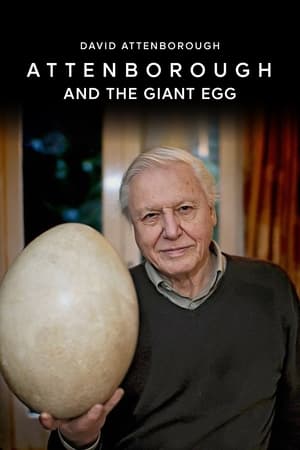
David Attenborough returns to the island of Madagascar on a very personal quest. In 1960 he visited the island to film one of his first ever wildlife series, Zoo Quest. Whilst he was there, he acquired a giant egg. It was the egg of an extinct bird known as the 'elephant bird' - the largest bird that ever lived. It has been one of his most treasured possessions ever since. Fifty years older, he now returns to the island to find out more about this amazing creature and to see how the island has changed. Could the elephant bird's fate provide lessons that may help protect Madagascar's remaining wildlife? Using Zoo Quest archive and specially shot location footage, this film follows David as he revisits scenes from his youth and meets people at the front line of wildlife protection. On his return, scientists at Oxford University are able to reveal for the first time how old David's egg actually is - and what that might tell us about the legendary elephant bird.
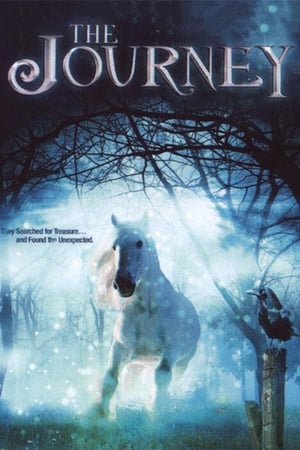
An orphan girl seeks her true inheritance in this Australian TV movie. On an isolated Tasmanian mountain, 12-year-old Ada lives with her wealthy father Justus. Housekeeper Martha is plotting to secure the family fortune for herself. Ada is orphaned when her father is killed in a fall. Before he dies, he tells Ada to journey south to find her true inheritance. Together with Agnes, the housekeeper's stepdaughter, Ada sets out on a journey full of adventure.
Tim Noonan investigates the ultimate wildlife mystery to find out if the Tasmanian tiger, the world's rarest, most elusive animal, is gone for good or just very good at hiding.