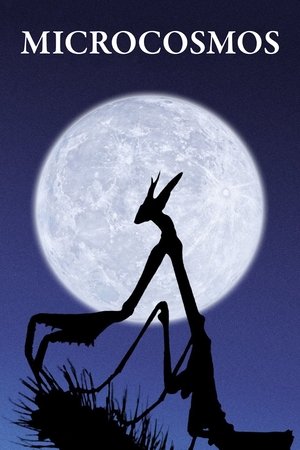
A documentary of insect life in meadows and ponds, using incredible close-ups, slow motion, and time-lapse photography. It includes bees collecting nectar, ladybugs eating mites, snails mating, spiders wrapping their catch, a scarab beetle relentlessly pushing its ball of dung uphill, endless lines of caterpillars, an underwater spider creating an air bubble to live in, and a mosquito hatching.
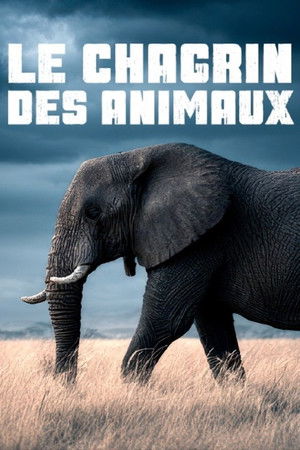
Le chagrin des animaux : mythe ou réalité ?
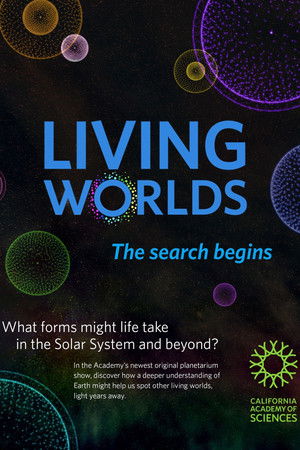
What forms might life take in the Solar System and beyond? In the Academy's newest original planetarium show, see how a deeper understanding of Earth might help us locate other living worlds, light years away.
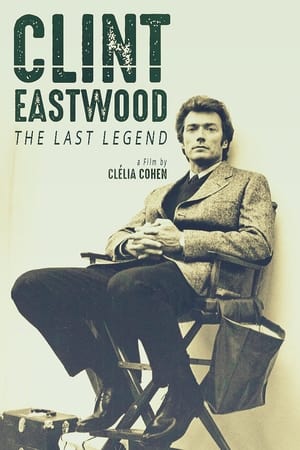
The portrait of the last cowboy Hollywood legend dives into the 65 years of an extraordinary career in Hollywood, highlighted iconic films like The Good, the Bad and the Ugly, as well as Million Dollar Baby, Mystic River and Gran Torino all the way to Cry Macho in 2021. It is no small task to cover more than 60 years of cinema history, especially when it is trying to surveyed with such breadth and diversity: TV star, international star, controversial icon, contested director, filmmaker with a capital F, Eastwood has been through it all, experienced it all, and it is first of all this romantic trajectory, this true American pastoral that the documentary wants to tell with all the passion it possibly can.
La Station spatiale internationale - Missions à haut risque
Before the joint NASA/ESA Cassini-Huygens mission, humanity only knew what had been learned, decades earlier, with the previous limited, rapid "fly-by" Pioneer and Voyager missions. Cassini-Huygens spent more than 13 years in wildly varied orbits around Saturn, allowing the spacecraft to pass near many of its moons, as well as execute a soft-landing of its Huygens lander on the moon Titan. By mission end, it accumulated a mountain of imagery and scientific data that will continue to be studied for years to come. This film is a testament to the amazing efforts of the scientists who planned and executed the mission. It combines breathtaking images, movies, and a variety of animations to take the viewer into Saturn's complex system of rings and moons, as well as stepping viewers through some of the more exciting scientific discoveries made over the course of the elaborately complex mission.
The story of Tasmanian-born actor Errol Flynn whose short & flamboyant life, full of scandals, adventures, loves and excess was largely played out in front of the camera - either making movies or filling the newsreels and gossip magazines. Tragically he was dead from the effects of drugs and alcohol by the time he was only 50 & the myths live on. But there is another side of Flynn that is less well known - his ambitions to be a serious writer and newspaper correspondent, his documentary films and his interest in the Spanish Civil War and Castro's Cuba
For more than 30 years, scientist, broadcaster and environmental activist David Suzuki has served as the host of The Nature of Things, a CBC program that is seen in more than forty nations. Suzuki Speaks is an hour of thought-provoking television. David Suzuki delivers one of the most powerful messages of his career - the relationship between the four "sacred" elements and their influence on the "interconnectedness" we feel individually, with each other and with the rest of the world.
Portrait of Hermann Heinzel.
Dr. Mark Fairchild, world-renowned archaeologist, traces the hidden years of Saint Paul's life in the mountainous Turkish countryside of Rough Cilicia.
An educational film about the nervous system produced by Encyclopædia Britannica Films, an educational film production company in the 20th century owned by Encyclopædia Britannica Inc.
An educational film about frogs produced by Encyclopædia Britannica Films, an educational film production company in the 20th century owned by Encyclopædia Britannica Inc.
The first American space station Skylab is found in pieces scattered in Western Australia. Putting these pieces back together and re-tracing the Skylab program back to its very conception reveals the cornerstone of human space exploration.
The Faraway Nearby follows the tragic life of pioneer physicist Joseph Weber, whose pursuit of gravitational waves takes him on a dizzying journey from the height of acclaim to the depths of despair and disdain when he breaks the cardinal rule of science and clings to his ideas though his results can't be duplicated. Physicists, artists, and other creatives explore the emotional side of discovery and question whether the risk is worth the journey.
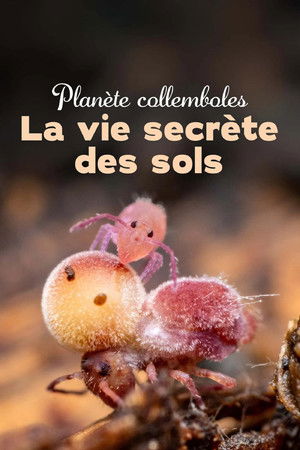
Who knows about springtails? And among those for whom this name rings a bell, how many have already seen them? Yet, these small animals, similar to insects, are present in all terrestrial ecosystems. Springtails are undisputed soil regulators. Scientists recognize them today as absolutely essential, especially in the search for pollutants, disruptors, and all the variations that affect our soils, but this little animal is almost unknown. Thanks to extremely precise cameras, as close as possible to these microscopic animals, a teeming life is revealed before our eyes. According to the seasons, the film invites us to get into the intimacy of the springtails, to discover their morphology, their role and their usefulness in the ecosystems of the planet while rubbing shoulders with other organisms in the same environments.
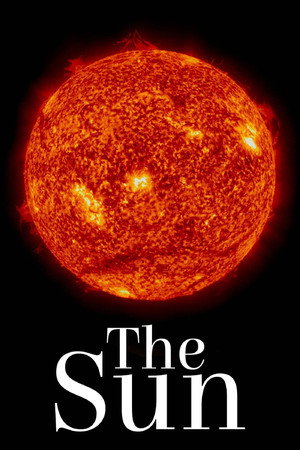
Explore the sun’s powerful storms, its impact on Earth, and groundbreaking research shaping our understanding of solar activity and its effects on our planet.
Moon Crab is a meditation on the horseshoe crab, one of Earth's oldest living species now struggling with extreme population decline. Blending reflections on nature's cycles with experimental visuals, the film employs an array of techniques, including eco-processed film developed with seaweed, to immerse the viewer in the crab's subaquatic world. Narrated with intimate depth by physiologist Dr. Abner Lall, the filmmaker’s neighbor, this documentary captures a timeless story of resilience and fragility, urging us to reconsider our connection to the natural world.
The film discusses the evolution and potential of using light waves, particularly coherent light, for communication. It highlights the development of lasers at Bell Telephone Laboratories, explaining how they produce a highly controlled and intense beam of light that could revolutionize communication. The film emphasizes the vast possibilities of lasers, including applications in telecommunications, surgery, and exploring the universe, suggesting that this technology represents a significant step in humanity's understanding and use of light.
At Arcata, California, testing technology for landing planes in fog. Also: a high-tech barber shop in Westwood Village, California; manufacture of precision steel gauge blocks in Eskilstuna, Sweden.
A giant ball of gas and raw energy with a temperature of up to 15 million degrees, the sun is the origin of life on earth and influences an infinite number of natural phenomena. This documentary is dedicated to the search for the significance of our home star for mankind, science and nature. Researchers at the American Space Agency NASA, the Canary Islands observatories, and the hottest and coldest places on earth share their insights. We can expect an emotional journey through science and history, peppered with human stories, at the end of which the complex bandwidth of life is revealed. Never before in the history of mankind has it been more important to uncover the secrets of the sun. Because for our earth, the sun is not just any star. It is the ultimate star.