Spies of Mississippi tells the story of a secret spy agency formed by the state of Mississippi to preserve segregation and maintain white supremacy. The anti-civil rights organization was hidden in plain sight in an unassuming office in the Mississippi State Capitol. Funded with taxpayer dollars and granted extraordinary latitude to carry out its mission, the Commission evolved from a propaganda machine into a full blown spy operation. How do we know this is true? The Commission itself tells us in more than 146,000 pages of files preserved by the State. This wealth of first person primary historical material guides us through one of the most fascinating and yet little known stories of America's quest for Civil Rights.
A living room, two video cameras, an armchair, two televisions and a mirror: domestic daily life in which colleagues, family and friends come together to decipher the life, personality and artistic trajectory of one of the most important actresses of Venezuelan Cinema: Hilda Vera
"My Own Breathing" is the final documentary of the trilogy, The Murmuring about comfort women during the World War II directed by BYUN Young-joo. This is the completion of her seven years work. BYUN's first and second documentaries spoke of grandmothers' everyday life through the origin of their torment, while My Own Breathing goes back to their past from their everyday life. Deleting any device of narration or music, the camera lets grandmothers talk about themselves. Finally, the film revives their deep voices trampled by harsh history.
Feature length documentary examining the troubled life and tragic death of college football standout and talented NFL running back Lawrence Phillips, whose scars of childhood abuse and abandonment haunted him throughout his career.
There are places that we don’t want to know anything about, places that we would rather pretend don’t exist at all. One such place is a dumpsite. From the humans’ point of view, it is a ghastly place, a stinking desert of trash. But it’s a desert that is teaming with life.
Ulrike Ottinger’s provocative mélange of ethnography, stunning tableaux and baroque vignettes was inspired by what she calls the “well-stocked miracle” of Korean wedding chests, assembled according to time-honored customs. This exploration of love and marriage in South Korea looks closely at ancient and present-day rituals, revealing what is old in the new and new in the old. Her inquiry leads us from shamans, temples and priests, to the enchanted maze of 21st-century Seoul, where vendors of medicinal herbs co-exist with high-tech beauty salons for wedding couples and secular marriage palaces. Using film much like a canvas, Ottinger creates a modern fairytale flush with mythological heroes, traditional rites, ancestral symbolism, dreams of eternal love, and a whole lot of Western kitsch. One of her most acclaimed documentaries, it captures the amazing phenomenon of new mega-cities and their contradictory societies caught in a balancing act.
At the sea shore, a goat, a child, and a naked man. This is a photograph taken in 1954 by Agnès Varda. The goat was dead, the child was named Ulysses, and the man was naked. Starting from this frozen image, the film explores the real and the imaginary.
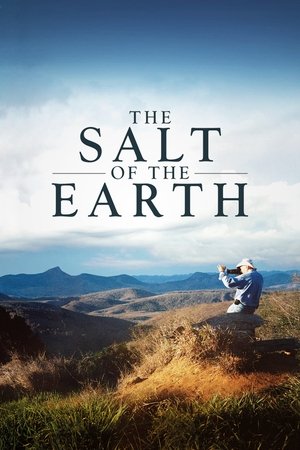
The film is a commemoration of the lost livelihood of the earth, the lost lives of the War and to the work of two of the cinema’s greatest artists.
Part activist and part globe trekking photographer, Sebastião Salgado is most famous for recording the migration of people and culture around the world. In this extensive conversation, Sebastiao Salgado revisits his adventurous career via the breathtaking images he captured.
Vienna’s Prater is an amusement park and a desire machine. No mechanical invention, no novel idea or sensational innovation could escape incorporation into the Prater. The diverse story-telling in Ulrike Ottinger’s film “Prater” transforms this place of sensations into a modern cinema of attractions. The Prater’s history from the beginning to the present is told by its protagonists and those who have documented it, including contemporary cinematic images of the Prater, interviews with carnies, commentary by Austrians and visitors from abroad, film quotes, and photographic and written documentary materials. The meaning of the Prater, its status as a place of technological innovation, and its role as a cultural medium are reflected in texts by Elfriede Jelinek, Josef von Sternberg, Erich Kästner and Elias Canetti, as well as in music devoted to this amusement venue throughout the course of its history.
A look at the state of the global environment including visionary and practical solutions for restoring the planet's ecosystems. Featuring ongoing dialogues of experts from all over the world, including former Soviet Prime Minister Mikhail Gorbachev, renowned scientist Stephen Hawking, former head of the CIA R. James Woolse
The drought in the American West is predicted to be the worst in 1,000 years. Join five Academy Award-winning filmmakers as they explore the environmental crisis of our time and how to fix it before it's too late.
The alien abduction phenomenon, told by those who experienced it, with the weight of a Pulitzer Prize-winning Harvard psychiatrist at their back.
An exploration of the origins of memes, how they spread, and the stories behind some of the most popular “human memes” like Ermahgerd Girl, Overly Attached Girlfriend, and Chocolate Rain Guy.
A chronicle of the production problems — including bad weather, actors' health, war near the filming locations, and more — which plagued the filming of Apocalypse Now, increasing costs and nearly destroying the life and career of Francis Ford Coppola.
Time Is Illmatic is a feature length documentary film that delves deep into the making of Nas' 1994 debut album, Illmatic, and the social conditions that influenced its creation.
"The Short Trilogy of Peace" is a collection of three short poetic documentaries made in New Zealand and Slovenia between 2012 and 2016.
Appalachian Journey is one of five films made from footage that Alan Lomax shot between 1978 and 1985 for the PBS American Patchwork series (1991). It offers songs, dances, stories, and religious rituals of the Southern Appalachians. Preachers, singers, fiddlers, banjo pickers, moonshiners, cloggers, and square dancers recount the good times and the hard times of rural life there. Performers include Tommy Jarrell, Janette Carter, Ray and Stanley Hicks, Frank Proffitt Jr., Sheila Kay Adams, Nimrod Workman and Phyllis Boyens, Raymond Fairchild, and others, with a bonus of a few African-Americans from the North Carolina Piedmont.
A short film about Pete Seeger and the birth of banjo music throughout the Southern United States.
Six blind Tibetan teenagers climb the Lhakpa-Ri peak of Mount Everest, led by seven-summit blind mountain-climber Erik Weihenmayer.