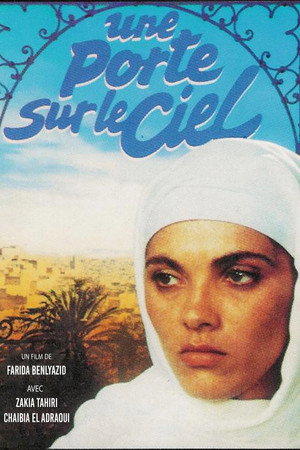
In this Sufi tale, Nadia, a young Moroccan emigre returns from Paris to Fez to visit her dying father. At his funeral, she is overcome by the voice of mystic Kirana chanting the Koran. A powerful friendship develops between the two women as they decide to turn the father's palace into a shelter for Muslim women.
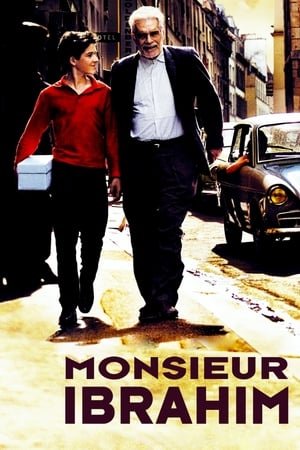
Paris, 1960s. Momo, a resolute and independent Jewish teenager who lives with his father, a sullen and depressed man, in a working-class neighborhood, develops a close friendship with Monsieur Ibrahim, an elderly Muslim who owns a small grocery store.
Orphaned in Africa as a child, Lilly escapes to England as a refugee, fleeing civil war in Ethiopia. Lost in this cold new world, Lilly embraces the immigrant community in London, attempting to reunite people with their scattered families. But as her friend Amina discovers, Lilly's mission isn't purely selfless: a passionate lost love affair is revealed.
A man (played by the filmmaker Nacer Khemir) returns home to Tunis to bury his mother. After the burial, his father gives him an "amana" to be handed to a certain Sheikh named Muhyiddin. Taken by his father's request, the man immediately sets out on an epic journey to find the long lost Sheikh and deliver the "amana."
The story revolves around Hassan, who is studying Arabic calligraphy from a grand master. Coming across a manuscript fragment, Hassan searches for the missing pieces, believing that once he finds them, he will learn the secrets of love.
A young teacher arrives to take over a village school isolated in the shimmering desert. Legendary figures materialize out of wells and the desert itself, groups of children hurry through a labyrinth of underground corridors, and the teacher is whisked away to a mysterious rendezvous and never returns.
For reasons unknown, a flautist and an astronomer find themselves drawn to one another. But, when the flautist stumbles upon a secret regarding his late father, the two wind up in a celestial duel against the ancient Master Flautist for earth's future.
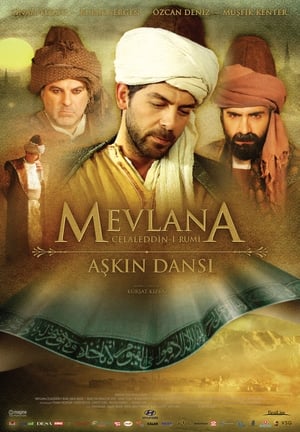
A dramatised documentary about the life of Rumi, a Persian mystical poet whose images of universal love and divine mystery continue to be celebrated more than 700 years after his death.
Story of Rumi, his friendship with Shams Tabrizi, the love he had for him and the great influence of Shams over him in his life, his poetry and his love for God.
Images from the texts of Rumi, 13th century Sufi poet.
Laila is a free-spirited girl from a conservative family who firmly believes in living for the present. Qais, a spoilt brat, falls head over heels in love with her. Their families, however, are warring over property, which leads to self-destruction, pain and bleeding hearts.
Two students in the West Bank are forced to return home to Gaza, where their love defies tradition. To reach his lover, Qays graffitis poetry across town. A modern retelling of the famous ancient Sufi parable Majnun Layla.
Posthumously completed film trilogy, conceived during the 1970s and left incomplete at the time of Abdelsalam's death in 1986, the trilogy reflects his lifelong mission of reconnecting modern Egyptians with the spiritual, cultural, and philosophical legacy of ancient Egypt. The work consists of three short films—The Fortress, The Dandarawiya, and The Tragedy of the Great House – Akhenaten—which examine ancient Egyptian civilization, religious thought, and humanity's search for meaning.
A young, free-spirited dancer and student of Arabic poetry falls in love with her thesis supervisor while trapped in a relationship with a man who disapproves of her dancing.
Rumi is a rebellious yet intelligent and creative Islamic boarding student. While on a pilgrimage, he is stunned by a group of Sufi dancers he sees. This admiration inspires him to go to Turkey to participate in a calligraphy festival.
The Sufi and the Scientist is the collective story of Sufi healer Sayyid Arif Hussain, the medieval Sufi Sheikh Haji Ali, and Dr. Thornton Streeter, a scientist working in the realm of human consciousness.
This VHS video includes two short documentaries by Elda Hartley. In the first, THE ART OF MEDITATION, Alan Watts gives us techniques and advice for meditating. Elda Hartley herself narrates the second film, MEDITATION: THE JOURNEY INWARD, which exposes viewers to different cultural approaches to meditation. Hartley then discusses how meditation enriches one's life, and what it can reveal to us.
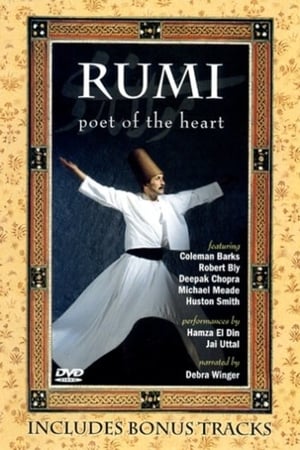
In 1244, Jelaluddin Rumi, a Sufi scholar in Konya, Turkey, met an itinerant dervish, Shams of Tabriz. A powerful friendship ensued. When Shams died, the grieving Rumi gripped a pole in his garden, and turning round it, began reciting imagistic poetry about inner life and love of God. After Rumi's death, his son founded the Mevlevi Sufi order, the whirling dervishes. Lovers of Rumi's poems comment on their power and meaning, including religious historian Huston Smith, writer Simone Fattal, poet Robery Bly, and Coleman Barks, who reworks literal translations of Rumi into poetic English. Musicians accompany Barks and Bly as they recite their versions of several of Rumi's ecstatic poems.
Wahdat-ul-Wujood explores the concept of oneness and the human journey through separation, conflict, and return. Inspired by the philosophy of Wahdat al-Wujood (Unity of Being), the film reflects on how all existence emerges from a single source but becomes fragmented through identity, ego, and the divisions created by the world. The story begins in a cosmic void, where two souls emerge from a singular thread, symbolizing unity in its purest form. As they descend into history and move through different eras of the subcontinent, they become increasingly distant through war, cultural conflict, and shifting identities. Transitioning from abstract cosmic spaces to contemporary Pakistan, the film mirrors both a personal and collective search for meaning and connection. Through poetic storytelling and symbolic imagery, the film ultimately leads the souls back toward oneness, suggesting that beneath all separation, humanity remains deeply connected.
This documentary explores the growing American interest in the 1970s in Eastern religions and philosophy. The teachings and lifestyles of ten spiritual teachers and their followers are presented without voice-over narration.