This chronicle of the Christchurch Commonwealth Games marked one of the National Film Unit's most ambitious productions. Though a range of events (including famous runs by John Walker and Dick Tayler), are covered, the film often bypasses the pomp and glory approach; instead it dares to talk to the injured and mention that most competitors lose. The closing ceremonies of the "friendly games" feature the athletes gathering to — as the official song's chorus put it — "join together". Four directors joined together to work on it: Arthur Everard, John King, Paul Maunder and Sam Pillsbury.
Based on home movies shot on Super 8mm film, A Family Film places the mother at its center as the narrator while tracing the memories of a family living in Istanbul in the 70s.
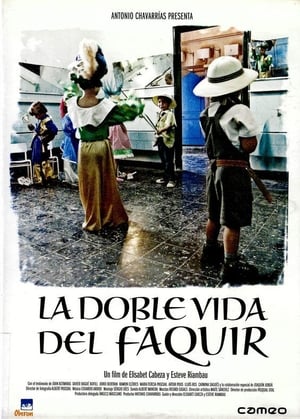
La doble vida del faquir (The magicians) returns to the scene of a school in the Catalan town of Sant Julià de Vilatorta where, in 1937, in the midst of civil war, a film-maker in hiding and a group of orphaned children dressed up as sultans and explorers shot an exotic adventure film. The films protagonists relive those childhood days when they were able to switch their school smocks for oriental turbans, while reality imposed its own fancy dress ball with military uniforms and priests dressed in civilian garb.
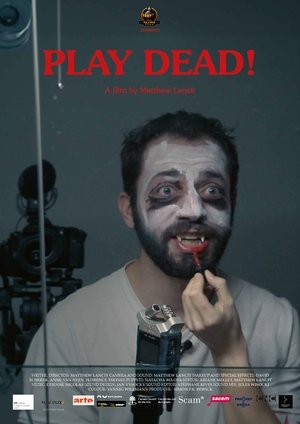
If there is one person Matthew Lancit can’t get out of his mind, it is his uncle Harvey. Dark rings around his eyes, pale, blind, his legs amputated. Like Harvey, the filmmaker also suffers from diabetes. He has the disease under control, but one question is always nagging at him: How much longer? His long-term (self-)observation reliably revolves around fears of infirmity and mutilation. He translates the feared body horror into film, stages himself as a zombie, vampire, a desolate figure. Lancit playfully anticipates his potential decline, serving up a whole arsenal of effects which – as video recordings prove – go back to his youth. It is not for nothing that the “dead” in the title is also reminiscent of “dad.” Because “Play Dead!” also negotiates his own role as a father.
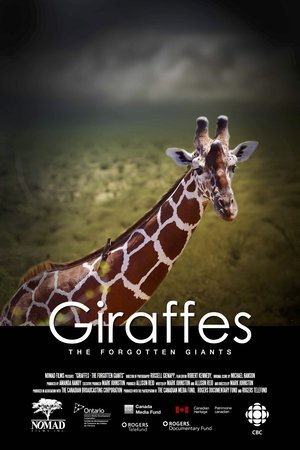
"Giraffes: The Forgotten Giants" delves into the reasons behind the "silent" extinction of giraffes worldwide, and introduces us to the scientists who are gathering new information that may stave off their decline.
A short behind the scenes documentary showing the creation of the short claymation film The Genie in a Ravioli Can (Le génie de la boîte de raviolis).
An annual battle of Dresden’s culture of commemoration and the question of authority to interpret history breaks out.
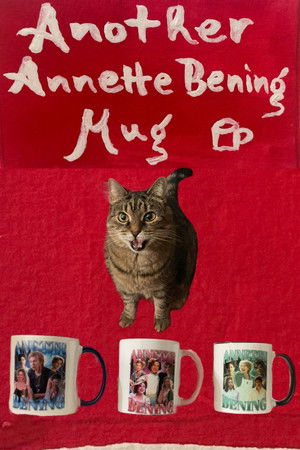
A video diary from Xmas 2023 New Years to awards season, the filmmaker's personal cinema, and a tribute/time capsule of their cat Fox, their movie-loving friends and film community of Portland, and the actresses they love -- with Annette Bening's Nyad Oscar campaign as its political backdrop.
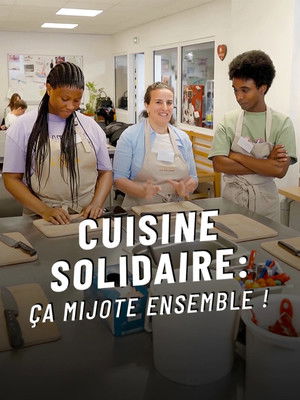
In France, more than 10 million people of all ages are believed to rely on food aid. Faced with this reality, mutual aid initiatives are multiplying to feed, comfort, and integrate people. From lunches where everyone pitches in, to one-euro menus, workshops on how to cook healthily and cheaply, and dinners prepared by Michelin-starred chefs, solidarity kitchens are multiplying in France.
In 1974 a group of Mohawk Indians occupied a defunct girls camp in New York's Adirondack mountains and established a community they called Ganienkeh. Aiming to practice a more traditional lifestyle, and asserting aboriginal title to the land, they stayed for three years, having occasional violent clashes with the local residents. In 1977 they negotiated a (somewhat complicated) land swap with the State, and agreed to move to a permanent home near Plattsburgh, New York, where they remain today. Ganienkeh is one of the only examples of an indigenous people successfully reclaiming land from the United States, but it may not be the last.
Fábulas Vivas
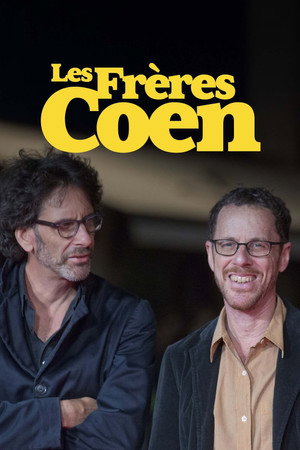
Tracing the careers of these two cinema enthusiasts, this documentary reveals the secrets behind the work of Ethan and Joel Coen, screenwriters and directors who are interchangeable within the same two-headed entity. It features fascinating, previously unseen interviews with some of the most iconic actors from their filmography.
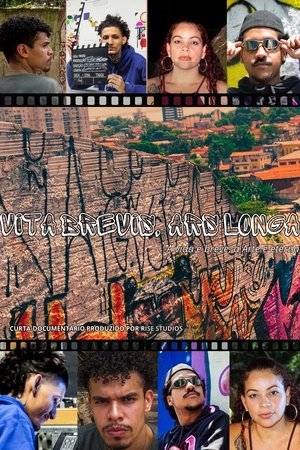
In the midst of a pandemic, government arbitrariness and the precariousness of Brazilian artists, the documentary shows how these four rappers resisted the difficulties of this period using only one weapon... music. Using plurality, creativity and cleverness, how did they produce music? What role did music play in this period? What did they have to do to stay alive as rappers?
Dusty, a Baltimore motorcycle builder, finalizes his shovelhead chopper named Gloria.
The Arts Council commissioned this film to coincide with their major retrospective of Giacometti's work at the Tate Gallery (now Tate Britain) in the summer of 1965. A similar exhibition was held concurrently at the Museum of Modern Art in New York, sealing the artist's reputation as a modern master.
"A Million Smiles" is a documentary film showcasing the Baseball Without Borders Foundation based in San Francisco, CA for nearly 30 years. Baseball Without Borders Foundation brings joy to children throughout the world through a love of America’s favorite pastime, baseball. They provide new and used baseball and softball equipment to children of all ages and they donate all equipment free of charge. Donations have been made to children in 52 countries since 1995. Baseball Without Borders has no paid staff. 100% of donated funds help to promote friendship, recipients' native cultures and connection with the less fortunate of our world. This is the first film in Baseball Without Borders history. This film focuses on bringing awareness to the culture and children of Yucatán while giving viewers a sense of the impact that Baseball Without Borders has been creating for more than 27 years as it carries out its mission to weave joy through the world by offering the gift of baseball.
In 1983, film student Rich Murray was handed $20,000 in a brown paper bag by a mobster. The money was for directing his first music video for a virtually unknown Philly rocker named Alan Mann. Mann's song "Christmas on the Block" became a Philly radio staple and Murray's music video, against the odds, became the first indie video to play on MTV. This experience, tainted by Mann's tragic passing, remained with Murray through the years. With "Fear of Heights," Murray travels back to that time to answer some nagging questions and to illuminate the dark, mysterious life and music of Alan Mann.
Serenade für Fanny
Filmmaker Krishita Desai explores AI grief technology that lets people interact with digital versions of their deceased loved ones. Through families and experts, the film asks whether it brings comfort or complicates grief and healing.
In a field dominated by men, five pioneering camerawomen Mary Rogers, Cynde Strand, Jane Evans, Maria Fleet and Margaret Moth went to the frontlines of wars, revolutions and disasters to bring us the truth. As colorful as accomplished, these brave photojournalists made their mark by capturing some of the most iconic images from Tiananmen Square, to conflicts in Sarajevo, Iraq, Somalia and the Arab Spring uprising. But the world doesn’t know it was these women behind the camera. In the midst of unfolding chaos, the pictures they took for CNN both shocked and informed the world. This feature documentary by director Heather O’Neill tells their remarkable story.