El jardín de las delicias
Eminent classical historian Robin Lane Fox embarks on a journey in search of the origins of the Greek myths. He firmly believes that these fantastical stories lie at the root of western culture, and yet little is known about where the myths of the Greek gods came from, and how they grew. Now, after 35 years of travelling, excavation and interpretation, he is confident he has uncovered answers.
A fascinating compilation tracing the development of British trains throughout the 20th century. This program provides a record of the greatest days of steam; the magnificent express engines developed by the 'Big Four' - the GWR, SR, LNER, and LMS; many famous named trains like the Golden Arrow and the Brighton Belle, the War and Nationalism; and the amazing variety of elder locos from the 1950's.
Mark Gatiss explores and celebrates Dracula, an icon of popular culture, asking just why we keep coming back to the count.
James May presents a celebration of the toys which have survived across the decades, including Meccano, Lego, Scalextric and Airfix. James's all-time number one is the train set.
Thousands of terracotta warriors guarded the first Chinese emperor's tomb. This is their story, told through archeological evidence and reenactments.
China's Secret Monkey Kingdom
The Tea Explorer documentary follows the journey of tea enthusiast Jeff Fuchs along the Tea Horse Road, a 1300-year-old trade route in the Himalayas. It combines the author's passion for both tea and mountains, tracing the route's history, meeting the people who live along it, and exploring the significance of tea in the region.
Aaron Eliyahu, a Jewish man, travels to a small village called Mala, Kerala in search of his Jewish heritage. On his journey, he befriends a Muslim man named Beerankunj. Unfortunately, Aaron meets with a fatal motor accident that lands him in a state of coma in a hermitage somewhere in North India. By the time he reaches Mala, he sees that his house has been converted into a post office and learns that his mother, Veronica, entrusted all her property with the panchayat before leaving for Israel. Unable to prove his own identity, Aaron is denied the rights to his own house. Since he is unable to provide any concrete evidence in the court of law, Aaron is thrown into the streets with only his true friend Beerankunj by his side. Karutha Joodhan reveals the unexpected happenings passing through the three generations of Aaron and Beerankunj.
The story of the Cuban Missile Crisis in 1962—the nuclear standoff with the USSR sparked by the discovery by the Americans of missile bases established on the Soviet-allied island of Cuba.
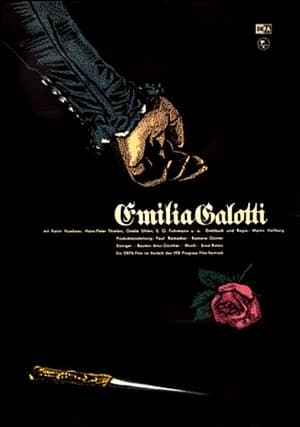
The Prince of Guastalla falls in love with the young citizen Emilia Galotti, who is soon to marry Count Appiani. In order to win Emilia, the prince tries to send the count on an "honorable" journey on his behalf with the help of his chamberlain Marinelli. However, after the Count refuses this offer, Marinelli decides to have the wedding carriage robbed on his own initiative in order to have Emilia abducted to the Prince's nearby pleasure palace. But he has not thought of the prince's mistress, Countess Orsina, and Emilia's shaken father Odoardo, both of whom soon arrive at the castle, one to meet the prince, the other to look after his daughter...
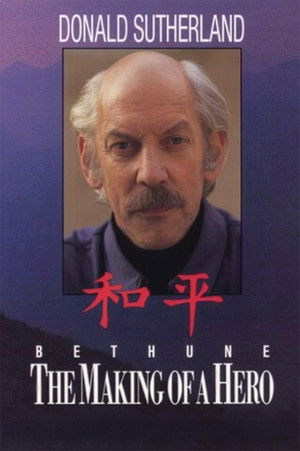
True story of Norman Bethune, a medical doctor who fought for justice in China during Mao's rise to power.
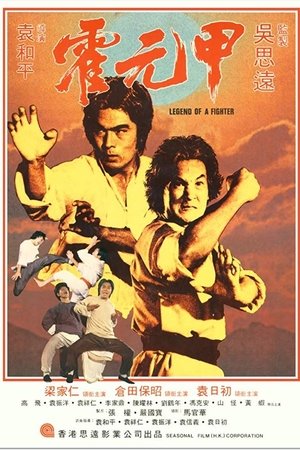
During the Japanese invasion of China, a young Indian doctor joins the Chinese resistance, meets and courts a Chinese girl, cures a virulent plague, and is captured by a Japanese platoon...
The opening of The Vasulka Effect couldn’t be more apt: Steina Vasulka addresses her husband Woody through various TV screens. He does the same and replies. A perfect image of the relationship between the free-spirited, groundbreaking pioneers of video art. After meeting in Prague in the early 1960s, they relocated from Czechoslovakia to New York, where they later founded The Kitchen, their legendary art and performance gallery.
Jerry, an ordinary immigrant dad, retired in Orlando, is recruited to be an undercover agent for the Chinese police. Jerry’s family recreates the events on film and his three sons discover a darker truth. True crime meets spy thriller in this genre-bending docufiction hybrid about an immigrant’s search for the American dream. A Slamdance Film Festival Grand Jury and Audience Award winner.
A BFA Educational media production on western expansion via railroads and the role they played in the foundation of the Americas
A true-story account of a German businessman who saved more than 200,000 Chinese during the Nanjing massacre in 1937-38.
At the peak of Perestroika, in 1987, in the village of Gorki, where Lenin spent his last years, after a long construction, the last and most grandiose museum of the Leader was opened. Soon after the opening, the ideology changed, and the flow of pilgrims gradually dried up. Despite this, the museum still works and the management is looking for ways to attract visitors. Faithful to the Lenin keepers of the museum as they can resist the onset of commercialization. The film tells about the modern life of this amazing museum-reserve and its employees.
A representation of queer and feminist imagery that was mainly shot in the Qinghai-Tibetan Plateau, remote and developing areas in southwest China, and metropolitan cities like Beijing from 2000 to 2004 to document the social changes in contemporary China. The director sympathetically and erotically represents a variety of women, including women as laborers, women as prayers, women in the ground, women in marriage, and women who lie on the funeral pyre with their dead husbands. Her camera juxtaposes the mountains and rivers in old times, the commercialized handicrafts as exposition, the capital exploitation of the elders’ living space, and the erotic freedom of the young people in a changing city.
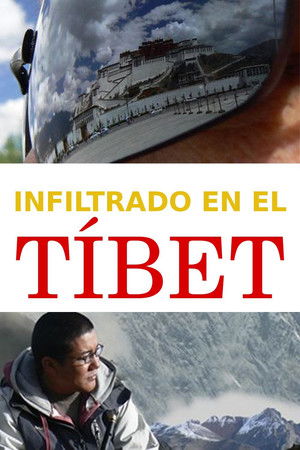
Undercover in Tibet reveals the regime of terror which dominates daily life and makes freedom of expression an impossibility. Tash meets victims of arbitrary arrests, detention, torture and ‘disappearances’ and uncovers evidence of enforced sterilizations on ethnic Tibetan women. He sees for himself the impact of the enormous military and police presence in the region, the hunger and hardship being endured by many Tibetans and hears warnings of the uprising taking place across the provinces now.