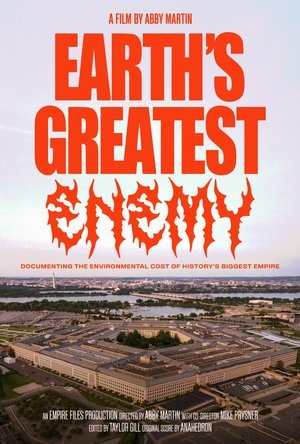
In Abby Martin's second feature documentary, Earth’s Greatest Enemy reveals a hidden truth behind the climate crisis: the role of the U.S. military as the world’s largest institutional polluter. Drawing on powerful testimonies from veterans, scientists, and frontline communities, it uncovers how military operations poison ecosystems, accelerate global warming, and sacrifice the future for endless expansion. From Alaska’s melting glaciers to contaminated bases across the U.S. and toxic battlefields abroad, Earth’s Greatest Enemy delivers a provocative and unflinching examination of the untouchable institution playing an outsized role in the climate crisis.
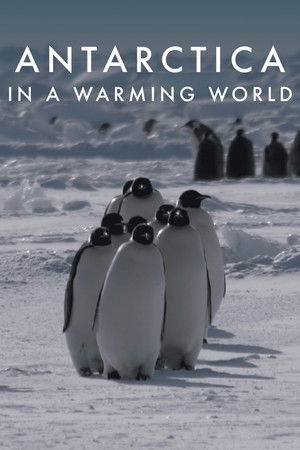
This documentary exposes Antarctica's dramatic climate shifts, from melting ice to rising seas, showing how changes at the world's edge threaten Earth's shared future.
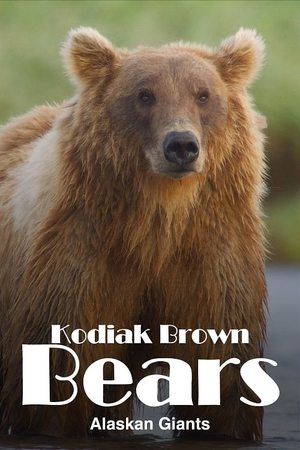
In Canada and Alaska, the consequences of global warming are being keenly felt by brown bears - but in different ways by different populations. Their survival depends mainly on the quantity of wild salmon available in the region, as it is the fruit of their catch that enables the bears to accumulate fat reserves for the winter. While salmon populations off Canada's Pacific coast continue to decline year after year, in the immense Bristol Bay in western Alaska, as well as on Kodiak Island, they are increasing considerably. The water temperature in the North Pacific is now ideal for salmon development. From Canada to Alaska, the documentary follows different bear populations over a two-year period.
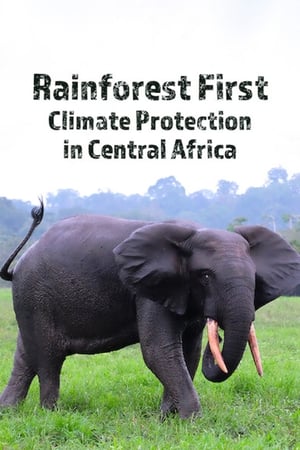
This documentary focuses on the Green Gabon program in the Congo Basin and explores rainforest conservation efforts as a way to stem climate change.
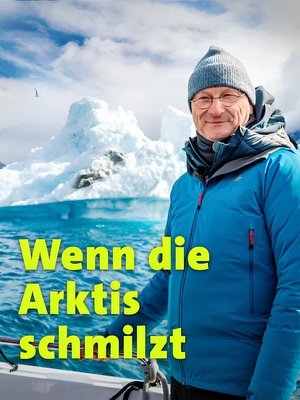
Wenn die Arktis schmilzt
Ningwasum follows two time travellers Miksam and Mingsoma, played by Subin Limbu and Shanta Nepali respectively, in the Himalayas weaving indigenous folk stories, culture, climate change and science fiction.
Mass suicide prevention from resource depletion, overpopulation and climate change.
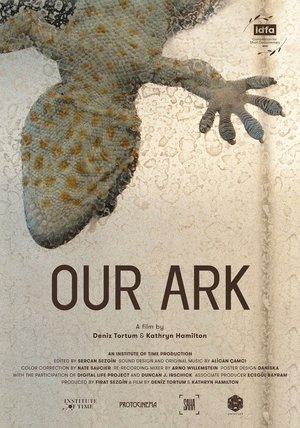
OUR ARK is an essay film on our efforts to create a virtual replica of the real world.
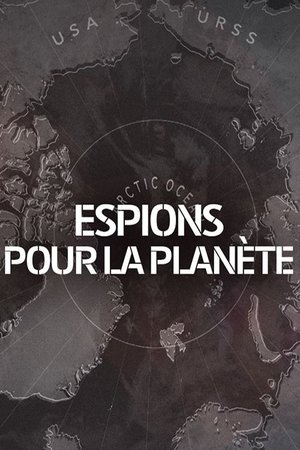
In the aftermath of the Cold War, Russian and American intelligence agencies, once enemies, joined forces and pooled their data to serve the planet, threatened by global warming. The story of a remarkable odyssey.
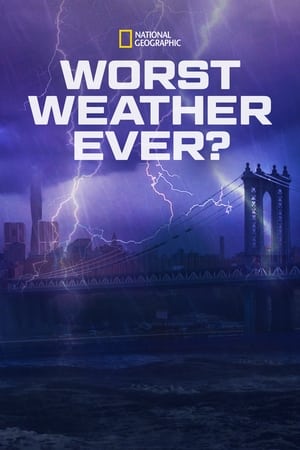
Scientists are in a race against time to discover what effect the warming world is having on our weather, which is getting wilder and weirder by the moment, causing chaos, death and destruction around the world.
An attempt to understand climate change through the production of human food; a few drawings to describe our world. This animation is the result of a workshop held with 15 children from the Limette School in Brussels during the festival Filming for the Climate.
Aggregate States of Matters highlights the ambiguous relationship between humans and nature. For her new 35mm film shot in Peru, Rosa Barba worked with communities that are affected by the melting of a glacier and geological time becoming exposed. Barba shows the slow disappearance of the glacier and the perception of this fact within the Quechuan population in the Andes. While exploring different local myths, she outlines the possibility of translating ancient knowledge into the present time.
An international diary of the impact of climate change is constructed from thousands of hours of in-the-moment footage. Through the process, we witness the deep human resilience, resourcefulness and courage necessary to confront the world’s most pressing challenge.
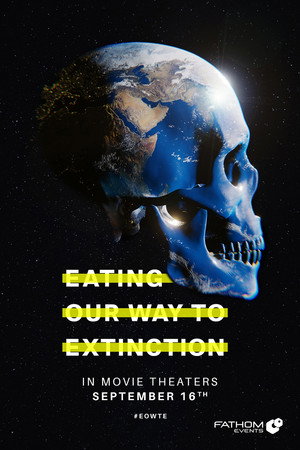
With searing insight that shines light in dark corners, EATING OUR WAY TO EXTINCTION is a compelling feature documentary that opens the lid on the elephant in the room no one wants to talk about. Confronting and entertaining, this documentary allows audiences to question their everyday choices, industry leaders and governments. Featuring a wealth of world-renowned contributors including Sir Richard Branson and Tony Robbins, it has a message of hope that will empower audiences.
A documentary that reflects on the vision of 'progress' that governments cling to in times of climate change, focusing on the personal and collective experience lived in Puerto Rico after Hurricane Maria struck the island in 2017.
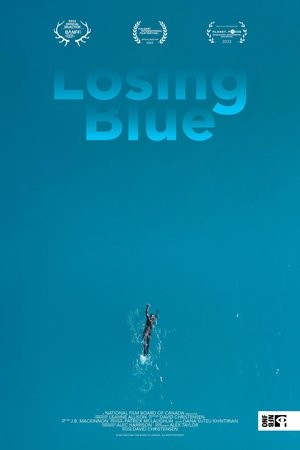
What does it mean to lose a colour? Losing Blue is a cinematic poem about losing the otherworldly blues of ancient mountain lakes, now fading due to climate change. With stunning cinematography, this short doc immerses the viewer in the magnificence of these rare lakes, pulling us in to stand on their rocky shores, witness their power and understand what their loss would mean—both for ourselves and for the Earth.
Ice has always moved. When glaciation took hold some 34 million years ago, interconnected rivers of ice combined to produce the Earth's vast ice sheets. As temperatures slowly warmed glaciers developed a unique balancing act; advancing and retreating to calibrate their annual winter accumulation against summer melt. Sometimes calving colossal icebergs into the sea. A positive feedback loop that has regulated the movement of ice for millions of years.
The devastating forest fires in Los Angeles are described in three acts.
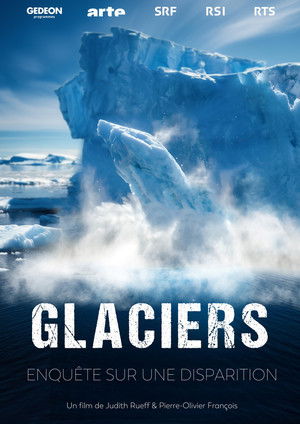
Climate change is accelerating the melting of glaciers around the world. A study conducted across all continents sounds the alarm about the urgent need to preserve them.
Nothing nor anyone can escape the impacts of climate change. People from all corners of Brazil, our cities and forests, our economy, our health and our dreams for the future. Six Brazilians, from five different states, tell how climate change has affected their lives. A young indigenous woman who became the leader of a volunteer fire brigade after an unprecedented forest fire; a small farmer who faced six years of drought; a centenarian caiçara community forced to move due to the advance of the sea; a retailer who saw his shop destroyed by rains and landslides that claimed hundreds of lives in Rio de Janeiro; an oyster farmer who suffered harsh losses due to rising sea temperatures; a woman from a coastal city who lost two cars to storm tides which are happening more and more often along the Brazilian coast.