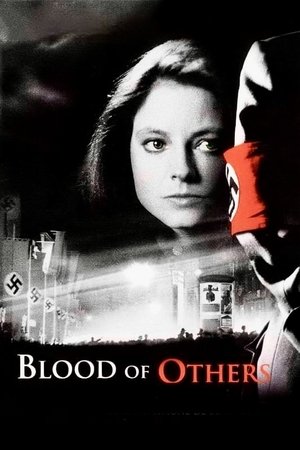
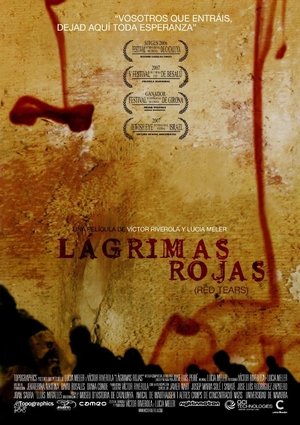
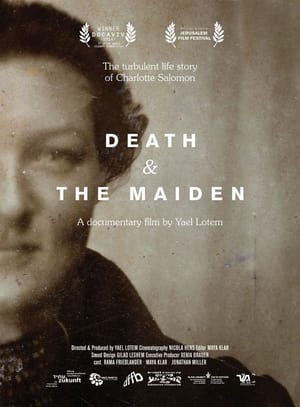
In the small town of Rechnitz a terrible crime against humanity was performed during the holocaust. Until now, no-one dares to talk about it.
Everyone knows the phrase “Black is Beautiful,” but few know of the man who helped popularize it. Little known Harlem based photographer - freedom fighter and activist - Kwame Brathwaite took 500,000 photos across his 70-year career, always devoted to celebrating the joy and beauty of African American life. This feature documentary tells the story of Kwame and the “Black is Beautiful” movement.
Upon Canada's entry into World War II, the RCMP rounded up thousands of people it considered fascist sympathizers. Among them, 700 Italian-Canadians were held for up to three years in internment camps. None were ever charged with a criminal offence.
The surprising story of how one of music's biggest icons helped to establish a USS Arizona memorial in Pearl Harbor. Elvis’ fundraising concert drew public attention to the plight and helped to galvanize efforts to finish the USS Arizona Memorial as it stands today.
In 1968, Billy and Antoinette Edwards participated in a landmark documentary that would intimately observe their turbulent relationship. Over 50 years later, their son Bogart sat down to view and discuss the resulting film, A Married Couple.
Filmmaker Alain Resnais documents the atrocities behind the walls of Hitler's concentration camps.
In this documentary, experts dissect the Battle of Britain, which took place on Sept. 15, 1940 — a day that determined the fate of the nation.
The original image or the first image. That of the first film, that of all the promises. The matrix image announcing all those to come. The history of cinema is full of legendary first movies, master strokes rather than test shots. There is a lot to be learned from the early plants of estrean directors who later became great filmmakers.
How well we know our cup of coffee?
A Associação
2021 was a turning point for Belarus and 6 Belarusian students - as well as for the city of Łódź, Poland, in which they found themselves. Across the rails of change and transformation, documenting a time that has not been before and will not repeat again. Heroes of the film have very different fates and experiences, but they are all connected by the place they found themselves in - the post-industrial and post-apocalyptic city, which becomes a part of their story and a hero of its own. Students, transport, quaters, youth, revolution, local apocalypse, changes and turns - they all mix in a documentary kaleidoscope 'Across the Rails'.
Eleven major film makers from Europe, America and Asia talk about Akira Kurosawa and discover surprising influences on their own work.
Film journalist and critic Rüdiger Suchsland examines German cinema from 1933, when the Nazis came into power, until 1945, when the Third Reich collapsed. (A sequel to From Caligari to Hitler, 2015.)
This documentary is a touching and intimate portrait of André Brasilier, both as a man and as an artist. Presented as a testament to his art, the film focuses on two main aspects: André's connection to his youth and early inspirations, and the evolution of his art. The film pays special attention to his wife Chantal, who was André's muse and who appears in many of his paintings.
In a star-studded evening of music and memories, a community of iconic performers honor Dolly Parton as the MusiCares Person of the Year.
A television documentary directed by Marcel Ophüls examining the Munich Conference of September 28, 1938, when European leaders met to avert the outbreak of war. Through archival documents and interviews, the film reconstructs the political atmosphere surrounding negotiations between Britain and France on one side and Nazi Germany and Fascist Italy on the other, situating the agreement within the broader context of European appeasement in the face of fascism.
After his father is murdered by the Nazis in 1938, a young Viennese Jew named Ferry Tobler flees to Prague, where he joins forces with another expatriate and a sympathetic Czech relief worker. Together with other Jewish refugees, the three make their way to Paris, and, after spending time in a French prison camp, eventually escape to Marseille, from where they hope to sail to a safe port.
When World War II broke out, John Ford, in his forties, commissioned in the Naval Reserve, was put in charge of the Field Photographic Unit by Bill Donavan, director of the soon-to-be-OSS. During the war, Field Photo made at least 87 documentaries, many with Ford's signature attention to heroism and loss, and many from the point of view of the fighting soldier and sailor. Talking heads discuss Ford's life and personality, the ways that the war gave him fulfillment, and the ways that his war films embodied the same values and conflicts that his Hollywood films did. Among the films profiled are "Battle of Midway," "Torpedo Squadron," "Sexual Hygiene," and "December 7."
This chilling, vitally important documentary was produced to mark the 40th anniversary of the liberation of Auschwitz Concentration Camp. The film contains unedited, previously unavailable film footage of Auschwitz shot by the Soviet military forces between January 27 and February 28, 1945 and includes an interview with Alexander Voronsov, the cameraman who shot the footage. The horrifying images include: survivors; camp visit by Soviet investigation commission; criminal experiments; forced laborers; evacuation of ill and weak prisoners with the aid of Russian and Polish volunteers; aerial photos of the IG Farben Works in Monowitz; and pictures of local people cleaning up the camp under Soviet supervision. - Written by National Center for Jewish Film
A subtle portrait of Japanese director Satoshi Kon by the specialist of Japanese cinema Pascal-Alex Vincent and a dive into a rich work. With interviews of the greatest Japanese, French and American directors inspired by his work.