Explore six of the last untouched locations on earth. The documentary series presents life as nature intended, following the unique way wildlife has adapted to these environments and continues to rise to new challenges over the course of a year.
The sexual behaviour and intriguing reproductive strategies of the animal world.
All In Earth's 4 billion year history, nature has solved all of lifes problems, from the highest mountain to the deepest ocean. Evolution is the ultimate inventor and many of mans most clever engineering solutions have exact counterparts in nature. In three amazing episodes, NatureTech views our world with fresh eyes, where nature and technology stand hand in hand.
Meerkat Manor is a British television programme produced by Oxford Scientific Films for Animal Planet International that premiered in September 2005 and ran for four series until its cancellation in August 2008. Blending more traditional animal documentary style footage with dramatic narration, the series told the story of the Whiskers, one of more than a dozen families of meerkats in the Kalahari Desert being studied as part of the Kalahari Meerkat Project, a long-term field study into the ecological causes and evolutionary consequences of the cooperative nature of meerkats. The original programme was narrated by Bill Nighy, with the narration redubbed by Mike Goldman for the Australian airings and Sean Astin for the American broadcasts. The fourth series, subtitled The Next Generation, saw Stockard Channing replacing Astin as the narrator in the American dubbing.
The people, places and stories making news in the British countryside.
A cinematic experience bringing you the most amazing human stories in the world. Humans and wildlife surviving in the most extreme environments on Earth.
La Corse, beauté sauvage
Documentary revealing the weird and wonderful stories of some of the natural world's most incredible parents.
Gordon Buchanan helps cat expert Dr Victor Lukarevsky as he tries - for the first time ever - to rescue and rehabilitate lynx from the lucrative fur and pet trades back to the wild.
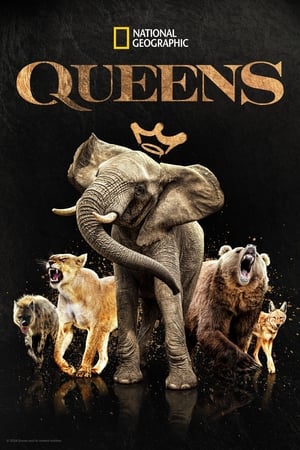
Explore phenomenal female animals: the rebel matriarchs, powerful leaders and dangerous lovers of the natural world.
Des volcans et des hommes
The nature of the Baltic Sea offers many surprises as demonstrated in the three-part series Wild Baltic Sea. From the Northern most tip of Denmark to the Curonian Spit, from the Estonian island world to the Bay of Bothnia. For the first time bottlenose dolphins and a Sowerby's beaked whale could be filmed in the Baltic Sea.
The series offers fascinating insights into the most successful animal group in the world. From the tiny Etruscan shrew to the giant blue whale, Mammals will reveal the secrets of their success, and how their winning design, incredible adaptability, unrivaled intelligence, and unique sociability have all contributed to their remarkable rise.
Clare Balding explores Britain's rivers - the glorious sights, sounds and inhabitants.
A follow-up to the 1990 Radio 4 series in which the late Douglas Adams and Mark Carwardine travelled around the world in search of endangered species. 20 years later Stephen Fry and Mark Carwardine go back to see what has become of the animals in two decades, and to discover what has affected their fortunes.
Immersive audio reveals the unexpected, unfamiliar, and untold ways in which animals communicate around the world.
On the 150th anniversary of its founding, Kevin Costner explores Yellowstone National Park to find out if it's still as wild and untouched as it was on the day of its birth, and looks back at the events that led to its preservation.
How do you cope when you suddenly become surrogate parents to 21 orphaned chimps? Jim and Jenny Desmond have chimps overrunning their home and even their bed.
See It Now is an American newsmagazine and documentary series broadcast by CBS from 1951 to 1958. It was created by Edward R. Murrow and Fred W. Friendly, Murrow being the host of the show. From 1952 to 1957, See It Now won four Emmy Awards and was nominated three other times. It also won a 1952 Peabody Award, which cited its
Takes viewers into the center of five animal families - lions, jackals, cheetahs, hyenas and meerkats - as they raise their young in the wilderness. Innovative camera techniques are used to follow the animals' tender, emotional and often stressful stories from the moment their babies are born through different stages in their maturity.