At the outbreak of World War I, two teenage boys - one German and one British - defy their parents to sign up. An epic historical drama spanning the five years of the First World War, as seen through the eyes of two ordinary young soldiers.
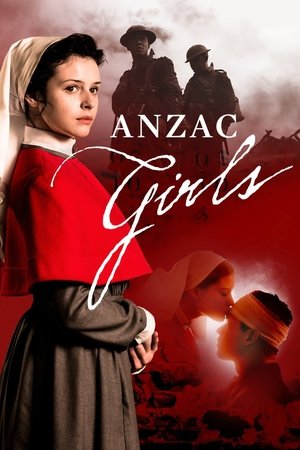
The unique, and rarely told true stories of Australian and New Zealand nurses serving at Gallipoli and the Western Front during the First World War.
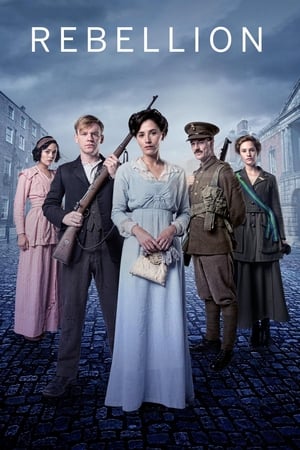
A group of young men and women in Dublin in 1916 are embroiled in a fight for independence during the Easter Rising. The story begins with the outbreak of World War I. As expectations of a short and glorious campaign are dashed, social stability is eroded and Irish nationalism comes to the fore. The tumultuous events that follow are seen through the eyes of a group of friends from Dublin, Belfast and London as they play vital and conflicting roles in the narrative of Ireland's independence.
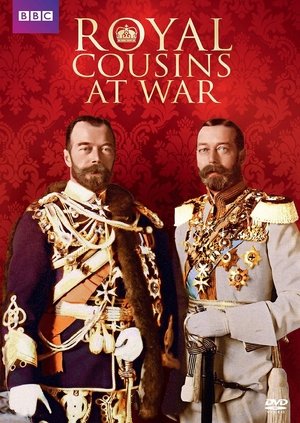
At the time World War I broke out, the King of England, the Czar of Russia, and the Kaiser of Germany were first cousins. This two-part series looks at the role played by Tsar Nicholas II of Russia, Kaiser Wilhelm II of Germany and King George V of England, and their relationships with each other, in the outbreak of war. Mismanaging their countries and mishandling foreign policy, they failed to adapt to the forces of nationalism and democracy, and so brought tumbling down their own ideal of a Europe governed by the descendants of Queen Victoria. While it was war that delivered the final blow, this fascinating series shows how the problems had set in much earlier. A two part miniseries.
One month after the outbreak of World War I, Paris is bombarded by German airplanes. Parisians witness a whole new type of warfare. Five pilots from France, Germany, and Britain take us into the world of the greatest "flying aces" of the First World War.
Sir Tony Robinson, the history presenter and former Black Adder star, tells the story of the Great War. How it started, how it changed the world and how it finished with a 100 day flourish of military brilliance, which finally put an end to four years of incompetence and slaughter. With the aid of hundreds of amazing archived 3D images of the Great War which chronicle WWI from start to finish and breathe new life into the story, Tony Robinson's World War I allows modern audiences to see the war in a completely new way. Robinson will also show how the Great War changed British people for generations to come – liberating large portions of the working class, powering the rise of the Labour party and breaking the old ties of service to the aristocracy.
Andrew Marr's The Making of Modern Britain is a 2009 BBC documentary television series presented by Andrew Marr that covers the period of British history from the death of Queen Victoria to the end of the Second World War. It was a follow-up to his 2007 series Andrew Marr's History of Modern Britain.
The First World War - carnage on a scale never-before seen. But how did it all start? And how did some key figures of WWII fare in the earlier war?
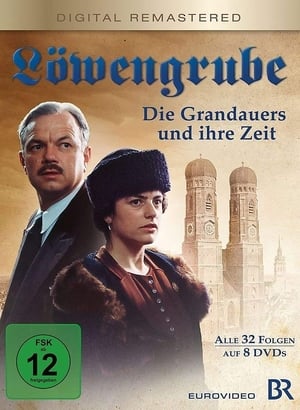
"Löwengrube – Die Grandauers und ihre Zeit" is a German television series first aired between 1989 and 1992, created by Willy Purucker and directed by Rainer Wolffhardt. It is set in Munich and follows the lives of Ludwig Grandauer and his son Karl, both policemen, covering the years from 1897 to 1954. The TV show is based on Purucker's radio play series Die Grandauers und ihre Zeit (‘The Grandauers and their time’). The series’ main title "Löwengrube", meaning ‘Lions’ Den’, refers to the address of the Munich Police Headquarters inaugurated in 1913.
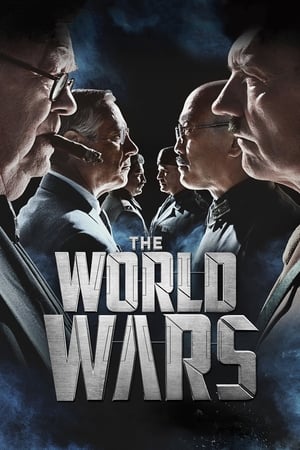
The story of three decades of war told through the eyes of various men who were its key players: Roosevelt, Hitler, Patton, Mussolini, Churchill, Tojo, DeGaulle and MacArthur. The series examines the two wars as one contiguous timeline starting in 1914 and concluding in 1945 with these unique individuals coming of age in World War I before ultimately calling the shots in World War II.
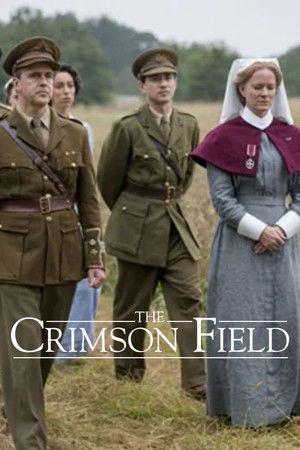
In a tented field hospital on the coast of France, a team of doctors, nurses and women volunteers work together to heal the bodies and souls of men wounded in the trenches.
Colorized historical footage in ascending order of World War 1. Not only the relatively known Flanders and France battles, but also the generally unknown Italian-Austrian, German-Polish-Russian, Japanese-German, Ottoman Empire- Allied and African German Colonies, and other unknown or forgotten fronts and battles.
Michael Portillo examines the role of the railways in World War I and travels through Britain and Europe uncovering stories from the Great War.
Adolf Hitler (1889-1945) was a mediocre who rose to power because of the blindness and ignorance of the Germans, who believed he was nothing more than an eccentric dreamer. But when the crisis of 1929 devastated the economy, the population, fearful of chaos and communism, voted for him. And no one defended democracy. As the dictatorship extended its relentless shadow, the leader claimed peace, but was preparing the Apocalypse.
Documentary narrated by Kenneth Branagh consisting of colourised footage from World War I.
Secrets are divulged and stories of espionage, conspiracy, murder, sabotage and greed are uncovered.
A dramatization of Vera Brittain's 1933 autobiography Testament of Youth—a memorial to a generation devastated by WWI—chronicles her experiences as a nurse in London and Malta and at the front lines in France. It opens with 18-year-old Vera, the genteel daughter of a paper-mill owner, nurturing "hopes of escaping from provincial young ladyhood." Her plan is to attend Oxford.
The warplane has evolved over nearly a century to become what it is today, in 2004. This series is the story of how, through life-and-death necessity, invention, ingenuity and sheer hard work that warplane technology evolved. The Warplane series is not a history of every military plane but rather a look at the major stepping stones that advanced military aviation.
The series is built in the form of saga and depicts the turbulent periods of the beginning of the 20th century through the eyes of ordinary people: the First World War, the revolution, the emergence of Soviet regime. Each of the characters faced the changes in their own way through their concept of truth. However, all of them shared fundamental desire to live, love and find their own place in the new era.
The story of a love triangle between a conservative English aristocrat, his mean socialite wife and a young suffragette in the midst of World War I and a Europe on the brink of profound change.