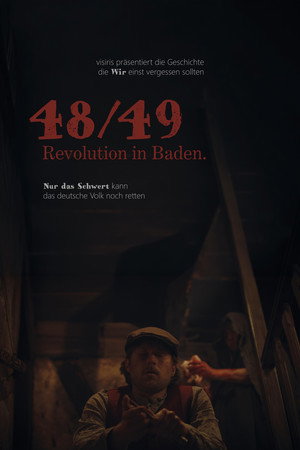
The history of Baden-Württemberg begins in 1952 with an imposed fusion. In 1956, opponents of the merger have organized themselves to the point that a referendum is to reverse the decision after the fact. The referendum does not take place until 1970 with a turnout of 62.5% and ends with a vote in favor of the merger of 81.9%. The example of the Baden-Württemberg fusion is used to illustrate how such a fusion takes place, how conflicts are settled, and what the final outcome is.
In 1950s Germany, a farmer's children face an excruciating dilemma when the son resists expectations to take over the family farm.
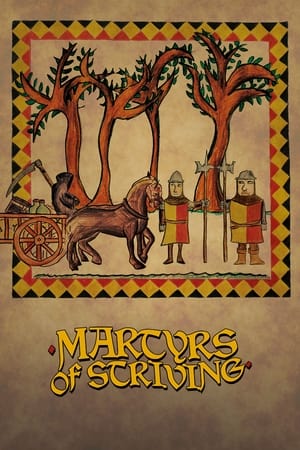
When Death wants to bring the plague to Württemberg in 1349, he has not reckoned with the two guard soldiers Volckel and Utz, who engage him in a heated argument about plague ordinances and entry regulations.
Written in 1625 by the British playwright Ben Jonson, the play “The Staple of News” provides a historic root for this discussion about the role of the press in modern day Brazil. Journalists of several generations discuss the dilemmas of the selection and focus of their subjects, the resistance of the media in accepting itself as a political agent, the inevitability of interpretation as there are no hard facts in nature, and above all the search for an always complex balance between credibility and the public’s growing demand for news.
An examination of why the James Bond films have proved so popular including a discussion between the four actors who have played Bond, an interview with Cubby Broccoli and contributions from the directors, production designers, special effects and stuntmen.
Jonathan Ross delves into the world of James Bond and meets with new and former cast members who reveal humorous stories and anecdotes in a series of interviews. All the 5 Bonds at the time are featured, though only Lazenby (reflecting in the usual frank, self criticizing manner), Moore and Brosnan granted an interview. Connery and Dalton are featured through some unused footage from LWT's 30 years of James Bond program. The ever faithful Desmond Llewelyn turns up in character as well as some other less related peeps like Christopher Lee, Paul McCartney and the ultimate playboy: Hugh Hefner -- who all give an interesting perspective on the worlds most famous spy.
In 1963, President Kennedy recorded one of the most foul mouthed telephone calls ever made from the White House. This is the story of that phone call and the silly bastard who started it all.
Before the advent of modern-day pornography, a vast and rapidly-paced world of smut peddling was the norm, complete with its own secret history. This documentary reveals the untold story of American cinema's gloriously sordid cinematic past. Starting in the 1920s, expert exploiteer David F. Friedman and Henenlotter navigate us through more than five salacious decades of skin flicks. It's the true story of dirty movies, traced in elegant detail from the bizarre locations where these nudie shorts were screened to the ongoing legal battles fought by their promoters. And of course there are the stories of the innovators themselves, people who often risked their own security and livelihood to make these films, believing in some way that what they were doing wasn't a 'bad' thing - and that it could rake in some dough.
In 1800, France's new First Consul - Napoleon Bonaparte - faces a precarious military situation, with huge Austrian armies poised to strike against the French Republic. But Napoleon will not wither in the face of such a crisis. Instead, he embarks on one of the most famous and daring strategic manoeuvres in history - a march across the Alps - to turn the tables on France's enemies
The greatest sport event in Sweden ever was without a doubt the soccer world cup of 1958. The film Conspiracy'58 is about the people who were there but most of all about the people who claim that it never took place at all.
Don't Lose Your Head is a documentary about the making of Doctor Who story The Reign of Terror.
One hour television documentary about the life and career of singer Natalie Cole which originally aired on Lifetime Television in 1998. Includes interviews with Natale Cole, Tony Bennett, Quincy Jones, Phil Ramone, David Foster, Chaka Khan, Luther Vandross, Maria Cole, Dan Cleary and narrated by Patrick Stewart.
In this making-of piece, costume designer Louise Mingebach takes us on a tour of the X2: X-Men United's wardrobe. She shows us many of the costumes and discusses how she came up with them.
"The Titanic Chronicles" is based on the 1912 Senate Hearings into the "Titanic" Disaster. The actual testimony is read by an international cast. This program is an enactment of the most striking and revealing moments from the actual hearings. The testimony you will hear comes closest to the truth as to why the R.M.S. "Titanic" now lies on the bottom of the North Atlantic.
In a celebration of the trans community in Puerto Rico, the fissure between internal and external is an ever-present battle. A unique exploration of self-discovery and activism, featuring a diverse collection of subjects that include LGBTQ advocates, business owners, sex workers, and a boisterous group of drag performers who call themselves The Doll House, Mala Mala portrays a fight for personal and community acceptance paved with triumphant highs and devastating lows.
For two hundred years, the Shakers have been America's most successful utopian society. While seeking harmony, order and perfection in every aspect of their lives, they built minimalistic furniture and buildings that influenced modern design. The Shakers wrote songs of exquisite beauty and danced to the point of ecstasy during their religious meetings. Inspired by this music and dance, choreographer Tero Saarinen created Borrowed Light, a dance piece about communal life and individual sacrifice. Shot in Finland and the United States, featuring interviews and excerpts from Borrowed Light, this documentary explore the cultural legacy of this religious group devoted to creating heaven on earth.
At first glance, Matthew VanDyke—a shy Baltimore native with a sheltered upbringing and a tormenting OCD diagnosis—is the last person you’d imagine on the front lines of the 2011 Libyan revolution. But after finishing grad school and escaping the U.S. for "a crash course in manhood," a winding path leads him just there. Motorcycling across North Africa and the Middle East and spending time as an embedded journalist in Iraq, Matthew lands in Libya, forming an unexpected kinship with a group of young men who transform his life. Matthew joins his friends in the rebel army against Gaddafi, taking up arms (and a camera). Along the way, he is captured and held in solitary confinement for six terrifying months.
The discovery of Bigfoot would be a momentous event with far-reaching implications for science, conservation, and society. It would challenge our understanding of the natural world and force us to confront the mysteries that still exist within it. For those who have encountered these legendary creatures, the emotional scars run deep, and their testimonials make one thing clear: that they truly exist. Whether Bigfoot is ever discovered remains to be seen, but the quest to unravel its secrets continues.
Join sociologists Monique and Michel Pinçon-Charlot on their “investigation” of the French aristocracy and gentry. An entertaining and instructive movie on an exclusive and highly secretive world.
Timothy Alberino and the GenSix Productions film crew head to the High Plain (“Altiplano”) of Peru and Bolivia on the shores of legendary Lake Titicaca to investigate some of the most compelling evidence on the planet of fallen angels and their giant hybrid offspring in the antediluvian past. This full length feature film includes cutting edge research that uncovers and publishes, for the first time, historical documentation which proves beyond a shadow of doubt that colossal giants once roamed the lands of Ecuador, Peru and Bolivia; as well as reveals never before seen mind-blowing geoglyphs engraved on the surface of the earth and stretching for hundreds of miles over the Altiplano. Join the crew as they examine the megalithic mysteries of Tiwanaku and confirm that both the Inca and the Spanish chroniclers were well aware of who built Puma Punku, and when.