2050 dans votre assiette
O vědě a vědcích
Researchers are pushing the boundaries of their fields to develop more accurate and efficient responses against international terrorism.
Popularis
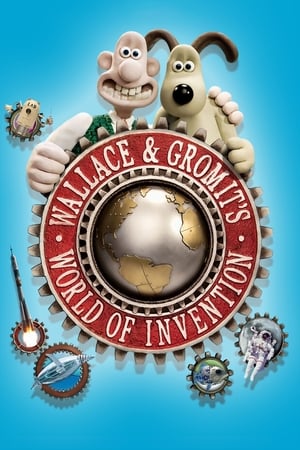
Take a mind-blowing journey through human history, told through six iconic objects that modern people take for granted, and see how science, invention and technology built on one another to change everything.
They are some of the world’s all-time greatest building projects. Most have stood the test of time, but with today’s technology, could they be duplicated and done better?
Science And Islam
Geologist Iain Stewart explain in three stages of natural history the crucial interaction of our very planet's physiology and its unique wildlife. Biological evolution is largely driven bu adaptation to conditions such as climate, soil and irrigation, but biotopes were also shaped by wildlife changing earth's surface and climate significantly, even disregarding human activity.
The Johns Hopkins Science Review is a US television series about science that was produced at Johns Hopkins University from 1948-1955. Starting in 1950, the series aired on the DuMont Television Network until the network's demise in 1955. The series' creator was Lynn Poole, who wrote or co-wrote most of its episodes and acted as the on-camera host. In 2002, Patrick Lucanio and Gary Coville wrote that, "In retrospect, Lynn Poole created one of those unique series that allowed television to fulfill its idealized mission as both an educational and an entertainment medium." The original series was followed by three related series produced by Poole at Johns Hopkins University: Tomorrow, Tomorrow's Careers, and Johns Hopkins File 7. Johns Hopkins University ended its production of television series in 1960.
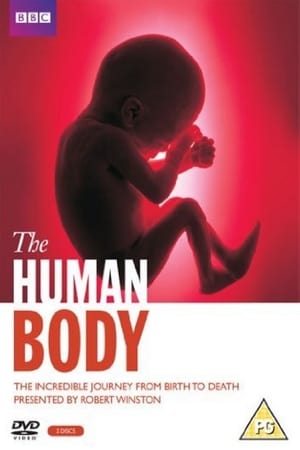
Explore the mysterious regions inside the human body. See how vital organs interconnect to make human life possible. Learn how skeletons fit together. Witness the lightness and strength of bone, how muscles work as levers, what it takes to achieve the "perfect" body. See how the heart functions, and learn the roles of white and red blood cells. Discover the complex systems controlling breathing, digestion, glandular changes, and hearing.
Catalyst is Australia's premier science investigation series. Each week the team brings you stories from Australia and around the world, meeting scientists at the forefront of discovery.
Pandora's Box is a six-part 1992 BBC documentary television series which examines the consequences of political and technocratic rationalism. The episodes deal, in order, with communism in The Soviet Union, systems analysis and game theory during the Cold War, economy in the United Kingdom during the 1970s, the insecticide DDT, Kwame Nkrumah's leadership in Ghana during the 1950s and 1960s and the history of nuclear power.
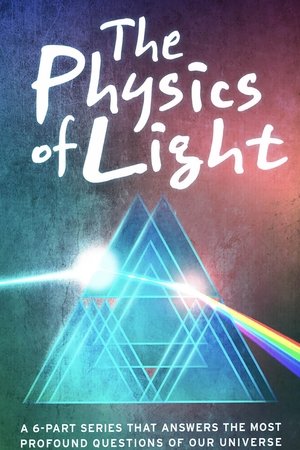
While the terms "quantum physics" and "Theory of Relativity" are used casually every day, not many people know what they really mean. Yet these theories have had a profound impact not only on science and technology, but also on our world view. This intriguing 6-part documentary series explores the concepts of physics from familiar theories, such as Newton's Law of Gravity, to the latest in scientific research, like string theory and M-theory. By connecting all of this research with the medium of light, we can gain a deeper understanding not only of our immediate reality, but of the unseen realities that are hidden beyond our perception. Starting with Einstein's Theory of Relativity, Physics of Light explores the true nature of light, peers inside the atom, and looks ahead to the most cutting edge theories in physics.
A high-end documentary series that takes a deep and thought-provoking dive into a variety of topics - such as the future of human life extension, breakthroughs in interspecies communication, the rise of “cyborgism”, existing in virtual reality, and more.
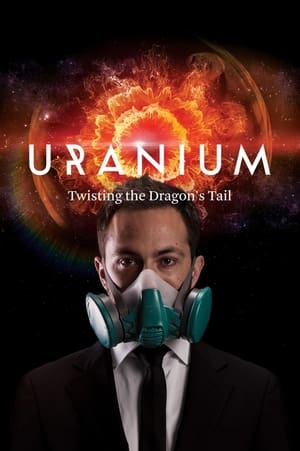
A stunning new documentary series exploring the incredible story of uranium, from its creation in an exploding star to its deployment in nuclear weapons, nuclear power, and nuclear medicine. It’s a journey across nine countries and more than a century of stories, to discover the rock that made the modern world. It’s part science, part history, and all epic adventure. Join physicist and YouTube phenomenon Dr. Derek Muller as he reveals the untold story of the most wondrous and terrifying rock on Earth.
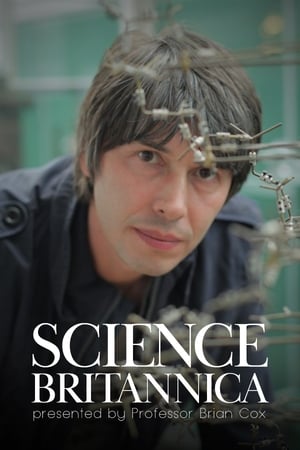
Professor Brian Cox embarks on a mission to guide viewers through 350 years of British science, laying bare what science really is, who the people are who practise it, and how it connects to the past, present and future of each of us.
Providing a thought-provoking and imaginative perspective on scientific discovery as it unfolds, each episode follows scientific explorers working on cutting-edge projects with breakthrough potential, revealing the world of tomorrow... today.
Staf and Mathias Coppens make their body available for you! Staf and Mathias try to answer all your questions with their bodies.
Scientists, researchers, and entrepreneurs are revolutionizing the way people see, touch, taste, hear, and smell with cutting-edge advances in technology.
Tour de force