Oskar Kokoschka : Portraits européens
For three and a half centuries, from the same day that Diego Velázquez (1599-1660) applied his last brushstroke to the canvas, the enigma of “Las meninas, o La familia de Felipe IV” (1656) has not been deciphered. The secret story of a painting unveiled as if it was the resolution of a perfect crime.
Ady Steg, un parcours juif, une histoire française
Documentary about Queen Elizabeth Square, Sir Basil Spence's block of Brutalist style flats built to replace the Gorbal's tenements in Glasgow during the 1960s. His vision was based on architect Le Corbusier's ideas and inspired him to transform the Gorbals into a Modernist Utopia. The film is about the life and times of one building told by some of the people involved in its history. The block was dynamited in 1993 amidst controversy and the death of a spectator. It is mentioned in Pevsner's Notable Buildings of Britain. This film was shown on BBC Scotland's Ex-S strand in 1993. Produced by May Miller and directed by Conrad Blakemore. This film is posted for educational and research purposes only and is copyright of BBC Scotland. Archive material courtesy of the Scottish Film Archive and the film's contributors.
Paris : Les Lieux secrets de l'occupation
Jacques Villeret, drôlement tragique
As Russian writer Boris Pasternak (1890-1960) thinks it is impossible that his novel Doctor Zhivago is published in the Soviet Union, because it supposedly shows a critical view of the October Revolution, he decides to smuggle several copies of the manuscript out of the country. It is first published in 1957 in Italia and the author receives the Nobel Prize in Literature in 1958, which has consequences.
A look at legendary Japanese animator Hayao Miyazaki following his retirement in 2013.
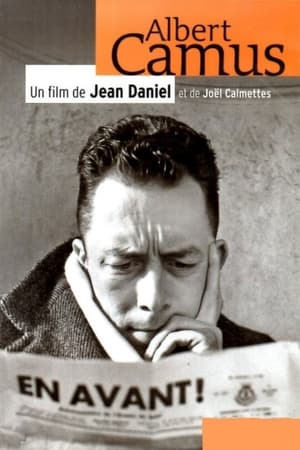
Maria Casarès, a theatre actress and Albert Camus, one of the most important modern french writer, keep a long correspondence (more than 900 letters) about their love and the emotions they feel for each other for 15 years.
Balavoine, enquête sur un destin tragique
An intimate look at the Woodstock Music & Art Festival held in Bethel, NY in 1969, from preparation through cleanup, with historic access to insiders, blistering concert footage, and portraits of the concertgoers; negative and positive aspects are shown, from drug use by performers to naked fans sliding in the mud, from the collapse of the fences by the unexpected hordes to the surreal arrival of National Guard helicopters with food and medical assistance for the impromptu city of 500,000.
IDFA and Canadian filmmaker Peter Wintonick had a close relationship for decades. He was a hard worker and often far from home, visiting festivals around the world. In 2013, he died after a short illness. His daughter Mira was left behind with a whole lot of questions, and a box full of videotapes that Wintonick shot for his Utopia project. She resolved to investigate what sort of film he envisaged, and to complete it for him.
Yves Montand would have been 100-years-old in 2021. A journey through the 20th century by the son of an Italian immigrant who reached the peak of his art and popularity. The song, the cinema, the commitments, a film all in archives.
An account of the life and work of the Polish writer Stanisław Lem (1921-2006), a key figure in science fiction literature involved in mysteries and paradoxes that need to be enlightened.
Tony Curtis, the man who influenced Elvis Presley and James Dean. A sex symbol, a matinee idol, a powerful and magnetic actor, Tony Curtis was the original movie star.
Semjon Byčkov
Eldar Ryazanov reads his poetry. An introspective movie on his multifaceted work.
Born in 1932, Keiko Kishi has been one of the first Japanese actresses known worldwide. Her decision to move to France and to marry director Yves Ciampi in 1957 – after he filmed her in Typhoon Over Nagasaki starring Jean Marais and Danielle Darrieux – caused a huge scandal in Japan. Despite this transgression, Keiko Kishi continued acting in her home country with Kon Ichikawa, Yasujiro Ozu, Masaki Kobayashi… building unique bridges between Japanese and European cultures. Free and rebellious, she emancipated herself from the many obstacles she encountered in the film industry, and created her own production company in her early twenties. Let’s look back at the story of a pioneer, an inspiration for many generations.
Indifferent landscapes, refracting light, some lonely bird and the window to the sebum-laden living room made of patterned wallpaper and trivialities. Cut. Tenacious sequences inflate moments to cliff-hangers and shatter their tremulous spectatorship. Thundering leitmotifs – in constant intoxication by German disinterest – with no backrest or lederhosen. Black-red-gold at full mast, the cinema is dead.
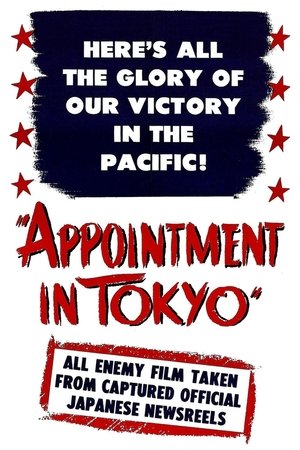
Produced by the Army Pictorial Service, Signal Corps, with the cooperation of the Army Air Forces and the United States Navy, and released by Warner Bros. for the War Activities Committee shortly after the surrender of Japan. Follow General Douglas MacArthur and his men from their exile from the Philippines in early 1942, through the signing of the instrument of surrender on the USS Missouri on September 1, 1945. Preserved by the Academy Film Archive in 2013.