Nearly a decade in the making, The House We Lived In is a strikingly candid portrait of a family transformed by a father’s brain injury. In 2011, 61-year-old Tod O’Donnell awoke from a coma with a case of total amnesia that doctors assured his wife and children was temporary. But when it proved permanent, and for no discernible reason, the O’Donnell’s were left to themselves to untangle the mystery — a struggle for answers that would only raise more questions as they came to realize, painfully, that the real mystery was Tod himself.
Chelsea Bledsoe and her husband Graig throw a surprise intervention for her old high school boyfriend, Henry, with a mismatched group of acquaintances from back in the day to fill out the guest list.
A deeply moving portrait of an architect tested by the impossible choices between career, country and motherhood
What happens when your child comes out to you? In this feature documentary, parents of lesbian, gay, bisexual and trans-gender individuals in Turkey intimately share their experiences with the viewer, as they redefine what it means to be parents in this conservative society.
A journey through a century of Ambrosoli family history.
What it is like to have a younger sibling
In this modern, coming of age documentary, Naomi, Jojo and Arham grapple with economic divides, gender roles, and family dynamics while competing in the fastest growing high school sport in the country: girl’s wrestling.
Jason Momoa's story of fatherhood, craftsmanship, and the legacy he'll leave behind.
An Oscar nominated documentary about a middle-class American family who is torn apart when the father Arnold and son Jesse are accused of sexually abusing numerous children. Director Jarecki interviews people from different sides of this tragic story and raises the question of whether they were rightfully tried when they claim they were innocent and there was never any evidence against them.
Filmmaker Kimi Takesue captures the cadence of daily life for Grandpa Tom, a retired postal worker born to Japanese immigrants to Hawai’i in the 1910s. Amidst the solitude of his home routines — coupon clipping, rigging an improvised barbecue, lighting firecrackers on the New Year — we glimpse an unexpectedly rich inner life.
Agricultural scientist and mother Isolde struggles with the dicrepancies between her personal convictions and the political realities in East Germany.
Junha is one of the most difficult children at the school. His autism causes him to attack his classmates and even teachers without warning. Each outburst further isolates Junha from his community as his teachers and peers struggle to find a way to live "with" Junha. The camera provides an intimate look into this society, leaving the question; what is human entity and how is it connected?
Thomas Haemmerli is about to celebrate his fortieth birthday when he learns of his mother's death. A further shock follows when he and his brother Erik discover her apartment, which is filthy and full to bursting with junk. It takes the brothers an entire month to clean out the place. Among the chaos, they find films going back to the 1930s, photos and other memorabilia.
In Uganda, AIDS-infected mothers have begun writing what they call Memory Books for their children. Aware of the illness, it is a way for the family to come to terms with the inevitable death that it faces. Hopelessness and desperation are confronted through the collaborative effort of remembering and recording, a process that inspires unexpected strength and even solace in the face of death.
What would your family reminiscences about dad sound like if he had been an early supporter of Hitler’s, a leader of the notorious SA and the Third Reich’s minister in charge of Slovakia, including its Final Solution? Executed as a war criminal in 1947, Hanns Ludin left behind a grieving widow and six young children, the youngest of whom became a filmmaker. It's a fascinating, maddening, sometimes even humorous look at what the director calls "a typical German story." (Film Forum)
World-renowned Drag Queen Miz Cracker helps a Texas family that’s experiencing strange occurrences after renovating their 1892 home. As a lover of the paranormal, can Miz Cracker solve their ghost problem and help them coexist peacefully with the spirits?
In the table that symbolizes the value of traditional women, a woman who wants to break free from her family must face her daughter.
An Austrian director followed five successful African music and dance artists with his camera and followed their lives for a year. The artists, from villages in Ghana, Gambia and Congo, were the subjects of Africa! Africa! touring across Europe, but they have unbreakable roots to their homeland and their families. Schmiderer lovingly portrays his heroes, who tell their stories about themselves, their art and what it means to them to be African with captivating honesty. The interviews are interwoven with dance scenes and colourful vignettes set to authentic music.
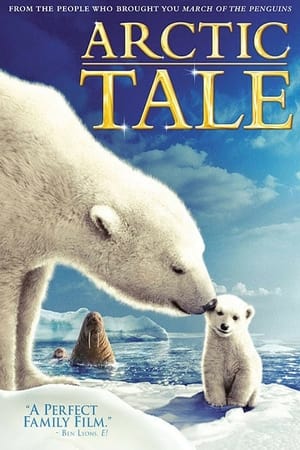
Arctic Tale is a 2007 documentary film from the National Geographic Society about the life cycle of a walrus and her calf, and a polar bear and her cubs, in a similar vein to the 2005 hit production March of the Penguins, also from National Geographic.
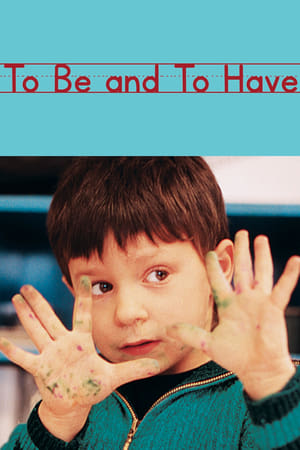
The documentary's title translates as "to be and to have", the two auxiliary verbs in the French language. It is about a primary school in the commune of Saint-Étienne-sur-Usson, Puy-de-Dôme, France, the population of which is just over 200. The school has one small class of mixed ages (from four to twelve years), with a dedicated teacher, Georges Lopez, who shows patience and respect for the children as we follow their story through a single school year.