A portrait of American actress Uma Thurman, muse of legendary filmmaker Quentin Tarantino and courageous voice for the many victims of despotic producer Harvey Weinstein.
On February 26, 1920, Robert Wiene's world-famous film The Cabinet of Dr. Caligari premiered at the Marmorhaus in Berlin. To this day, it is considered a manifesto of German expressionism; a legend of cinema and a key work to understand the nature of the Weimar Republic and the constant political turmoil in which a divided society lived after the end of the First World War.
After an absence of five years, six times Mr Olympia winner Arnold Schwarzenegger makes a comeback and attempts to take the World Body Building Championship for the 7th time.
Marie-Jo
A chronicle of the production problems — including bad weather, actors' health, war near the filming locations, and more — which plagued the filming of Apocalypse Now, increasing costs and nearly destroying the life and career of Francis Ford Coppola.
The extraordinary life and career of the Russian chess grandmaster Garry Kasparov, a brilliant and charismatic, but also rebellious, favorite son of the Soviet Union.
An hour-long discussion between Fritz Lang and Jean-Luc Godard in which they discuss a variety of art forms, the role of the cinema, their collaboration together, and much more. (Filmed in 1964 but released for TV in 1967.)
A unique celebration of the Queen's ninety years as she reaches her landmark birthday in April. Film-maker John Bridcut has been granted special access to the complete collection of Her Majesty's personal ciné films, shot by the Duke of Edinburgh and the Queen herself, as well as by King George VI and Queen Elizabeth The Queen Mother. Much of it has never been seen publicly before. Various members of the Royal Family are filmed watching this private footage and contributing their own personal insights and their memories of the woman they know both as a member of their own close family and as queen. Among those taking part are the Prince of Wales, the Duke of Cambridge, Prince Harry, the Princess Royal, the Duke of Kent and his sister Princess Alexandra, who has never before given an interview.
Over six decades, Richard Demarco CBE, the Scottish artist and iconic promoter has brought 1000s of artists to the Edinburgh Festival and launched the careers of some of the most famous names in contemporary art. Yet today, Demarco struggles to make ends meet and is out of favour with the modern art wold. The film discusses how art has been commodified in society by dominant forces. How can society remedy the absence of art in the lives of those who feel excluded? Demarco wants to put this right before his final breath!
A full on examination of the two presidential terms of Carlos Andres Perez in which he led the venezuelan fates: 1974-1979 and 1989-1993, known respectively as "La Gran Venezuela" and "El Gran Viraje". Two models of government that, separated by ten years, were very different but produced a change in the history of the country.
Roman Polanski hasn't given an interview for many years. However, in the conversation from 2006 with the author Pierre-André Boutang, illustrated with numerous film clips and archives, the filmmaker provides insights into his life and work.
A childhood in boarding school, volunteered at 17 for the war and dismissed for indiscipline, thug in Marseille turned gigolo in Paris, he became actor thanks to some inspired women. Then flying high, fast and far, thanks to his director masters René Clément, Luchino Visconti & Jean-Pierre Melville.
Elem Klimov's tribute to his late wife, director Larisa Shepitko, killed in a car accident a year earlier. Features excerpts from all of her films, and archival audio of her discussing life and art.
The first part of this series by Norman McLaren deals only with tempo. It starts by showing the disc travelling in one move (1/24 of a second) from A to B, and progressively demonstrates slower and slower tempos.
The background and career of Tony Parker, whose determination led him to become arguably the greatest French basketball player.
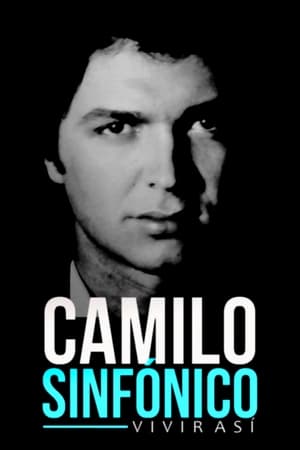
Although he is unanimously credited with having democratised opera, making it accessible to the greatest number, focus is rarely put on the strategy he devised and implemented in order to carry out his actions, nor what his actions reveal of the man and artist, and of the resulting metamorphosis from opera singer to pop artist. Through this angle, this film sets out to pay tribute to the man who summed up his credo, obsession and life’s work, in the following way: “They led the public to believe that classical music belonged to a restricted elite. I was the way to prove to the world that was wrong.
While Rodman is no doubt one of the greatest talents in NBA history, he is just as famous for his off-court exploits. 30 for 30 explores the reasons behind him becoming the character he is known as today.
In the late sixties, Spanish cinema began to produce a huge amount of horror genre films: international markets were opened, the production was continuous, a small star-system was created, as well as a solid group of specialized directors. Although foreign trends were imitated, Spanish horror offered a particular approach to sex, blood and violence. It was an extremely unusual artistic movement in Franco's Spain.
Documentary about filmmakers of the New German Cinema who were members of the legendary Filmverlag für Autoren (Film Publishing House for Authors). Among them are Werner Herzog, Rainer Werner Fassbinder, and Wim Wenders.
Martin Scorsese’s electrifying concert documentary captures The Rolling Stones live at New York’s Beacon Theatre during their A Bigger Bang tour. Filmed over two nights in 2006 with an all-star team of cinematographers, the film combines dynamic performances with archival footage and rare glimpses behind the scenes, offering a vibrant portrait of the band’s enduring energy and legacy.