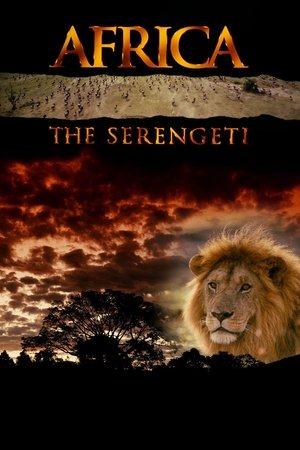
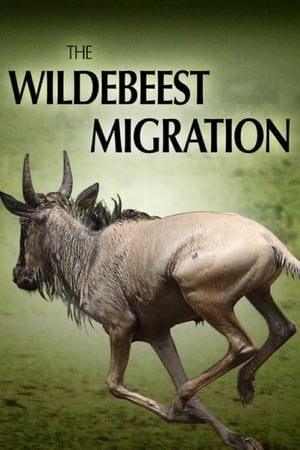
Africa the Serengeti takes you on an extraordinary journey to view a spectacle few humans have ever witnessed: The Great Migration. Journey with more than two million wildebeests, zebras and antelopes as in their annual 500 mile trek across the Serengeti plains.
This shows physicist Stephen Hawking's life as he deals with the ALS that renders him immobile and unable to speak without the use of a computer. Hawking's friends, family, classmates, and peers are interviewed not only about his theories but the man himself.
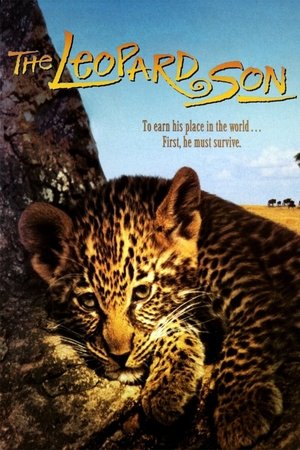
The true story of the birth, growth and coming of age of a leopard cub in Africa's Serengeti plain. The journey of "The Leopard Son" begins at his mother's side where he discovers, through play, essential skills for survival in the wild. As it is with humans, there inevitably comes the day when a child must leave his mother to go out on his own.
A documentary that paints a remarkable picture of America and how the rise of civic and economic reinvention is transforming small cities and towns across the country. Based on journalists James and Deborah Fallows' book Our Towns: A 100,000-Mile Journey into the Heart of America, the film spotlights local initiatives and explores how a sense of community and common language of change can help people and towns find a different path to the future.
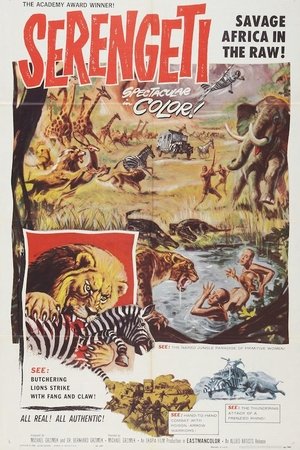
The film tells of the beginnings of the Serengeti National Park in Tanzania. At the end of the 1950s, the Tanzanian National Park Administration wanted to fence in the protected area around the Ngorongoro Crater. Bernhard and Michael Grzimek were invited by the national park administration in 1957 to get a precise picture of the animal migrations and to provide the national park administration with the values they needed for their project. Using a new counting method with two airplanes, the Grzimeks found out that the migration of the herds was different than assumed.
When Peter Wohlleben published his book "The Hidden Life of Trees" in 2015, he quickly entered bestseller lists. The forester wrote vividly about his experience that trees are able to communicate with each other, a thesis explored here.
In August 1969, Charles Manson's followers killed seven people on his orders. Why? Explore a conspiracy of mind control, CIA experiments, and murder.
During the worst days of World War II, the British government asks the mathematician Alan Turing to unravel the mysteries of the German Enigma encryption machine, an impossible task to accomplish without the invaluable information that Hans-Thilo Schmidt, a disenchanted but greedy German citizen, had been handing over to the French secret services since 1931.
On October 12th, 1978, New York Police discovered the lifeless body of a young woman, slumped under the bathroom sink in a hotel room. She was Nancy Spungen, an ex-prostitute, sometimes stripper, heroin addict, and girlfriend of Sex Pistols' bassist Sid Vicious.
This documentary outlines the unique properties and latest studies of "Physarum Polycephalum", also known as Blob.
Inspired by the book of the same name, film-maker James Marsh relays a tale of tragedy, murder and mayhem that erupted behind the respectable facade of Black River Falls, Wisconsin in the 19th century.
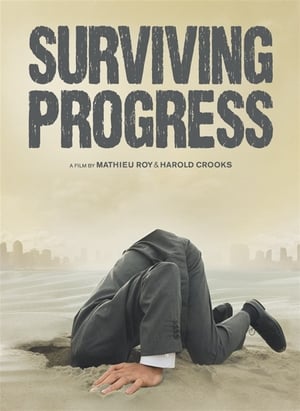
Humanity’s ascent is often measured by the speed of progress. But what if progress is actually spiraling us downwards, towards collapse? Ronald Wright, whose best-seller, “A Short History Of Progress” inspired “Surviving Progress”, shows how past civilizations were destroyed by “progress traps”—alluring technologies and belief systems that serve immediate needs, but ransom the future. As pressure on the world’s resources accelerates and financial elites bankrupt nations, can our globally-entwined civilization escape a final, catastrophic progress trap? With potent images and illuminating insights from thinkers who have probed our genes, our brains, and our social behaviour, this requiem to progress-as-usual also poses a challenge: to prove that making apes smarter isn’t an evolutionary dead-end.
Vincenz Priessnitz
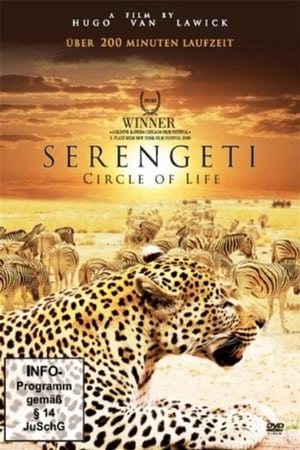
Main subject of Serengeti is the mass migration of wildebeest , which in search of nutritious grass hundreds of kilometers annually by the savannah draw. At the end of the rainy season, they break into a huge herd of over a million animals on the north. The wildebeest and other animals are joining the migration, as zebras and gazelles , continuously exposed to hazards, particularly by predators such as lions and cheetahs . A highlight of the great migration, the crossing of the Mara is: There, the wildebeest have to overcome not only meter high cliffs, they are also crocodiles delivered. With the onset of the rainy season, however, leave the wildebeest north again what had long been a mystery. The reason for this is that the grass in the north a phosphorus deficiency , and said thus wildebeest forces to retreat to the south.
Bertie arrives in the Serengeti as the spectacular wildebeest migration kicks off. He’s here to film the fastest land animal on Earth: the cheetah. As he gets close to a mother caring for her tiny cubs and a young group of males executing phenomenal hunts as a team, he learns about the unexpected challenges the species endures.
A young couple battle entrenched tradition and hostile forces to bet on nature for the future of their failing, four-hundred-year-old estate. Ripping down the fences, they set the land back to the wild and entrust its recovery to a motley mix of animals both tame and wild, beginning a grand experiment.
Based upon the Gold-Medallion award-winning best-seller, The Case for Christ documents Lee Strobel's journey from atheism to faith through his two-year investigation of the Bible and the life of Jesus Christ.
Norwegian researcher Petter Amundsen claims to have deciphered a secret code hidden in legendary playwright William Shakespeare's works that reveals a map leading to the location of certain treasures. British Shakespearean scholar Robert Crumpton embarks on a mission to prove he is spectacularly wrong. (A remake of “Shakespeare: The Hidden Truth,” including new discoveries.)
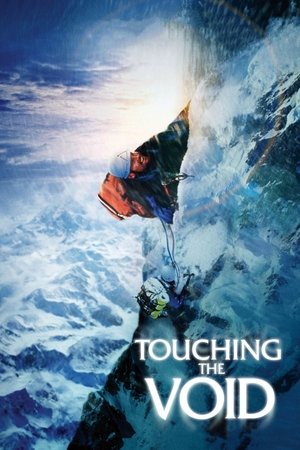
The true story of Joe Simpson and Simon Yates' disastrous and nearly-fatal mountain climb of 6,344m Siula Grande in the Cordillera Huayhuash in the Peruvian Andes in 1985.
The chronicle of the process, ten long years, that led to the end of ETA (Euskadi Ta Askatasuna), a Basque terrorist gang that perpetrated robberies, kidnappings and murders in Spain and the French Basque Country for more than fifty years. Almost 1,000 people died, but others are still alive to tell the story of how the nightmare finally ended.