Combining real footage, archival footage, fiction and 3D modeling, this unseen documentary traces the history of this spectacular and unfinished work.
Pražský hrad
The construction of the Obelisco in Buenos Aires, Argentina.
Vladimir 518, uncompromising rapper, artist, stage designer and activist, is a rare phenomenon, who not only writes books, but publishes them as well. Today also a respected authority primarily on pre-1989 architecture, he has written not only a major publication on the subject, but also the story for two audiovisual works treating the same theme, which were shot by Jan Zajíček, renowned director of music videos. In addition to the recent TV series we have the eagerly anticipated feature-length film which, through its fascinating and impressive exploration of Czech and Slovak architecture of the latter half of the 20th century, offers exclusive insight into extraordinary buildings and unique individuals living below the Tatra Mountains. Karel Och (kviff.com)
An intimate portrait of Christopher Alexander, a critic of modern architecture on a lifelong quest to build harmonious, livable places in today’s world. The film tells the story of two projects – a spectacular high school in Japan and an innovative homeless shelter in California. For Alexander, feelings come first, users are deeply engaged and process is paramount. We discover what happens when an architect’s unconventional method collides with standard practices in his profession.
What’s it like to dedicate your life to work that won’t be completed in your lifetime? Fifteen years ago, filmmaker David Licata focused on four projects and the people behind them in an effort to answer this universal question.
How can structures, which take up defined, rigid portions of space, make us feel transcendence? How can chapels turn into places of introspection? How can walls grant boundless freedom? Driven by intense childhood impressions, director Christoph Schaub visits extraordinary churches, both ancient and futuristic, and discovers works of art that take him up to the skies and all the way down to the bottom of the ocean. With the help of architects Peter Zumthor, Peter Märkli, and Álvaro Siza Vieira, artists James Turrell and Cristina Iglesias, and drummer Sergé “Jojo” Mayer, he tries to make sense of the world and decipher our spiritual experiences using the seemingly abstract concepts of light, time, rhythm, sound, and shape. The superb cinematography turns this contemplative search into a multi-sensory experience.
Funkiskungen
The Richardson Olmsted Campus, a former psychiatric center and National Historic Landmark, is seeing new life as it undergoes restoration and adaptation to a modern use.
In 1919 an art school opened in Germany that would change the world forever. It was called the Bauhaus. A century later, its radical thinking still shapes our lives today. Bauhaus 100 is the story of Walter Gropius, architect and founder of the Bauhaus, and the teachers and students he gathered to form this influential school. Traumatised by his experiences during the Great War, and determined that technology should never again be used for destruction, Gropius decided to reinvent the way art and design were taught. At the Bauhaus, all the disciplines would come together to create the buildings of the future, and define a new way of living in the modern world.
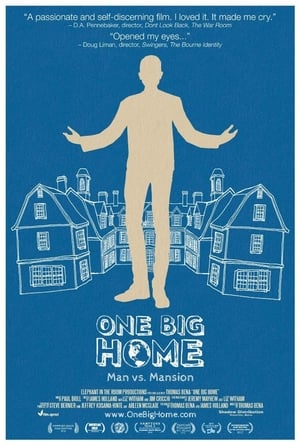
On the tiny island of Martha's Vineyard, where presidents and celebrities vacation, trophy homes threaten to destroy the islands unique character. Twelve years in the making, One Big Home follows one carpenters journey to understand the trend toward giant houses. When he feels complicit in wrecking the place he calls home, he takes off his tool belt and picks up a camera.
Catalan architect Antonio Gaudí (1852-1926) designed some of the world's most astonishing buildings, interiors, and parks; Japanese director Hiroshi Teshigahara constructed some of the most aesthetically audacious films ever made. With camera work as bold and sensual as the curves of his subject's organic structures, Teshigahara immortalizes Gaudí on film.
With the construction of the Indian planned city of Chandigarh, the Swiss and French architect Le Corbusier completed his life's work 70 years ago. Chandigarh is a controversial synthesis of the arts, a bold utopia of modernity. The film accompanies four cultural workers who live in the planned city and reflects on Le Corbusier's legacy, utopian urban ideas and the cultural differences between East and West in an atmospherically dense narrative.
A history of Bucharest, as seen in the light of the totalitarian architecture, having as leading idea the reality that the Power always exposes its purposes through architecture. After five decades of communism, the reality on thee Dark Ages is still waiting to be revealed, and architecture is one of the most obvious embodiments of the ideology to whom it was builtÉ It is not a movie about faults or about guilty peoples, but about official edifices of thee communist Romania and their story.
Nicknamed “Architect to the Stars,” African American architect Paul R. Williams had an incredible life. Orphaned at the age of four, Williams grew up to build mansions for movie stars and millionaires in Southern California. From the early 1920s until his retirement 50 years later, Williams was one of the most successful architects in the country. His clients included Frank Sinatra, Cary Grant, Barbara Stanwyck, William Holden, Lucille Ball and Desi Arnaz. His name is associated with icons like the Beverly Hills Hotel, the original MCA Headquarters Building and LAX Airport. But at the height of his career Paul Williams wasn’t always welcome in the restaurants and hotels he designed or the neighborhoods where he built homes, because of his race. “Hollywood’s Architect: The Paul R. Williams Story” tells the compelling, but little known story, of how he used talent and perseverance to beat the odds and create a body of work that can be found from coast to coast.
A documentary focusing on the rebuilding projects in Berlin after the fall of the Berlin Wall.
Rising sea levels and sinking land threaten to destroy Venice. Leading scientists and engineers battling the forces of nature to try to save this historic city for future generations. Discover the innovative projects and feats of engineering currently underway, including a hi-tech flood barrier, eco-projects to conserve the lagoon, and new efforts to investigate erosion beneath the city.
In the same vein as Meri's other documentations, this one takes advantage of the glasnost policy to discuss the social and ecologic impact of the Russian oil industry on the natives and the lands they inhabit.
What started as a simple tomb became over a 2,000 years history the universal seat of Christendom and is today one of the most visited museum in the world with invaluable collections of Arts, Manuscripts, Maps. Using spectacular 3D modelisation and CGI to give viewers as never before a true understanding of the history of this architectural masterpiece and its extensions, the film will also use animation to tell relevant historical events. This heritage site reveals new untold secrets with the help of historians deciphering the Vatican’s rich archives and manuscripts collection and following the restorations at work (newly discovered frescoes by Raphael) and recent excavations. A story where Religion, Politics, Arts and Science meet to assert religious authority and serve as a spiritual benchmark.
Castiglione d'Otranto, in the South of Italy. A group of thirty-year-olds no longer accept that the solution to the economic, ecological and political problems of the territory is always "to leave". They propose to the villagers who own pieces of uncultivated land, often felt as a burden, to put them in common. They decide to stay, to link their lives to the land and to invest in a value: being together. Castiglione becomes the village of restance. They cultivate ancient seeds and local biodiversity, they make decisions together, they develop a local economy. Accepting the shadows of the past, another potential of the place is rediscovered.