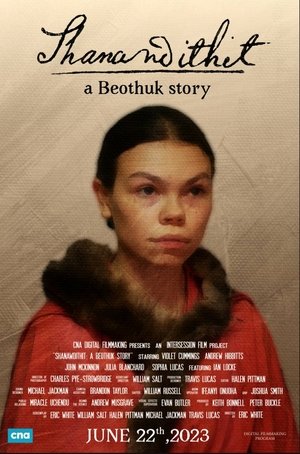
In New France before the British Conquest, Marie, an indigenous slave, serves the local surgeon. Her daily life of household chores is bleak and alienating. The encounter with a young girl she presumes to be her child will give her motivation to undertake radical actions.
Two brothers, one of whom suffers from a traumatic brain injury, struggle to survive on their own.
In the midst of one of the most significant moments in human history - the Moon landing - a guy working at a NASA warehouse has his own little passion project: the invention of the first urinal net.
Le Bataillon du Pacifique
Working men and women leave through the main gate of the Lumière factory in Lyon, France. Filmed on 22 March 1895, it is often referred to as the first real motion picture ever made, although Louis Le Prince's 1888 Roundhay Garden Scene pre-dated it by seven years. Three separate versions of this film exist, which differ from one another in numerous ways. The first version features a carriage drawn by one horse, while in the second version the carriage is drawn by two horses, and there is no carriage at all in the third version. The clothing style is also different between the three versions, demonstrating the different seasons in which each was filmed. This film was made in the 35 mm format with an aspect ratio of 1.33:1, and at a speed of 16 frames per second. At that rate, the 17 meters of film length provided a duration of 46 seconds, holding a total of 800 frames.
Az I. Világháború: Az európai frontok nagy csatái
Jesus tries to impress at the Last Supper with some miracles but his final parlor trick does not end the way he would like.
Thread: My Rose is the 1st part of the Sequel: Thread
While on a seemingly routine delivery run for the Brigadier, Benton finds himself close to his childhood home, where ghosts from his past have never rested easily… Trapped in a nightmare world where past and present are one, will he be lost forever or can he fight his way back to reality, where he is desperately needed?
Amidst the horror and chaos of war, two enemies are forced into an unholy alliance in the battle for survival.
Set in 1944. A battle in the french countryside leaves a German soldier alone to bury his fallen comrades. He is attacked by a lone American paratrooper and the two do battle around a country manor house, in a tense game of cat and mouse
Filmmaker Alain Resnais documents the atrocities behind the walls of Hitler's concentration camps.
"In 1904, disgusted by the aftermath of the Spanish-American War and the subsequent Philippine-American War, Mark Twain wrote a short anti-war prose poem called "The War Prayer." His family begged him not to publish it, his friends advised him to bury it, and his publisher rejected it, thinking it too inflammatory for the times. Twain agreed, but instructed that it be published after his death, saying famously: None but the dead are permitted to tell the truth."
A female Australian soldier cut off from her team, lies trapped in a collapsed building behind enemy lines. With a broken leg and minimal supplies, she is on her own until the unlikely arrival of a frightened 10 year old boy wielding a rifle, who helps her maintain survival through their developing friendship.
On the London Underground, a young man relives past traumas as he endures the sensory overload of rush hour, only to look up and see a young woman at the end of the carriage going through the same PTSD symptoms. Their recognition of each other's condition allows them a moment of peace before the train jolts them back into reality and she disappears at the next platform.
In 1974, a soldier, having now returned home, is haunted by shadows from the past, but are they just in his mind?
During the reign of Oliver Cromwell, Catholic worship is forbidden on pain of death. Three soldiers are arrested as Catholics and condemned to die. Cromwell decides to spare two of them and to determine which should die by chance. The guards bring the first child they meet. Whichever soldier she gives the 'death disc' to shall die. Cromwell is charmed by the girl and gives her his signet ring. By chance the child is the daughter of one of the soldiers and gives the death disc to her father, because she thinks it's pretty. The child is returned home to her mother, who learns of her husband's pending execution and of the power of the ring. She rushes to the place of execution and saves her husband by producing the ring.
The American submarine is rushing to the intended target, from where the U.S. ballistic missiles are shot. For the third month the boat has been on a cruise, everyone is tired of this life, the captain is nervous - the speed is at the limit of the machine's capabilities. Only the chief mate, the only person on the boat who will not hesitate to press the fatal button, feels confident ... When the target is only minutes away, the radio operator raises the alarm: the Moscow radio announces that an important government message is about to be announced. The base is silent. Fearing that war has broken out, the captain declares combat readiness, but at the same time Moscow radio reports the launch of the world's first cosmonaut.
Near the end of World War II, Gen. Dietrich von Choltitz receives orders to burn down Paris if it becomes clear the Allies are going to invade, or if he cannot maintain control of the city. After much contemplation Choltitz decides to ignore his orders, enraging the Germans and giving hope to various resistance factions that the city will be liberated. Choltitz, along with Swedish diplomat Raoul Nordling, helps a resistance leader organize his forces.
The Bokelberg photographic collection brings to life the Paris of the Belle Époque (1871-1914), an exhibition of workshops and stores with extremely beautiful shop windows before which the owners and their employees proudly pose, hiding behind their eyes the secret history of a great era.