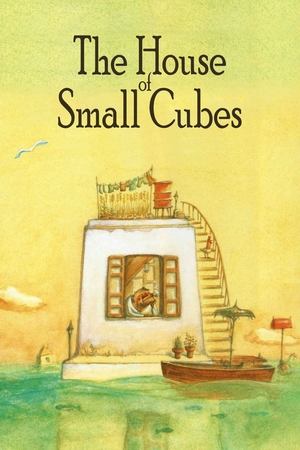
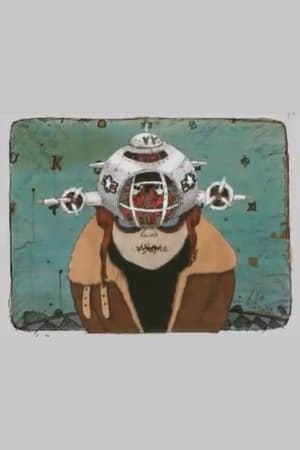
La Maison en Petits Cubes tells the story of a grandfather's memories as he adds more blocks to his house to stem the flooding waters.
An anthology of one-minute films created by 51 international filmmakers on the theme of the death of cinema. Intended as an ode to 35mm, the film was screened one time only on a purpose-built 20x12 meter public cinema screen in the Port of Tallinn, Estonia, on 22 December 2011. A special projector was constructed for the event which allowed the actual filmstrip to be burnt at the same time as the film was shown.
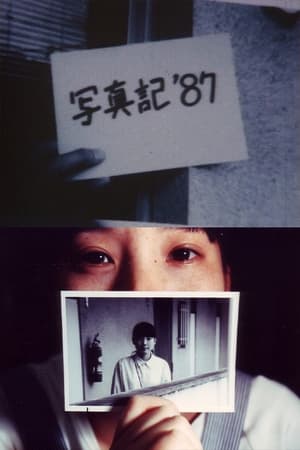
I turned my gaze to the various events in daily life and made this filmic diary in a manner as if confessing my feelings. Of course, since I was making the film, I wanted to depict these feelings and events with tricky techniques. I used various methods to shoot photographs of a relative's wedding, the landscape I see from window of my house, commemorative travel photographs and the like frame-by-frame.
The emotion of people easily changes. It is not easy to define what emotion is. We just feel it. To feel emotion is like to observe nature because nature always changes by time, sun, and wind. When we observe nature, the nature tries to say what our emotion is because the nature leaves the trace of emotion.
"My last image of Jonas."—Ken Jacobs
Creeping from the halls of the maze brain, corruption and terror is woven by devils born from the denied errors of mankind.
Hand painted directly onto film stock by Margaret Tait, this film features animated dancing figures, accompanied by authentic calypso music.
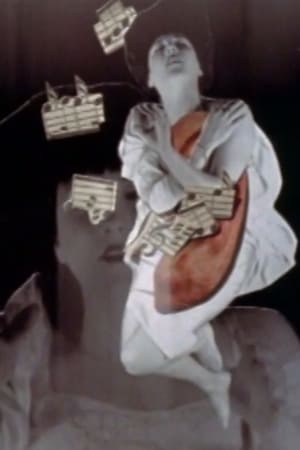
Slow disintegration and aging of artists head, revealing underlying bone structure. Created using old picture-phone technology. New music added in 2013.
Bill struggles to put together his shattered psyche.
Shows a couple (Adam and Eve) and various objects, simultaneously, in time, space and movement.
Untitled / Aubrac
Eye-popping digital moving image work with an equally arresting soundtrack from noise music heavies.
A short film advertising the newspaper Sztandar Młodych (The Banner of Youth), noteworthy for its abstract elements painted directly onto film stock. An attempt at showing the complexity of the world in a capsule, the film reflects the new policy of the openness to the West during the Thaw of the late 1950s in Poland.
Initially commissioned to accompany a Danish production of Alban Berg’s LULU, Lewis Klahr’s cut-out animation refigures the opera's themes in a torrent of images. With an ever-inventive approach to color and symbol, Klahr distills the title character's moral predicament, along with a great many of German Expressionism’s characteristic motifs, in the span of a pop song.
“The changing dots, ectoplasmic shapes and electronic music of L. Schwartz’s ‘Mutations’ which has been shot with the aid of computers and lasers, makes for an eye-catching view of the potentials of the new techniques.” – A. H. Weiler, N. Y. Times
Movimiento Browniano
Vela
PUEDO VER TODO MENOS MIS OJOS
Images of two women, two men, and a gray cat form a montage of rapid bits of movement. A woman is in a bedroom, another wears an apron: they work with their hands, occasionally looking up. A man enters a room, a woman smiles. He sits, another man sits and smokes. The cat stretches. There are close-ups of each. The light is dim; a filter accentuates red. A bare foot stands on a satin sheet. A woman disrobes. She pets the cat. Preserved by the Academy Film Archive in 2006.
Seemingly at random, the wings and other bits of moths and insects move rapidly across the screen. Most are brown or sepia; up close, we can see patterns within wings, similar to the veins in a leaf. Sometimes the images look like paper cutouts, like Matisse. Green objects occasionally appear. Most wings are translucent. The technique makes them appear to be stuck directly to the film.