A cinematic mountain-bike film. Featuring some of the sports biggest athletes. The ninth feature from award-winning adventure filmmakers Anthill Films. Return to Earth proves that when we lose track of time, we can make the most of it.
It created one of the most memorable days in grand tour history. Riders such as Andy Hampsten and Franco Chioccioli share their extraordinary experience of a day they'll never forget.
The Impossible Hour is a concentrated study of Ole Ritter's attempt in Mexico City in 1974 to set a new record for the hour - described in the film as "the noblest, most difficult record that can be set on a bicycle". A brief retrospective in black and white sets the historical framework, with shots of Ritter and Eddy Merckx' successful record attempts in 1968 and 1972 respectively, and a few words about former record holders such as Fausto Coppi.The film follows Ritter's three record attempts chronologically, which, accompanied by a Mexican marching band on the bandstand, all fail.
Bas Jan Ader rides his bike into a canal in Amsterdam.
In the early morning of a middle summer day of 2013 the ultra-athlete Nico Valsesia reached the summit of Mont Blanc (4810 metres). But Nico wasn’t an alpinist like the many others with him that morning. He conquered the highest summit of Europe after a no-stop riding almost 17h long, started the day before by bicycle from a beach in Genoa. The first Mont Blanc 24 hour record was beaten by Marino Giacometti in 1997 (23hrs) and subsequently by Andrea Daprai in 2008 (18 hrs 58’). From that day on, Nico launched the project “From Zero To…” and continued to add records and summits (Aconcagua, Elbrus, Kilimanjaro). ”Summit” tells all the efforts that Nico and his team have made for making possible this epic challenge.
Bikes for Africa is an entertaining, insightful and moving documentary following the life adventures of Hap Cameron and Mandy Todd, and their attempt to help implement a self sustainable bike workshop in rural Namibia with a container load secondhand donated bikes from Melbourne. The film investigates how a bicycle can fundamentally change the lives of rural Africans, and brings to focus the great works of two-wheeled charities Bicycles for Humanity and the Bicycling Empowerment Network Namibia.
At any given moment hundreds of people are soaring above us in a 747. From the moment the very first jumbo jet took off in 1969, it has been the aircraft against which all others are judged. But its 45-year journey has been anything but smooth. This is the definitive story of the Boeing 747, from its milestones and triumphs to its turning points and disasters. Witness its history through rare archival footage and tales from pilots, engineers, designers, and passengers who were there when it all began.
THE STRAIT GUYS follows Czech-born mining engineer, George, and his fast-talking protégé, Scott, along the proposed route of the InterContinental Railway through Alaska, to the Bering Strait and onward to Russia. The “Strait Guys” endeavor to convince international governments, corporations, and indigenous tribes to green-light their $100 billion railway project, which would provide ground-based infrastructure across the continents, relieve overcrowded Pacific ports, improve global supply chains, and ease tensions between the superpowers. The US and Russia have been successfully collaborating in space for decades. Now the Strait Guys are out to prove it is also possible down here on earth.
In 1988, Tilda Swinton toured round the Berlin Wall on a bicycle - starting and ending at the Brandenburg Gate - accompanied by filmmaker Cynthia Beatt. As Swinton travels through fields and historic neighborhoods, past lakes and massive concrete apartment buildings, the Wall is a constant presence.
Before Lance Armstrong, there was Greg LeMond, who is now the first and only American to win the Tour de France. In this engrossing documentary, LeMond looks back at the pivotal 1986 Tour, and his increasingly vicious rivalry with friend, teammate, and mentor Bernard Hinault. The reigning Tour champion and brutal competitor known as “The Badger,” Hinault ‘promised’ to help LeMond to his first victory, in return for LeMond supporting him in the previous year. But in a sport that purports to reward teamwork, it’s really every man for himself.
This is a conversation starter first, a video second.
In 1998 Marco Pantani, the most flamboyant and popular cyclist of his era, won both the Tour de France and Giro d'Italia, a titanic feat of physical and mental endurance that no rider has repeated since. He was a hero to millions, the saviour of cycling following the doping scandals which threatened to destroy the sport. However, less than six years later, aged just 34, he died alone, in a cheap hotel room, from acute cocaine poisoning. He had been an addict for five years. This is the story of the tragic battles fought by the most important Italian cyclist of his generation; man verses mountain, athlete verses addiction, Marco Pantani verses himself.
The untold story of the halcyon era of women's professional cycling. For six glorious years during the 1980s, the Tour de France held a women's race alongside the men's race. These women raced over the same cobblestones, conquered the same mountains, and were cheered by the same throng of adoring crowds as the men.
800 million units circulate around the globe. It is the largest contributor to air pollution worldwide and accounts for 8,300 deaths every day. And every night it sleeps in your garage.
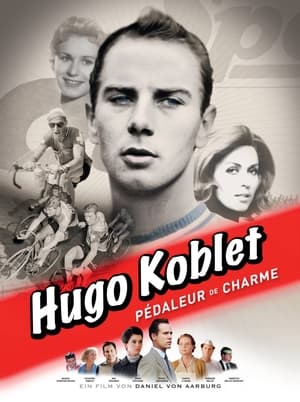
Zurich-born Hugo Koblet was the first international cycling star of the post-war period. He was a stylist on the bicycle and in life, and a huge heartthrob. Koblet had a meteoric rise and won the Giro d'Italia in 1950. Once he had reached the zenith of his career, Koblet was put under pressure by overly ambitious officials and ended up ruining his health with drugs. In 1954, he married a well-known model and they became a celebrity dream couple. After his athletic career ended, Koblet began to lose his footing. Threatened by bankruptcy, he crashed his Alfa into a tree.
Jusqu'où ira Uber ?
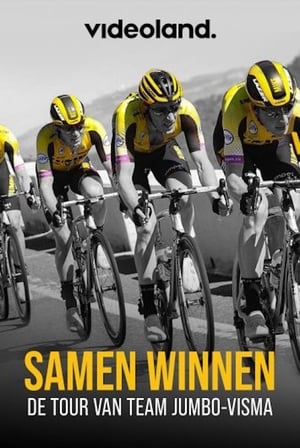
With Tom Dumoulin and Primož Roglič, Team Jumbo-Visma has one big goal in the summer of 2020: to win the Tour de France. For three weeks, the "yellow and black train" can be seen in front of the peloton. Everything seems to be under control. In the last week, Roglič has the leader's jersey firmly around his shoulders and apparently nothing can stand in the way of a victory march on the Champs-Élysées.
The film Together we cycle investigates the critical events that has led to the revival of the Dutch cycling culture. For most people, cycling in the Netherlands, seems a natural phenomenon. However, until the 1970s the development of mobility in the Netherlands followed trents across the globe. The bicycle had had its day, and the future belonged to the car. The only thing that had to be done was to adapt cities to the influx of cars. Then Dutch society took a different turn. Against all odds people kept on cycling. The question why this happened in the Netherlands, has not an easy answer. There are many factors, events and circumstances that worked together, both socially and policy-wise. In Together we cycle, key players tell the story of the bumpy road which led to the current state. Where cycling is an obvious choice for most citizens.
Documentary about the development of the Boeing 747 jumbo jet. The 747 was a game changer, the airliner that revolutionised mass, cheap air travel. But the first wide-bodied plane was originally intended as a stopgap to Boeing's now-abandoned supersonic jet. This is the remarkable untold story of the jumbo, a billion-dollar gamble that pushed 1960s technology to the limits to create one of the world's most recognisable planes.
La bicyclette fait sa vélorution