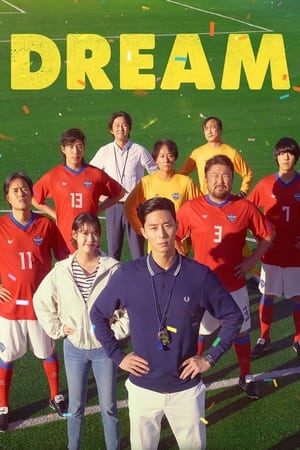
A lonely old man neglected by his family stumbles upon a teenage girl who thinks he may need help. A warm friendship they develop makes his last days the best he ever had.
With hard work and dedication on lock, a group of homeless men trains to compete in a global tournament — despite a cranky coach.
The star player of Icelands top football team causes a stir when he admits to being gay to his team mates and then goes on a journey to discover himself (with the help of the local press). He soon finds himself on the bench for most of his teams matches and decides to call it quits and join a small amateur team made up of men like himself - gay guys trying to play football in a straight world of Icelandic fishing culture machoism
The groundsman of the FC St. Pauli is just about to finish his work, when he suddenly finds a dead fan on the grandstand of the stadium. The ghost of the dead man haunts him and makes him realize, that the motto of the football club is more than just a stadium song: “You’ll never walk alone”.
Ecki is a sweet, closeted gay man who works in his family’s bakery and plays goalie in his small town’s soccer team. When he both loses the big game, and is caught flirting with another player, his homophobic teammates throw him out. He vows to return one day with an all-gay team that will grind the heteros into the dust, so he sets off to find his “dream team.” With the help of his nurse sister, Ecki scours local gay bars and eventually assembles a hilariously motley but endearing crew of misfits that includes a leather-daddy threesome, a femme Turk with Beckham fantasies, a secret straight guy in love with the sister, and a seriously cute nurse eager for some private play-time with the goalie. Ecki now has two problems – turning this bunch into a team, and facing his own fears regarding his first romance.
An African mother will do just about anything to protect her child. Bilaly is a simple peasant who is blind. He wants to “know” a woman before he dies, but try as his mother might, she cannot find someone to oblige. She finally gets an idea – an idea that completely stuns the village.
A dim witted, scrawny fellow from the country finds college full of bullies that trick him into various painful situations with the dean. His wife mistakes him for a prize athlete, and he's put on the football team. The big game includes unusual things like a mud hole on the field and a wasp nest substituting for the ball.
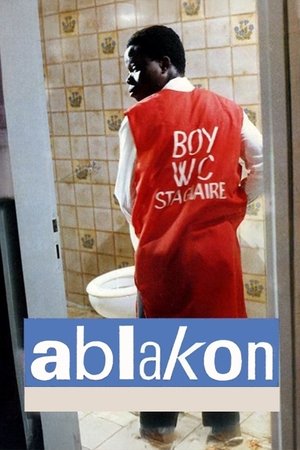
A city with its problems. A gang of abandoned children provide for themselves and pose as heroes. The police are on their backs day and night. They are enterprising, energetic, and full of fresh vitality. Despite the fact they are rejected by their parents and ignored by the world, they form among themselves a powerful example of solidarity. Ablakon is something of a different order. He is an adult delinquent and a swindler. Posing as a businessman, he has deceived a countless number of people. When he and his accomplice return to the village, his extravagant behaviour is mistaken for a sign of success. Following his example many young people leave for the city. But they will soon understand their mistake...
Ali is the image of modern Africa. He happily returns from a football match on his motorbike but a nasty surprise is waiting for him at his parents' home: he finds Haoua, his bride-to-be, waiting for him. The wedding is celebrated shortly afterwards and the two begin living together under the same roof. They are strangers but cannot stand each other. Haoua is the classic traditional woman who has just arrived from the village, God-fearing and faithful to the laws of tradition. Ali's friends advise him to look for a second wife. He meets Henriette, an uninhibited and provocative city girl, the woman of his dreams. To meet Henriette's constant requests, Ali 'borrows' some money from the coffers of commander Soleymane, but he is discovered and ends up in prison. Henriette is furious and leaves him, whilst Haoua cries for him in despair.
The story of Quincy Bosomfield who is the product of colonial education and has risen to become the district commissioner. In the process, he abandons his African heritage and all that has real meaning to him.
Tourneur, a self-proclaimed cinéaste, feuds with Cinema and his gang, who are obsessed with foreign action movies.
Simon Henderson is at boarding school in Canada while his father works in Hong Kong, and his mother lives in England. When his parents visit him in the holidays, Simon discovers that his mother has schizophrenia.
An epic, untold story that brings to life the inspiring saga of the World Cup and the three determined men who created it. Driven by their vision and passion, three men, overcame their doubts and fought obstacles and scandals to make the World Cup a reality. Spanning the tumultuous 20th Century, this timeless saga celebrates the event that became the most popular sporting event in the world.
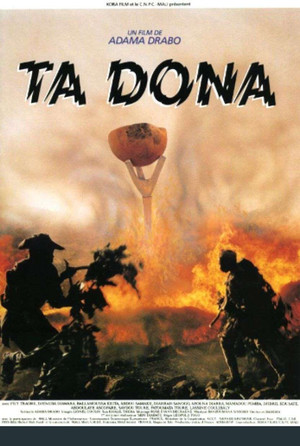
Life in the African country of Mali in the 1990s is vividly highlighted in this mild drama. In the story, a young forest ranger who sees that his work holds the key to the future of his country (through reforestation) is disgusted at the short-sighted, money-grubbing ways of his superiors. He has a much better relationship with local villagers than with his agency's bosses. As the movie opens, the villagers are preparing to hold a hunting ceremony but are not sure whether they will do it the old fashioned way, with a bonfire, or will obey a government decree that open fires are too dangerous. There is a lot of sexual teasing between the villagers, including some harmless horseplay. For instance, when a man whispers another woman's name in his sleep, his wife pours water into his ear in revenge.
A young Ivorian man travels to Paris in search of his white wife and their daughter, after she has returned to France. His journey through the city becomes an account of a mixed marriage and the social tensions surrounding it. The film, Désiré Ecaré's feature debut, unfolds as a satirical comedy set to a score by Memphis Slim.
Young Africans in Paris face insecurity and vague future. Should they stay in France, or return to their homes?
Jenny is hit in the head by a soccer ball. When she comes to, the clock has turned back exactly 32 years! It is June 21, 1974, the year of the football World Cup, one day before the football match between the Federal Republic of Germany and the GDR. Jenny experiences two turbulent days at the side of her future parents - in both parts of Germany.
Koji Nanjo, a young rock star, falls in love with soccer player Takuto Izumi. Koji eventually learns that Izumi's mother killed his father out of severe and intense love. Izumi took all the guilt for his father's murder and refuses to go pro because of fear that his past will be discovered by the media. Izumi detests Koji's company and encouragement and severely dislikes the attention from the press, but Koji cannot stay away for he soon realizes that his love for Izumi is very similar to the love that Izumi's mother felt for his father.
At a festival, a chorus of women sing and dance as two stories unfold. In a village, a young women with a jealous husband gives him something to be jealous about when his younger brother visits from the city.
Rio de Janeiro. Confronted with the violence that exists in the favela where he lives, Tiago sees the only way out to become a soccer player and, in this way, help his family to have a better life. Although he is the best player in his neighborhood and the chances of being discovered by a scout are good, he faces a number of problems. One of them is Tubarão, the leader of the most powerful gang in the favela, who wants Tiago to work for him as a drug dealer. To complicate matters even more, Tiago falls in love with Juliana, Tubarão's sister.