The second version of the American television game show.
Based on the hit UK format, The Cube challenges players with what appear to be simple tasks all to be completed in — you guessed it — a 4m x 4m x 4m perspex cube. The games may sound simple, like bouncing a ball into a bucket within a timeframe, but once the clock starts counting down everything becomes a little bit more tense. Add to that the promise of $250,000 in prize money and you’ll be setting up your own practice Cube at home.
膠戰
The show is divided into several segments, each one offering contestants prizes in return for achieving a set of challenges or game tasks given by the host. The prizes offered range from cars and motorcycles to gold, cash, vacation packages and household items. The show is funded by sponsors, advertisers and commercial brands
In a Temple filled with lost treasures and protected by mysterious Mayan temple guards, six teams of two children compete to retrieve one of the historical artifacts in the Temple by performing physical stunts and answering questions based on history, mythology, and geography. After three elimination rounds, only one team remains, who then earns the right to go through the Temple to retrieve the artifact within three minutes and win a grand prize.
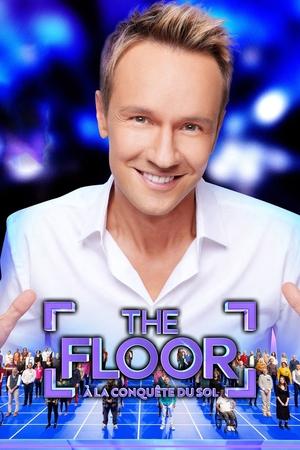
A spectacular battle of the brains quiz show in which 100 contestants stand on 100 squares on a massive game show floor, competing for a whopping $250,000 prize.
Battle Dome was a syndicated American television series that aired from September 1999 to April 2001. It combined elements of American Gladiators - inspired athletic competition with scripted antics more reminiscent of professional wrestling. Recurring character-athletes known as "Warriors" competed against weekly contestants in a variety of physically demanding events. The series was filmed at the Los Angeles Sports Arena and produced by Columbia TriStar Television. The entire first and second season of Battle Dome is available for purchase on iTunes and Amazon Instant Video.
A game show following contestants as they travel through a massive maze, answering multiple-choice questions along the way. The maze consists of rooms filled with money; and the further in they go, the bigger the prize. But in order to collect the price, however, contestants must remember what they learned along the way as they find their way out.
Teams compete to build ingenious machines out of everyday objects in TV's most leftfield engineering show.
Taxi
Se llama copla
Beat-Club was a German music program that ran from September 1965 to December 1972. It is notable for being the first German show to be based around popular music, and featured artists such as The Equals, Grateful Dead, Zager and Evans, Cream, Frank Zappa, The Rolling Stones, Gene Pitney, Ten Years After, Rory Gallagher, Led Zeppelin, Jimi Hendrix, Ike & Tina Turner, The Who, Black Sabbath, Harry Nilsson, David Bowie, The Bee Gees, The Beach Boys, Chicago, The Doors, Kraftwerk and Robin Gibb in its seven-year run. In 1972, it was replaced by Musikladen.
Card Sharks is an American television game show created by Chester Feldman for Mark Goodson-Bill Todman Productions. Two contestants compete for control of a row of oversized playing cards by answering questions posed by the host and then guessing if the next card is higher or lower in value than the previous one. The concept has been made into a series four separate times since its debut in 1978, and also appeared as part of CBS's Gameshow Marathon. The primary announcer for the first three series was Gene Wood.
Game$how Marathon is an American television program which aired on CBS from May 31, 2006 to June 29, 2006. It is based on the UK series Ant & Dec's Gameshow Marathon which aired on ITV in 2005. The show features contestants competing in some of television's most historically popular game shows, in a single-elimination format until an ultimate winner is found. Both the UK and US versions featured celebrity contestants. The US version was produced by FremantleMedia North America and Granada America and was hosted by Ricki Lake and announced by Rich Fields. In the US, the series only aired for a single season, while in the UK a second season aired in 2007, this time entitled Gameshow Marathon and hosted by Vernon Kay. This program was recorded at Stage 46, CBS Television City in Los Angeles, CA, USA.
Welcome to The Traitors NZ, Paul Henry's devilish little game with one main goal - find and unmask the traitors, the secret saboteurs within the group, before they get you.
Famous faces move into Britain's best-known apartment block, in aid of Stand Up To Cancer, as they compete to be crowned The Circle's most popular celebrity player
The beloved trivia game Trivial Pursuit is reimagined in a question-packed entertainment format. Gameplay takes place on a giant version of the iconic Trivial Pursuit game board, as contestants battle it out over a range of play-along question categories to win wedges and beat each other to the center. The victor then takes on a dramatic finale against the clock to claim the big money jackpot.
Wordsmiths compete in challenging word games to score points and control a giant Scrabble board, displaying strategic skill and mastery of language.
Three reckless fatbike owners compete in a traffic race full of obstacles, rules, and confrontations, while experts and a desperate presenter try to get their driving skills and traffic awareness on track.
Concentration is an American television game show based on the children's memory game of the same name. Matching cards represented prizes that contestants could win. As matching pairs of cards were gradually removed from the board, it would slowly reveal elements of a rebus puzzle that contestants had to solve to win a match. The show was broadcast on and off from 1958 to 1991, presented by various hosts, and has been made in several different versions. The original network daytime series, Concentration, appeared on NBC for 14 years, 7 months, and 3,770 telecasts, the longest run of any game show on that network. This series was hosted by Hugh Downs and later by Bob Clayton, but for a six-month period in 1969, Ed McMahon hosted the series. The series began at 11:30 AM Eastern, then moved to 11:00 and finally to 10:30. Nearly all episodes of the NBC daytime version were produced at 30 Rockefeller Plaza, New York City. A weekly nighttime version appeared in two separate broadcast runs: the first aired from October 30 to November 20, 1958 with Jack Barry as host, while the second ran from April 24 to September 18, 1961 with Downs as host.