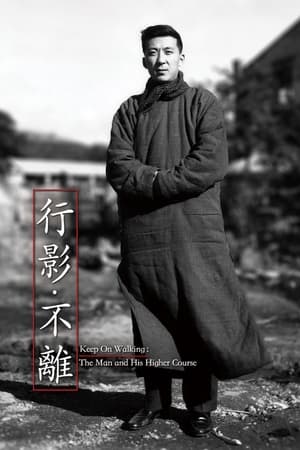
In Taiwan, director Lee Hsing's films have become a reflection of society and a collective memory of many. His dedication to film not only launched the careers of many movie stars and crew, but was also the foundation of the prestigious Golden Horse Awards. This documentary offers Lee Hsing's personal perspective on family, films, fate and beliefs, giving us a glimpse of the glory and rebirth of Taiwanese cinema.
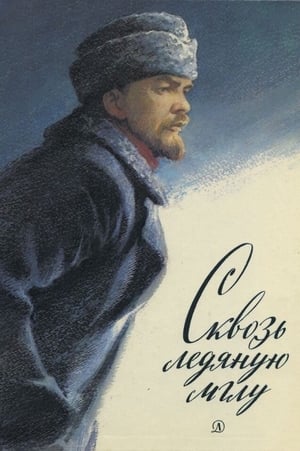
After the events of 1905, the proletariat slowly retreated with battle. The Lenin headquarters of the leadership of the revolution was moved to Finland. There Lenin and Krupskaya live illegally in safe houses. Vladimir Ilyich works on his articles, occasionally his associates visit him, sometimes he goes to the city for meetings with his party comrades — Gorky, Kalinin, Krasin, and others. By all possible means, Lenin directs the activities of the Bolsheviks in Russia...
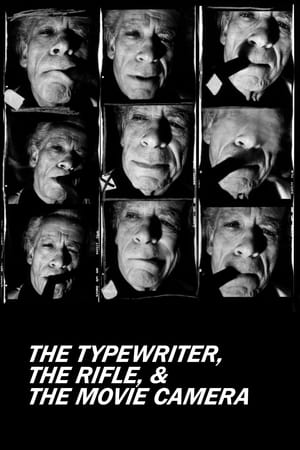
In a documentary about Samuel Fuller, the spectator gets different impressions about the Hollywood director and his films. The film is divided into the three sections: The Typewriter, the Rifle and the Movie Camera. The first segment covers Fuller's past as a newsman where he began as a copy boy and ended as a reporter. Part two describes Fuller's experiences in World War II, in which he participated as a soldier. The last section focuses on Fuller as director. Tim Robbins interviews Samuel Fuller revealing the director's own memories and impressions. Beside the interview, Jim Jarmusch, Martin Scorsese and Quentin Tarantino accompany the documentary with their comments.
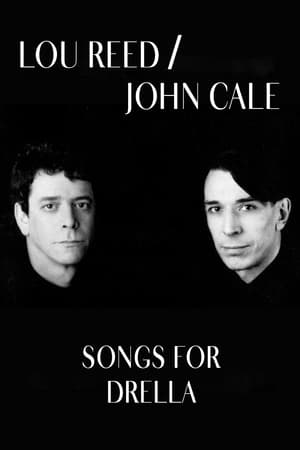
Songs for Drella is a concept album by Lou Reed and John Cale, both formerly of The Velvet Underground, and is dedicated to the memory of Andy Warhol, their mentor, who had died unexpectedly in 1987. Drella was a nickname for Warhol coined by Warhol Superstar Ondine, a contraction of Dracula and Cinderella, used by Warhol's crowd. The song cycle focuses on Warhol's interpersonal relations and experiences, with songs falling roughly into three categories: Warhol's first-person perspective (which makes up the vast majority of the album), third-person narratives chronicling events and affairs, and first-person commentaries on Warhol by Reed and Cale themselves. The songs on the album are, to some extent, in chronological order.
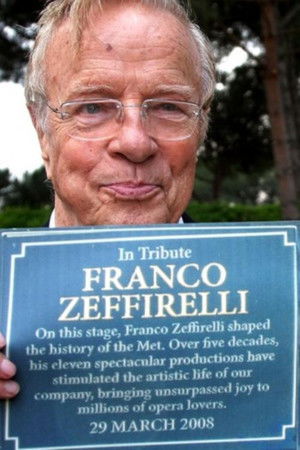
Franco Zeffirelli passed away on 15th June 2019. Chris Hunt's biography explores how Zeffirelli's sense of drama was born out of his own experience and how his life inspired his productions. Chris Hunt interviewed him and other famous actors, friends and associates, had a camera at Zeffirelli's 94th birthday and during the opening of his foundation in Florence. This documentary, including clips from operas, films and plays aims to be the definitive portrait of a Renaissance man larger than life.
Vezmu-li to, oprátka mne nemine
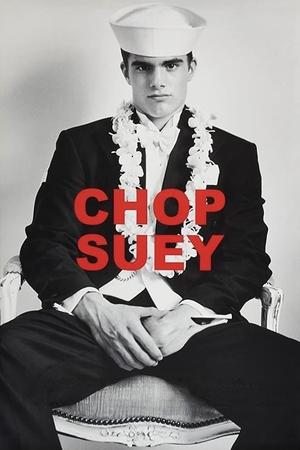
A homage to Bruce Weber's Favourite things, these being mixing film, photography and classic movies. With portraits of a lesbian jazz singer and a 16-year-old wrestler.
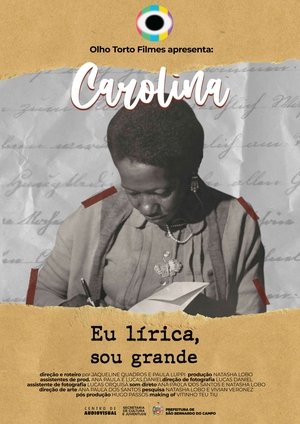
Carolina Maria de Jesus: Eu lirica, sou grande
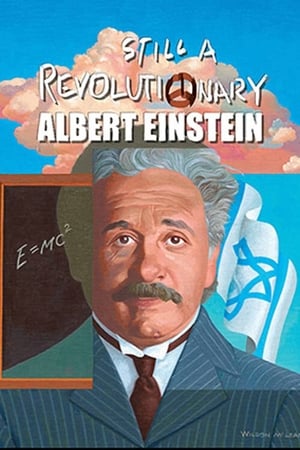
Using a wealth of rarely-seen archival footage, correspondence, and new and illuminating interviews, Julia Newman makes the case that Albert Einstein's example of social and political activism is as important today as are his brilliant, groundbreaking theories.
In 2018 Japan’s NHK television network was given unprecedented access to the Freer Gallery of Art’s collection of works by Katsushika Hokusai so they could film the details of paintings using a state-of-the-art 8K video camera. The resulting documentary is hosted by actor Iura Arata and features commentary from the James Ulak, former curator at the National Museum of Asian Art, and Tim Clark, former curator at the British Museum. The film’s intended premiere in April 2020 was canceled due to the pandemic. We are proud to finally screen it. Explore masterpieces at a never-before-seen level of detail and enjoy new insights into the artist’s genius.
Provocative, challenging, original, and courageous. The ironic and poetic narrative of writer and visual artist Pedro Lemebel is present in this documentary journey proposed by Verónica Quense. Through some chronicles read from Radio Tierra, it is possible to enter into urban geographies where the so hackneyed “marginality” becomes an urgent and revitalized political manifesto in the presence of three women who unite on the issue of human rights. Thus, gender, writing, sex, music, and politics trace a historical trace from Havana, Santiago, Cartagena, and Pisagua.
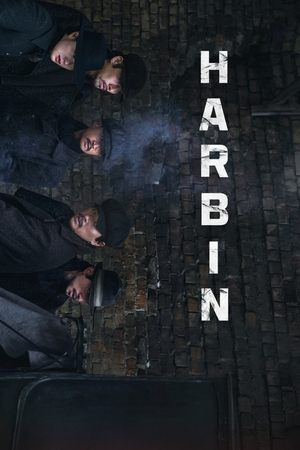
In 1909, several years after Korea is forced into becoming a Japanese colony, freedom fighters plot the daring assassination of Japan's prime minister during their quest for independence.
Working, working, working... Here are the words that make up a contemporary Turkish fairy tale. In fact, this fairy tale is not just the story of one person or a family. It is also the story of a country...
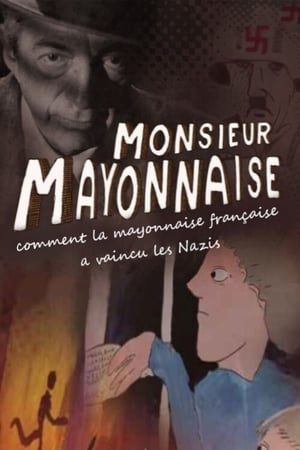
Artist and filmmaker Philippe Mora (Mad Dog Morgan; The Howling II; Swastika) is producing a graphic novel about his late father, Georges, widely known in Melbourne as a beloved contemporary art patron and owner of bohemian eateries Mirka Café, Café Balzac and the Tolarno Restaurant and Galleries. Less known, however, is Georges' astonishing history as part of the French resistance during World War II, his friendship with renowned mime Marcel Marceau (Philippe's godfather), and how together they saved thousands of Jewish lives with a fiendishly simple trick involving baguettes and mayonnaise.
This documentary is a chronicle of the journey through the most important sites of the life of venezuelan writer Francisco Massiani who reveals the details of his work and the love of his life.
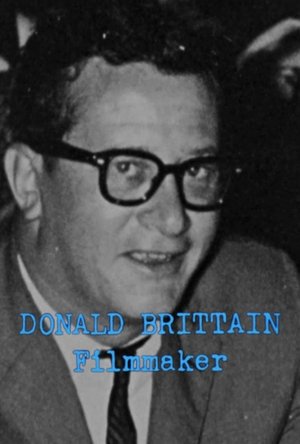
A retrospective of documentary films by Donald Brittain offering a glimpse of the man and the restless energy that informed his work. Dedicated and hard-working Brittain left nothing to chance, driving himself and his colleagues at the NFB and the CBC until perfection was achieved, or until airtime -- whichever came first.
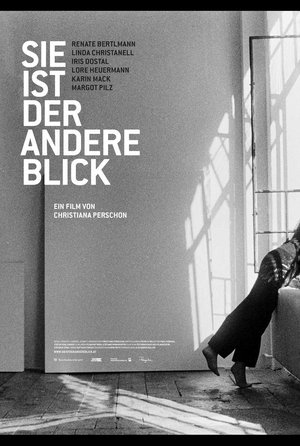
Every encounter with an image, every interaction searches for its own form. She is the other gaze is a collaboration with five female visual artists of an older generation who have been part of the Viennese art scene since the 1970s and engaged in the women's movement. In dialogue with the filmmaker Renate Bertlmann, Linda Christanell, Lore Heuermann, Karin Mack and Margot Pilz share their early works and artistic practices. They remember how their self-determination evolved between artistic ambitions, economic constraints, adaptation and resistance to the prevailing patriarchal social structures. In their role as feminist pioneers, the protagonists are a great influence on the contemporary art scene and the self-understanding of younger artists today. With their voices and narratives, they become collaborators passing on feminist thinking and artistic experiences.
“Master Wonhyo” is an 8-part special drama commemorating the 1986 Seoul Asian Games that aired on KBS 1TV from September 23 to October 3, 1986. This is a drama depicting Wonhyo, a monk from the Silla period, from the perspective of a monk, a scholar, and a thinker.
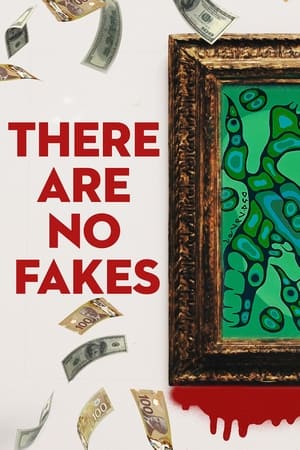
Norval Morrisseau was the first Indigenous Canadian artist to be taken seriously in the art world. By the turn of this century his work commanded tens of thousands of dollars. So when Barenaked Ladies keyboardist Kevin Hearn learned his prized painting was a forgery, he sued. But as Jamie Kastner's doc reveals, there was a cottage industry in fake Morrisseaus, an industry that flourished unchecked for years, feeding on greed, exploitation, racism and contempt.
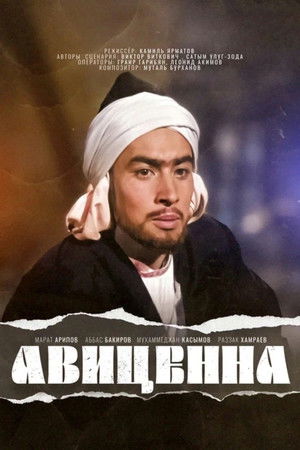
The film is dedicated to the philosopher, doctor, scientist of the East and poet Abu-Ali Ibn-Sin, who lived in Bukhara in the 10th century and was known in Europe under the name of Avicenna. Bukhara. Eighteen-year-old doctor Ibn Sina saves the emir from a fatal illness. Refusing gold and honors, the young man only asks for admission to the emir's book depository as a reward. The study of the works of ancient scientists, philosophers, doctors, observations of nature, numerous experiments increase the knowledge of Ibn Sipa. The treacherous attack on Bukhara by the troops of the ruler of Ghazna Mahmud, who devastated the city and set the world's greatest book depository on fire, forced Ibn-Sina to leave his homeland. After many years of wandering, he, together with his student and assistant Juzjani, comes to the capital of Khorezm, Gurganj, to declare war on the plague raging here...