The artist J.M.W. Turner is widely recognised as England’s greatest painter. Tate has the world’s finest and most extensive collection of his work. Turner at Tate explores Turner’s art through many of his best-known canvases and exquisite sketches and watercolours, all newly and exceptionally filmed in HDTV from the original artworks. Incorporating the landscapes and places that inspired the works, the film provides an overview of Turner’s life and - in an accessible and engrossing way - of critical approaches to his art. The film’s focus is Turner and England, and his work is considered against the radical social and political changes of the early nineteenth century. Turner at Tate is a film about ideas and history and landscape, a film about colour and light. Contributors include Tate curators Ian Warrell and David Blayney Brown, and art historians Sam Smiles and Barry Venning. Also featured on the DVD are ten additional short films, each of which considers in detail a major work.
From the remote Australian desert to the opulence of Buckingham Palace - Namatjira Project is the iconic story of the Namatjira family, tracing their quest for justice.
This documentary follows three parallel stories. First, that of the masterpiece, The Little Girl with the Blue Ribbon, this melancholic Renoir work with the "musical face" described by Henri Michaux. The painting was constantly tossed around, shelved by its patrons, looted by the Nazis, found by the Monument Men, recovered by the family, sold to a controversial collector, before finally arriving at the Kunsthaus Zurich. We also discover the painter's biography, and the eventful life of his model, Irene Cahen d'Anvers. Born into the Jewish upper middle class, this free and divorced woman long disowned the painting and left it to her daughter, who was murdered at Auschwitz. Discover the tumultuous journey of this painting, its model, Irene Cahen d'Anvers, and its connection to the dark hours of the Nazi regime.
Jim Carrey exhibits his talent as a painter and reflects on the value and power of art.
Serial Killer Culture examines the reasons why artists and collectors are fascinated by serial killers.
Black Is the Color highlights key moments in the history of Black visual art, from Edmonds Lewis’s 1867 sculpture Forever Free, to the work of contemporary artists such as Whitfield Lovell, Kerry James Marshall, Ellen Gallagher, and Jean-Michel Basquiat. Art historians and gallery owners place the works in context, setting them against the larger social contexts of Jim Crow, WWI, the civil rights movement and the racism of the Reagan era, while contemporary artists discuss individual works by their forerunners and their ongoing influence.
Follows the young people of Selma, Alabama's RATCo (Random Acts of Theatre Company) as they journey to New York City to share their story of hope, resilience, and overcoming.
What does modern art mean for ordinary visitors to an exhibition?
In decades past, Native American artists who wanted to sell to mainstream collectors had little choice but to create predictable, Hollywood-style western scenes. Then came a generation of painters and sculptors led by Allan Houser (or Haozous), a Chiricahua Apache artist with no interest in stereotyped imagery and a belief that his own rich heritage was compatible with modernist ideas and techniques. Narrated by actor Val Kilmer and originally commissioned as part of an exhibit of Houser’s work at the Oklahoma History Center, this program depicts the artist’s tribal ancestry, his rise to regional and national acclaim, and the continuing success of his sons as they expand upon and depart from their father’s achievements. Key works are documented, as is Houser’s tenure at the Santa Fe–based Institute of American Indian Arts.
56-year-old artist Mindy Alper has suffered severe depression and anxiety for most of her life. For a time she even lost the power of speech, and it was during this period that her drawings became extraordinarily articulate.
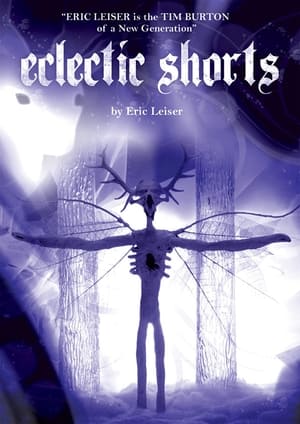
Eric Leiser displays his boundless creativity in this short collection; A stunning compilation of works presented with a mixture of live action, stop motion animation, puppetry and pixilation techniques, produced between 2001 and 2006.
Tilburg artist Tommy van der Loo searches for the influence of superiority thinking, racism and colour in his life. Van der Loo is an emerging artist and his work has been purchased by Boijmans van Beuningen in Rotterdam. He also had an exhibition at the Kunsthal. He also made the memorial for the abolition of slavery in Eindhoven. He has had multiple experiences with discrimination and incorporates that into his sculptures. Identity and image formation are important to him: How do you look at others, how do others look at you. The search is the inspiration for his new sculpture.
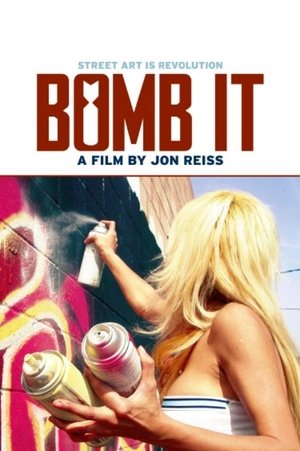
Tells the history of skateboard art and its evolution through the decades, as iconic and rebellious skateboarders and artists give firsthand experiences and stories about their art that challenged the establishment.
Ningwasum follows two time travellers Miksam and Mingsoma, played by Subin Limbu and Shanta Nepali respectively, in the Himalayas weaving indigenous folk stories, culture, climate change and science fiction.
Hopper, one of America’s most admired artists, captured the shared realities of American life with poignancy and enigmatic beauty. His iconic images, set in unexceptional places, reveal the poetry of quiet, private moments. Hopper’s influences, which vary from French impressionism to the gangster films of the 1930s, are explored through archival photos, footage of locations he painted in New York and along the New England coast, and interviews with artists Eric Fischl and Red Grooms.
For both Aboriginal and non-Aboriginal Australians, Captain James Cook is a figure of great historical significance.
ALLIES is a landmark documentary from 1983, made at the time of Bob Hawke’s unequivocal embrace of the American alliance.
This documentary profiles contemporary artists Wangechi Mutu, Barron Claiborne, and Sanford Biggers. Each monologue is a reflection of their life experiences, letting the viewer discover how their observations have shaped the art they create.
"The prevailing stigmatization of the 'villero' universe is fed back by the images. In order to dismantle this stigmatization, other images must be presented or we need to reveal what the existing ones seek to cover up. The slum is usually represented from a limited and deceitful visual panorama. This representation has an intention. Cinema and television are two image-producing devices that strengthen the stereotypes that we have about the people who inhabit these spaces. And what happens in the field of painting? Do clichés reign there too? This visual essay seeks to confront various works by national painters and sculptors, belonging to the Palais collection, with the kinetic images of current cinema and television, to reflect on both the differences and the similarities in the meanings and discourses that both regimes of images can produce." César González
This ninety-minute film takes audiences on an epic journey across nine countries and over 1,400 years of history. It explores themes such as the Word, Space, Ornament, Color and Water and presents the stories behind many great masterworks of Islamic Art and Architecture. Narrated by Academy Award winning performer Susan Sarandon, this dazzling documentary reveals the variety and diversity of Islamic art. It provides a window into Islamic culture and brings broad insights to the enduring themes that have propelled human history and fueled the rise of world civilization over the centuries