South Korean cinema is in the throes of a creative explosion where mavericks are encouraged and masters are venerated. But from where has this phenomenon emerged? What is the culture that has yielded this range of filmmakers? With The Nine Lives of Korean Cinema, French critic, writer and documentarian Hubert Niogret provides a broad overview but, nevertheless, an excellent entry point into this unique type of national cinema that still remains a mystery for many people. The product of a troubled social and political history, Korean cinema sports an identity that is unique in much modern film. Niogret's documentary tells of the country's cinematic history - the ups along with the downs - and gives further voice to the artists striving to express their concerns, fears and aspirations.
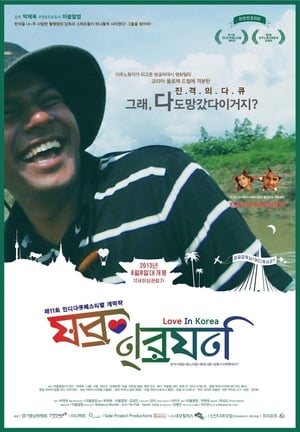
Over 98 days from August 20th to November 25th 2013, 2821 people from around the world sent 11,852 video featuring many different faces of Seoul. 154 were selected, edited, and made into a movie.
The small county of Seongju staged protests against the THAAD. Young mothers led protests from concerns about their kids and the exposure to radiation. Gradually, they learn the system is faulty.
Ryun-hee Kim, a North Korean housewife, was forced to come to South Korea and became its citizen against her will. As her seven years of struggle to go back to her family in North Korea continues, the political absurdity hinders her journey back to her loved ones. The life of her family in the North goes on in emptiness, and she fears that she might become someone, like a shadow, who exists only in the fading memory of her family.
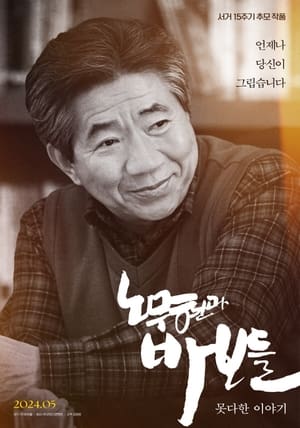
In South Korea, 2002, the Democratic Party put the presidential nomination to a plebiscite for the first time. Amongst numerous candidates, the one who brought about the most unexpected result was a fringe candidate named Roh Moo-hyun.
The film describes the microcosmos of the small village Wacken and shows the clash of the cultures, before and during the biggest heavy metal festival in Europe.
High up in the Northern California mountains there is a place, where not too many get to visit. Its called - The Emerald Triangle, real mecca of Americas cannabis game. Follow a ukrainian journalist Luka on a journey that explores lifes of real growers and hustlers and the dangers that come with it.
“What kind of person do you think former President Park Geunhye is?” Sohn Seokhee, a journalist, gives a clear and sharp answer that he “shares the common ideas that people in our country have.” That common idea has led millions to bring candles to the streets, correcting a thread of history that has gone awry, and gather a sense of hope among people. Candlelight Revolution portrays the voices of citizens from various generations, political figures of different parties, and the witnesses of an administration under improper influence. It is a documentary that identifies the genuine structure of politics and society by following how Park entered politics along with government records up until March 10.
My father led a coup in 1961. Two years later, I became the president's daughter.
From falsehood to mystification to manipulation and false impartiality, the whole logic of disinformation and brutality is brought to light. When the king of the media and his politico-journalistic buffoons are sifted by a radical counter-audiovisual power, the discredit of the "elites" sanctioned by the referendum of May 29, 2005 is better understood. With this film, Zalea TV's team had decided to laugh about it and make them laugh, even if at bottom these discoveries were rather disturbing. By staging a series of very simple techniques of "self-defense", this film is an invitation to self-disengage permanently. The use of the TV-B Gone, an instrument whose sole function is to turn off the television, appears here as the ultimate resort to media criticism.
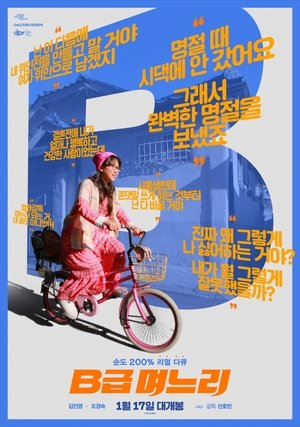
In our 3-year marriage, we have fought on every holiday, on parents' birthdays, during ancestral rituals, and even on Christmas. We argue all the time. The tension between my wife and my mother is killing me.
The film – documentary “Shooting vs Shooting” presents a group of astonishing stories about journalists who were afflicted in the Iraq war, by following a journalist’s journey in Baghdad in 2009 and the story of a mother who seeks for an answer to the question why her son got killed while his only weapon was his camera. “Shooting vs Shooting” narrates incredible moments and adventures, reveals unknown sides to the facts and shows the dramatic stories of media workers who lost their lives, trying to freely broadcast the truth to the public opinion. Through the documentary, we witness the absurdity of war, the responsibilities of governments and armies and the atrociousness of blinded fanatics.
Interpreting an event of ROKS Cheonan corvette, torpedoed and sunken by North Korea, this documentary rebuilds the event with a different insight. No one can tell if the investigation of Cheonan has reached compelling conclusion. But the film tells and reveals how unreasonable Korean society is.
The public yearns for a hero who will solve the economic crisis, and MB bursts onto the scene. However, what made voters excited now makes them disappointed. How the then voters were seen from the MB’s perspective? A political documentary that makes people laugh and cry.
Why did Moon Jae-in, a human rights lawyer who hated politics, become president? During five years at the Blue House, why didn’t he use his power? Why did he just silently plant flowers while being sworn at by protesters? One by one, those who watched him reveal their hidden stories.
Korea is a divided nation. Filmmaker Min Sook Lee sets out on a revelatory, emotion-charged journey into Korea’s broken heart, exploring the rhetoric and realism of reunification through the extraordinary stories of ordinary people.
Tracing the footsteps of North Korean orphans who went to Poland during the Korean War, two women, one from the North and the other from the South, bond through the solidarity of wound and forge together a path toward healing.
The National Intelligence Service (NIS) intervened with the 2012 presidential election, and the court has acquitted NIS. This documentary tracks the long process where a special team of prosecutors formed after the inauguration of PARK Geunhye administration discovering the truth under all kinds of external pressures and obstructions. This documentary also tracks the footsteps of the late LEE Namjong, who reminded us the NIS Intervention incident.
A searing account of war correspondent Michael Ware's seven years reporting in Iraq--an extraordinary journey that takes him into the darkest recesses of the Iraq War and the human soul.
The church is the body of Christ. In Greece, the church embodied a philosophy. Then in Rome, it became an institution. Spreading throughout Europe, it became one with the culture there. Traveling to the US, the church became a business. And when it arrived in Korea, it became a conglomerate. The top five largest churches in the world are located in Korea. However, Christ has long been absent in the nation. So then, what is the church? Who is Jesus Christ? What kind of world do Christians want? If the church is indeed the body of Christ, then we must ask the questions point-blank. Where do we stand in all this? And where exactly are we headed? Korean churches—“Quo Vadis?” Korean society—“Quo Vadis?”