The International Space Station is the most ambitious orbital project ever built. This film explores elements of life inside it.
One of humanity’s greatest achievements, the International Space Station is a $150 billion science laboratory hurtling around Earth at 17,000mph, its thin metal walls shielding astronauts from the most hostile environment humans have ever endured. Microgravity, the vacuum of space, extremes of temperature, micrometeorites - life here is perilous. To mark 25 years of continuous habitation onboard, Space Station We Have a Problem reveals how astronauts are only a technical glitch or software error away from disaster. From malfunctioning spacesuits and docking disasters, critical leaks and even the entire space station backflipping out of control, this is life and death played out in low earth orbit, coupled with the bravery and brilliance that each time, saves the day.
Finding Life Beyond Earth
"The World's Most Powerful Telescopes" is a research expedition across the southern firmament. The science documentary shows the powerful telescopes of the European Southern Observatory (ESO) in action and gives insight into the discoveries they make. The world's most powerful telescopes can be found atop the highest peaks of northern Chile, amidst the exotic flora and fauna of one of the driest regions on the planet: the Atacama Desert. This is the starting point for a journey to the outer edges of our universe.
In Diretta Da Marte - Missione Perseverance Alla Ricerca Della Vita
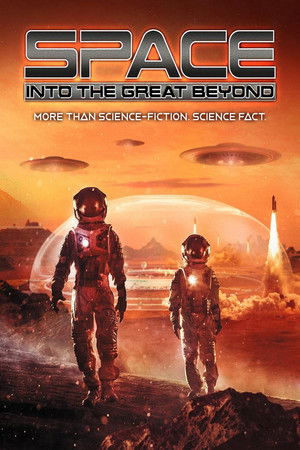
We have all dreamed of going where no man has gone before but that time is here and now. We are on the very edge of a new era in humanity. Within our lifetime, mankind will not only be journeying to other planets, we will be inhabiting them. Our ultra-high technology robots are even now walking upon the surface of Mars, sending back information and preparing the ground for our arrival. This is not science fiction, we are living the future now.
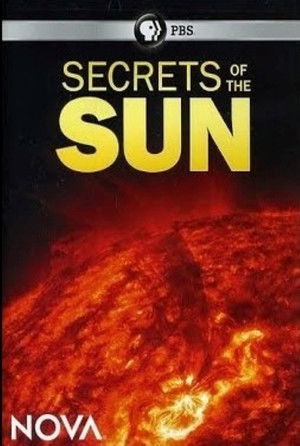
It contains 99.9 percent of all the matter in our solar system and sheds hot plasma at nearly a million miles an hour. The temperature at its core is a staggering 27 million degrees Fahrenheit. It convulses, it blazes, it sings. You know it as the sun. Scientists know it as one of the most amazing physics laboratories in the universe.
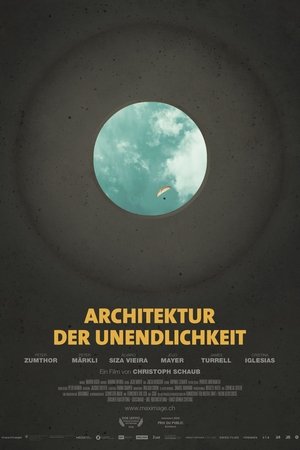
How can structures, which take up defined, rigid portions of space, make us feel transcendence? How can chapels turn into places of introspection? How can walls grant boundless freedom? Driven by intense childhood impressions, director Christoph Schaub visits extraordinary churches, both ancient and futuristic, and discovers works of art that take him up to the skies and all the way down to the bottom of the ocean. With the help of architects Peter Zumthor, Peter Märkli, and Álvaro Siza Vieira, artists James Turrell and Cristina Iglesias, and drummer Sergé “Jojo” Mayer, he tries to make sense of the world and decipher our spiritual experiences using the seemingly abstract concepts of light, time, rhythm, sound, and shape. The superb cinematography turns this contemplative search into a multi-sensory experience.
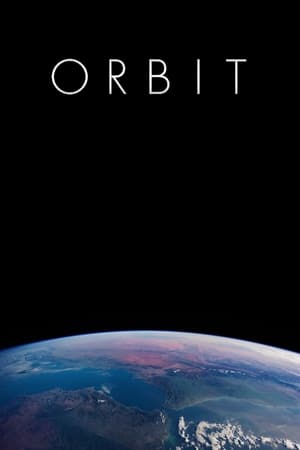
A real-time reconstruction of time-lapse photographs taken on board the International Space Station by NASA’s Earth Science & Remote Sensing Unit. The film is scored with musical selections from three albums by Phaeleh (producer Matt Preston): Lost Time, Illusion of the Tale, and Somnus. The music directly influenced the choice of material used in the film. The film's duration is approximately the length of time it takes ISS to orbit the Earth once: 92 minutes and 39 seconds. Meditate on the beauty of our planet.
This extraordinary film features NASA film footage enhanced by AI-based software and other image processing. The clarity of the images gives viewers a whole new perspective on what it was like to step onto lunar soil and ramble about the alien landscapes. The film shows how teams of astronauts collected evidence that has revolutionized our understanding of the origin of both Earth and the moon.
Apollo 11 : Retour vers la lune
Can Homo sapiens evolve into Homo spatius? For over 50 years now, we have been testing our human nature in our effort to conquer outer space, and still 30 years away from a possible human exploration of Mars, a question remains: Can our body take such travels? Will it ever adapt? Combining human adventure and the exploration of the human body, this film offers unique insights into the physical and psychological effects of space travel on the Astronauts and measures the impact on medical sciences.
Apollo 16 mission from NASA footage.
Short educational film of our solar system
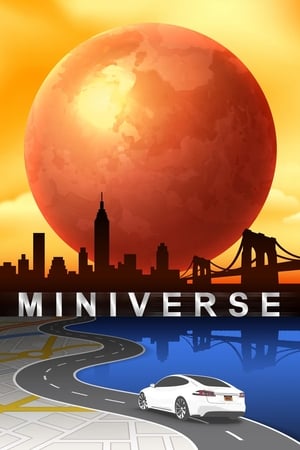
What if you could get behind the wheel and race through space? We scale down the Solar System to the continental United States and place the planets along the way to better appreciate the immense scale of the Universe. See space as never before, with Mars looming over the Freedom Tower and Jupiter towering above the Lincoln Memorial. Join former astronaut Chris Hadfield - a YouTube sensation for his performance of David Bowie’s “Space Oddity” aboard the International Space Station - and his interstellar hitchhikers Michio Kaku and astronomers Derrick Pitts and Laura Danly. It’s a joyride from coast to coast - and from the sun to Pluto.
In VAST, we set off on a journey further into space than any other human being has ever been. Join us on the journey, starting in our own solar system all the way out to the Big Bang.
A new age of space exploration, and exploitation, is dawning. But surprisingly, some of the boldest efforts at putting humans into space are now those of private companies started by a handful of maverick billionaire businessmen. Beyond mass space travel, and even space mining and manufacturing, the dream of Elon Musk and others is true space exploration. His company, SpaceX, already delivers supplies to the International Space Station, and their next step is delivering astronauts too. But their true ambition is to ensure the survival of the human race by crossing our solar system and colonizing Mars in the next decade. Could commercial spaceflight companies eventually make us a space-faring civilization?
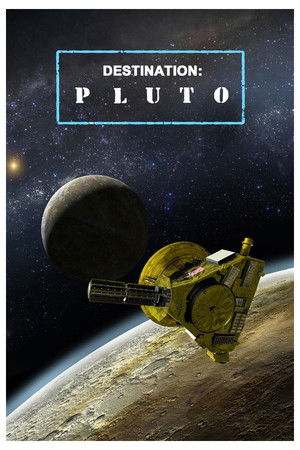
The New Horizons team examines the latest findings and imagery from Pluto and the fringes of our solar system revealing a world unlike any other we've seen before.
Hypotézy
Comets pose one of the greatest threats to life on Earth - a threat that can only be countered if we find out more about them. In 2005, in an audacious bid to do just that, NASA scientists launched a space probe to collide with a comet in the emptiness of deep space. This film follows the amazing story of mission Deep Impact, from its inception through to the final nail-biting moments when the probe and comet Tempel 1 met head-on.