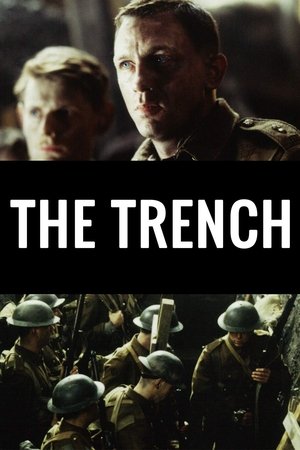
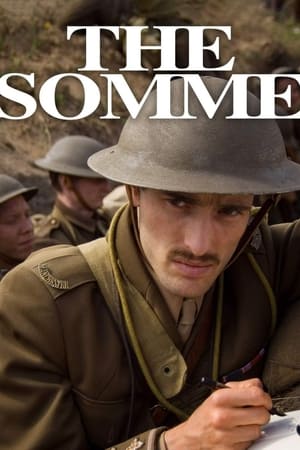
The Trench tells the story of a group of young British soldiers on the eve of the Battle of the Somme in the summer of 1916, the worst defeat in British military history. Against this ill-fated backdrop, the movie depicts the soldiers' experience as a mixture of boredom, fear, panic, and restlessness, confined to a trench on the front lines.
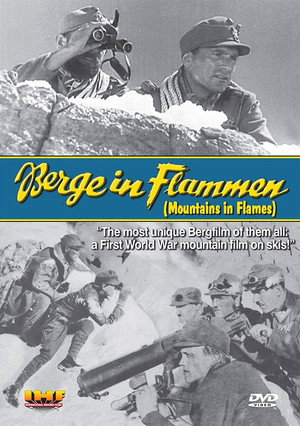
Two of Germany's best and busiest directors collaborated on Berge in Flammen (Mountain in Flames). The storyline should be of interest to pro-ecologists, inasmuch as the directors take to task the warmongers of the world for despoiling the natural beauties of the European mountain ranges with their shell-fire. The final outrage occurs during a battle between the Austrians and the Italians in the Dolomites, culminating with the destruction of an entire mountain (hence the film's title). The harrowing images on screen were complemented perfectly by the musical score of Giuseppe Beece. Also known as The Doomed Batallion, Berge in Flammen was filmed in three different languages -- German, English, French -- for a total cost of $150,000.
Set in France in 1916, three British soldier's are facing the firing squad for cowardness. As they await their fate they have to overcome their own differences and class as in the eyes of death all men are equal.
The Somme (also: The Tomb of the Millions) is the title of a silent documentary drama that Heinz Paul realized in 1930 for the Cando-Film Berlin based on his own script. Paul supplemented scenes with German actors with documentary footage from archive material of German, French and English origin. - Twelve years after the end of the First World War, Heinz Paul records the battle of the Somme in 1916 with original recordings, with over one million dead, the most lossy battle of the war. The archive images are supplemented by game scenes of a German mother who loses her three sons and by trailing front scenes. The Battle of the Somme, in which Allied troops bombarded the German front line, resulted in a months-long war of position. In documentary style, the film shows scenes of the most devastating battle of the First World War. It is narrated from the perspective of a mother who loses her three sons in battle.
The 1916 Battle of the Somme remains the most famous battle of World War I, remembered for its bloodshed and its limited territorial gains. What is often overlooked, however, is the literary importance of the Somme: more writers and poets fought in it than in any other battle in history. Narrated by Michael Sheen, War of Words: Soldier-Poets of the Somme details the experiences of the poets and writers who served in the battle. The work of Siegfried Sassoon, Robert Graves, David Jones, Isaac Rosenberg and JRR Tolkien (who arrived at the Western Front with ambitions to be a poet) was informed and transformed by the battle. Taken together, their experiences allow us to see this dreadful historical event through multiple points of view. The film uses animation, documentary accounts, surviving artefacts, battalion war diaries and the landscape itself to reconnect this literature to the events that inspired it.
Based on diaries, records and eyewitness accounts, this is the story of the two Battles of the Somme from the perspective of British and German soldiers. It shows how the major lessons learned by the British Army leadership after the disastrous first attacks of July 1916 were turned into victory at the second attempt in September 1916, arguably the turning point for the First World War.
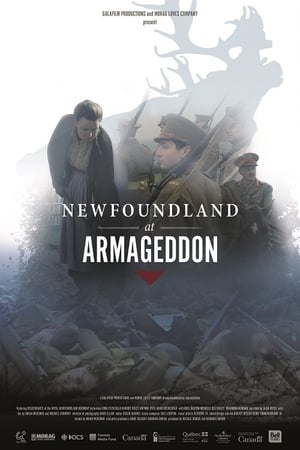
On July 1st, 1916, the Newfoundland Regiment took part in a massive First World War offensive on the Somme, led by the British. At Beaumont Hamel the regiment was nearly wiped out, as only 110 of 780 soldiers survived the day. To commemorate its 100th anniversary, Brian McKenna’s documentary film tells the story of this epic tragedy. Using a technique that brings new meaning to reenactment, McKenna recruits descendants of soldiers who fought this battle, offering them a unique opportunity to relive the experience of their ancestors in trenches built specifically for the film.
As a young soldier in the Belgian Army, Indy learns firsthand the savagery of warfare while participating in the Battle of the Somme. Almost succumbing to despair as his life becomes an endless round of artillery barrages, nerve gas attacks and decaying corpses, Indy fears that death will be his only way out. Then he is captured by the Germans and confined to a POW camp where he and fellow prisoner Charles de Gaulle hatch a daring scheme to win their freedom in true "Great Escape" style.
Shortly before the First World War, an Italian and an Austrian mountain guides take part in a mountaineering expedition together. Not long afterwards they find themselves fighting on different sides in the same area in the Dolomites, fighting to conquer the same high pass (Col Alto). When the war is over, they meet again. Their friendship has survived the war. American version of the film Berge in Flammen. It uses some scenes from the original German-French version. There is a third version of the film titled Les Monts en Flammes, shot the same year in French.
After a bloody battle in the First World War, a German Red Cross dog scours the devastated landscape for survivors. When he finds a wounded and terrified young soldier, he decides to take him back to the safety of the camp. Their fragile complicity becomes a glimmer of humanity in the midst of the absurdity of war.
This film tells the story of the 8th and 9th Devon's on the 1st July 1916, both served in 20 Bde of 7th Division. Their objective was the German Strong point of Mametz. By 5 pm the Devon's along with the rest of 7th Div had taken Mametz despite taking over 3300 casulaties.
"This noted place is due to rank high in history as the proving grounds of America's pluck. Every American man, woman and child should see this." (Print Ad-Greenfield Recorder, Greenfield, Mass., 6 August 1919)
A documentary telling the story of composer George Butterworth's life and music from his earliest childhood to his final hours in the violent confusion of the trenches.
1918, produced by Frederick Burlingham.
Released on March 16th, 1919. Produced by Burton Holmes.
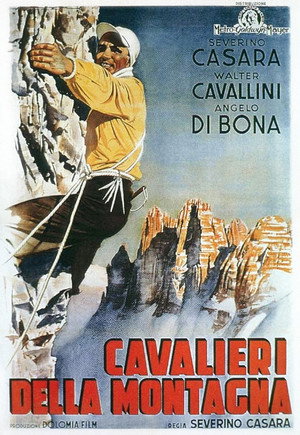
To honor the memory of the famous guide Luigi Comici, two climbers climb a sixth grade wall of one of the Tre Cime di Lavaredo. The adventure of the two climbers, forced to stay overnight on the rocks, sometimes takes on dramatic aspects. During the break, one of the two mountaineers tells the other an episode of the First World War, which took place in those mountains. Two Italian Alpines, attacked by two Alpenjäger armed with hand grenades, repulsed them with stones. The film, originally titled 'Il richiamo dell'Alpe splendente' was distributed in 1949 by the Metro Goldwyn Mayer under the title of 'Cavalieri della montagna'.
Drama-documentary recounting the events of the 1st July 1916 and the Battle of the Somme on the Western Front during the First World War. Told through the letters and journals of soldiers who were there.
The film chronicles the ascent of Shivaji, the great Maratha warrior who fought for liberty from the erstwhile Muslim rulers in order to establish a secular Hindu kingdom.
Dark animation examining the thin line between human definitions of war and peace. Part of Sweet Disaster; a 1986 series of short films made for Channel 4. It consists of “animated visions of the apocalypse”.
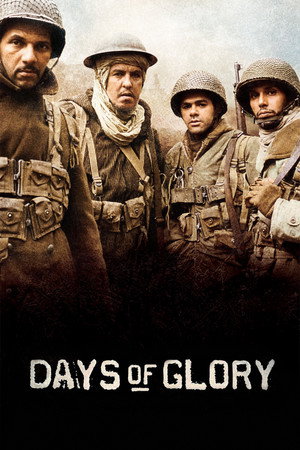
1943. They have never stepped foot on French soil but because France was at war, Said, Abdelkader, Messaoud and Yassir enlist in the French Army, along with 130,000 other “indigenous” soldiers, to liberate the “fatherland” from the Nazi enemy. Heroes that history has forgotten...