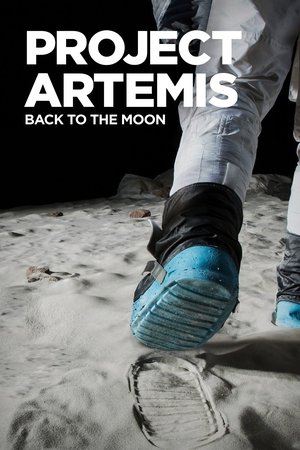
Top Gear presenter James May presents this informative program that examines the historic moon missions. Traveling to America, May meets three of the men who walked on the surface of the moon, learning how it felt and how the now antiquated technology was used to achieve such an historic feat.
A variety of scientific subjects, including the laboratory of a plastic surgeon in London, and his method for applying permanent makeup; a new school for kiddies employing finger paint so they can express their urge to put things on paper; Army aviation, showing the latest development in blind landing. Produced in Cinecolor.
Through interspersed conversation and prose, this experimental documentary follows a poet and a neuroscientist as they explore the definition of love, what it means, and why it matters.
214 million years ago a gigantic meteorite broke up and impacted Earth. 65 million years ago, the impact that killed the dinosaurs occurred where the country of Belize stands today. 200 thousand years ago early humans were walking and died when they were hit by a 40 meter wide meteorite hit South Africa creating a 1.4 km wide crater. This meteorite fragment, the largest ever found hit Namibia 80 000 years ago and more recently a major impact occurred in Toungouska, Russia in 1908. Every year 10 000 tons of meteoritic matter fall onto Earth in much smaller but not necessarily less influential pieces. This film will explore how the impact of these meteorites big and small through the ages have changed our world and what they brought from outer space with them that may have been the seed of life itself on Earth.
NASA may have just gotten one step closer to the answering the question: are we alone? The Spitzer Telescope has made a groundbreaking discovery of exoplanets that could be similar to our own. And as Kepler also continues its search, our understanding of the universe continues to be redefined.
Travel alongside the astronauts as they deploy and repair the Hubble Space Telescope, soar above Venus and Mars, and find proof of new planets and the possibility of other life forming around distant stars.
A documentary produced in 1979 to celebrate the centenary of the birth of Albert Einstein. Narrated and hosted by Peter Ustinov and written by Nigel Calder.
One of humanity’s greatest achievements, the International Space Station is a $150 billion science laboratory hurtling around Earth at 17,000mph, its thin metal walls shielding astronauts from the most hostile environment humans have ever endured. Microgravity, the vacuum of space, extremes of temperature, micrometeorites - life here is perilous. To mark 25 years of continuous habitation onboard, Space Station We Have a Problem reveals how astronauts are only a technical glitch or software error away from disaster. From malfunctioning spacesuits and docking disasters, critical leaks and even the entire space station backflipping out of control, this is life and death played out in low earth orbit, coupled with the bravery and brilliance that each time, saves the day.
Apollo 16 mission from NASA footage.
Oil is a primary energy source in the world. Global oil consumption reached approximately 95 million barrels per day but oil fields' quality is constantly declining. A team of Russian scientists came up with more accurate, cheaper, and faster technology that can increase the oil production rate. After all, modern civilization is built in the way that 'to live well' means 'consume more oil'
Near the cold Pyrenees of Iberia, surrounded by ancient and dark green forests, lies a strange land where the rain is scarce and the wind is always blowing. The soil is poor, there are no trees and the landscape resembles the moon. Is this what the future of desertification will look like? Incredible creatures with surprising behavior live in this strange landscape. The documentary explores a place with very dry skin but a wet hidden heart where even waterfowl or amphibians can live. Living in such conditions is not easy and only the toughest animals will survive.
CERN and the University of California-Santa Barbara are collaborating in the search for the elusive substance that physicists and astronomers believe holds the universe together -- dark matter. Where is this search now in the realm of particle physics and what comes next?
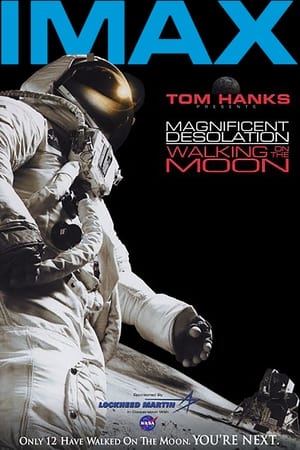
Twelve men who belong to one of the world's most exclusive fraternities -- people who've walked on the surface of the moon -- are paid homage in this documentary. Using newsreel footage, rare NASA photographs, and digitally animated re-creations, Magnificent Desolation: Walking on the Moon examines the Apollo missions between 1969 and 1972 which put astronauts on the moon.
Explores the latest longevity research and whether dramatically extended human lifespan is achievable. Features top scientists, startup leaders, celebrities, and critics offering balanced perspectives on this fascinating field.
Short educational film of our solar system
What forms might life take in the Solar System and beyond? In the Academy's newest original planetarium show, see how a deeper understanding of Earth might help us locate other living worlds, light years away.
A team of international skiers embark on a two-week glacier traverse connecting two remote research stations in Kazakhstan. The Tien Shan's 4000+ meter peaks host an active scientific community, leveraging the rare environmental conditions for groundbreaking research. Established during the Soviet Union's occupation, the high-altitude research stations here are home to some of the longest-standing glacier and cosmic radiation experiments in the world - and are surrounded by deadly alpine terrain.
StarGaze HD brings the beauty and majesty of the Universe to your HD Home Theater. Journey beyond the stars with images from the Hubble Space Telescope Spitzer Space Telescope and the Chandra X-Ray Observatory. With over an hour of astounding images set to ambient music StarGaze HD will quickly become a favorite in your Blu-ray collection.
A new age of space exploration, and exploitation, is dawning. But surprisingly, some of the boldest efforts at putting humans into space are now those of private companies started by a handful of maverick billionaire businessmen. Beyond mass space travel, and even space mining and manufacturing, the dream of Elon Musk and others is true space exploration. His company, SpaceX, already delivers supplies to the International Space Station, and their next step is delivering astronauts too. But their true ambition is to ensure the survival of the human race by crossing our solar system and colonizing Mars in the next decade. Could commercial spaceflight companies eventually make us a space-faring civilization?
Before the joint NASA/ESA Cassini-Huygens mission, humanity only knew what had been learned, decades earlier, with the previous limited, rapid "fly-by" Pioneer and Voyager missions. Cassini-Huygens spent more than 13 years in wildly varied orbits around Saturn, allowing the spacecraft to pass near many of its moons, as well as execute a soft-landing of its Huygens lander on the moon Titan. By mission end, it accumulated a mountain of imagery and scientific data that will continue to be studied for years to come. This film is a testament to the amazing efforts of the scientists who planned and executed the mission. It combines breathtaking images, movies, and a variety of animations to take the viewer into Saturn's complex system of rings and moons, as well as stepping viewers through some of the more exciting scientific discoveries made over the course of the elaborately complex mission.