An attempt to create a bridge between the different political positions that coexist, sometimes violently, in the Basque Country, in northern Spain.
The story of what daily life was like in Poland under communism: private conversations, cruel interrogations, recruitment attempts, recorded and filmed with hidden devices; of how the secret services spied on every activity of ordinary citizens: nothing escaped the brutal system of control developed by the Soviets in the name of freedom.
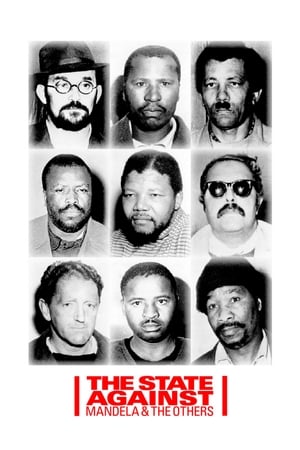
South Africa, July 11th, 1963. Several members of the African National Congress, an organization declared illegal, are arrested in Rivonia, a country house near Johannesburg. The detainees, along with Nelson Mandela, imprisoned since 1962, are charged with serious crimes for their radical activism against the apartheid regime.
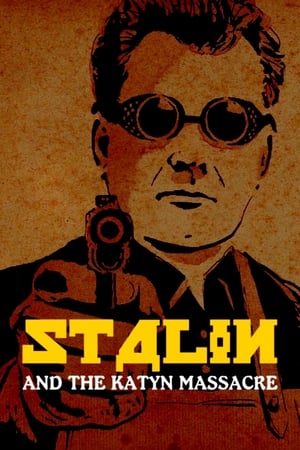
The Katyn massacre, carried out by the Soviet NKVD in 1940, was only one of many unspeakable crimes committed by Stalin's ruthless executioners over three decades. The mass murder of thousands of Polish officers was part of a relentless purge, the secrets and details of which have only recently been partially revealed.
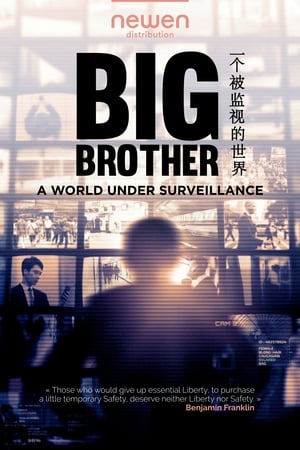
Under the pretext of fighting terrorism or crime, the major powers have embarked on a dangerous race for surveillance technologies. Facial recognition cameras, emotion detectors, citizen rating systems, autonomous drones… A security obsession that in some countries is giving rise to a new form of political regime: numerical totalitarianism. Orwell's nightmare.
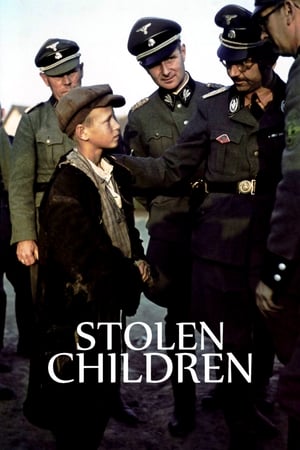
June 1941, during World War II. Reichsführer-SS Heinrich Himmler orders the mass abduction of particularly well-bred young children from Poland and the occupied territories of the Soviet Union in order to be educated in German culture, by both state schools and German families…
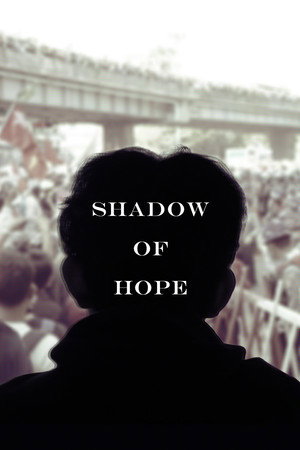
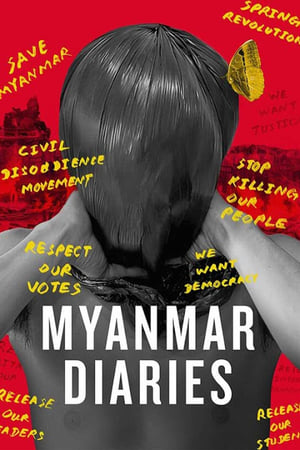
How does it feel to be forgotten by the world? A powerful collective cry denouncing the crimes of the military dictatorship installed in Myanmar after the coup perpetrated on February 1, 2021: cinema and imagination against horror and in defense of freedom.
This film is a story, testimony and documentation of the forced disappearance of 43 student teachers, which exposes the criminal complicity between the police and military authorities, between the political and economic elites and criminal organizations in Mexico, which appear to be different forces, but respond to similar interests.
In the summer of 1959, as a magazine correspondent, writer and filmmaker Pier Paolo Pasolini (1922-75) traveled along the Italian coast. In 1963, he documented the sexual behavior of the Italians. In the winter of 1970-71, he witnessed the hardships of the most impoverished Italian population suffering from the boot of state power. After these three trips, he came to the conclusion that Italian society had changed drastically for the worse over the years.
Different experts make a stand against today's putatively criminal and harmful health system, focusing on Anthony Fauci and his role in the shaping of the AIDS and COVID-19 epidemics.
Between 2002 and 2010, more than 10,000 civilians were killed by the Colombian army and thrown into mass graves—with the aim of demonstrating the success of the offensive against the FARC. Felipe Monroy offers a voice to the families of the victims of this unpunished state crime, thereby creating a heartrending film that stands against the worst crime of all: oblivion.
Donostia-San Sebastián, Basque Country, Spain, November 26th, 1985, at night. Mikel Zabalza, a young bus driver, is arrested along with other people by the Guardia Civil as part of an operation against the ruthless terrorist gang ETA. When the other detainees are released, they denounce that they have been brutally tortured in the Intxaurrondo facilities. Besides, Mikel is not among them: Mikel has disappeared.
A look back over nine years of the Syrian Civil War, an inextricable conflict, like a black box, due to the competing interests of the many factions in presence and those of the foreign powers.
Ndola, Northern Rhodesia (currently Zambia), September 18, 1961. Swedish economist and diplomat Dag Hammarskjöld, Secretary General of the UN, dies mysteriously in a plane crash. Decades later, Danish journalist and filmmaker Mads Brügger and Swedish researcher Göran Björkdahl investigate the case in search of definitive closure.
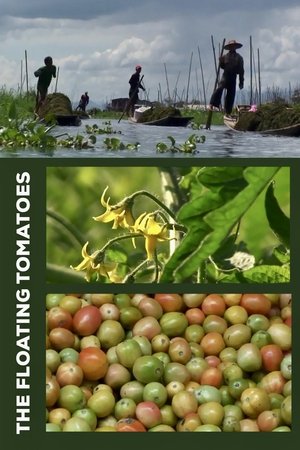
Proximity Designs is a sustainable development group that works to improve the lives of the rural poor in Myanmar. Proximity Designs boosts agricultural productivity by designing, producing, and distributing affordable products for people living on less than $2 a day.
A relentless chronicle of the tragedy of the Uighurs, an ethnic minority of some eleven million people who live in the Xinjiang region of northwest China, speak a Turkic language and practice the Muslim religion. The Uighurs suffer brutal cultural and political oppression by Xin Jinping's tyrannical government: torture, disappearances, forced labor, re-education of children and adults, mass sterilizations, extensive surveillance and destruction of historical heritage.
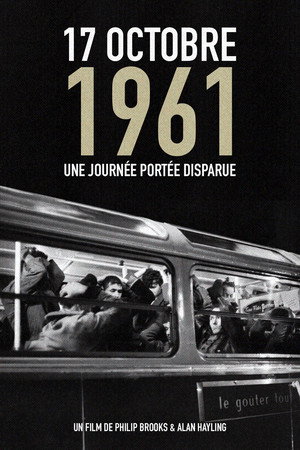
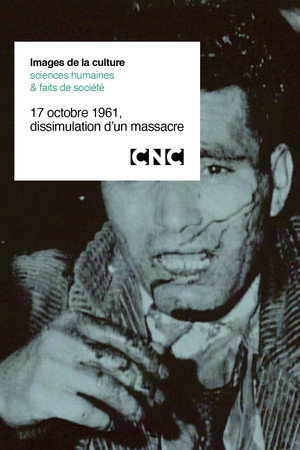
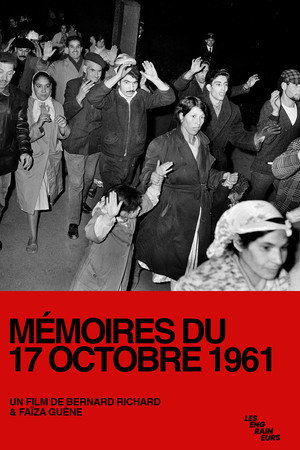
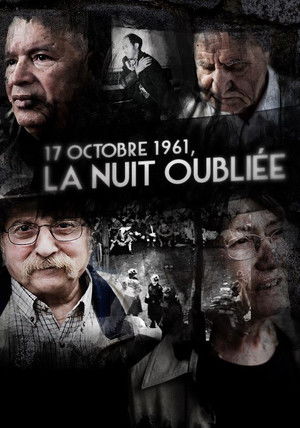
“In Algeria, we are restoring order, what we mean by French order,” declared Michel Debré, Prime Minister, under the presidency of Charles De Gaulle, in April 1956. It was, of course, order colonial in defiance of the republican order, in Algeria as in Paris where, on October 17, 1961, Algerians flocking from suburban slums were massacred by the police of prefect Maurice Papon, while they were peacefully marching for the independence of their country. On October 17, 2001, a commemorative plaque was placed in Paris on the Saint-Michel bridge: "In memory of the many Algerians killed during the bloody repression of the peaceful demonstration of October 17, 1961." A surge of racial hatred, less than 20 years after the roundup of the Jews in July 1942. An Algerian, victim of this roundup, told us, holding back his tears, "I still have nightmares."
After the coup d'état on 1 February 2021, which brought the ten-year transition to democracy in Myanmar to an abrupt end, thousands of young urbanites, both men and women, gave up their lives to join the resistance against the junta.
The painful story of Ireland and the Irish people, who struggled for centuries to free themselves from the tyrannical clutches of the British Empire; an epic tale of poverty, hunger, despair, violence and unyielding courage.
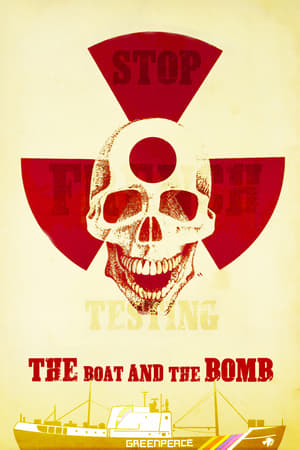
The exciting story of the splitting of the atom, a scientific breakthrough of incalculable importance that ushered in the nuclear age, has a dark side: the many events in which people were exposed to radiation, both intentionally and by accident.