When adults are ineffectual, children have to grow up quickly. Ola is 14 and she takes care of her dysfunctional father, autistic brother and a mother who lives apart from them and is mainly heard the phone. Most of all she wants to reunite a family that simply doesn’t work — like a defective TV set. She lives in the hope of bringing her mother back home. Her 13 year old brother Nikodem’s Holy Communion is a pretext for the family to meet up. Ola is entirely responsible for preparing the perfect family celebration. “Communion” reveals the beauty of the rejected, the strength of the weak and the need for change when change seems impossible. This crash course in growing up teaches us that failure is not final. Especially when love is in question.
Upon learning of his father's terminal illness diagnosis, a young, autistic, hearing-impaired artist travels back to Taiwan with a filmmaker to make a film in his honour.
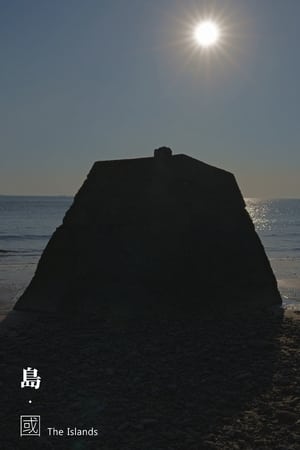
The rural Taiwanese outer islands of Kinmen sit merely 2 miles off the coast of China. Kinmen attracts tourists for its remains from the 1949 Chinese Civil War. It also marks the frontline for Taiwan in its escalating tension with China.
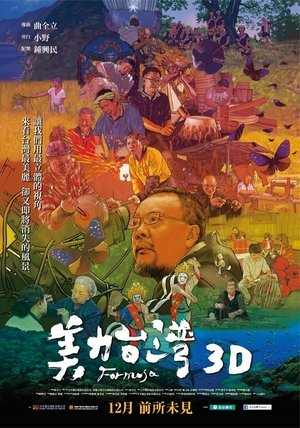
Formosa 3D
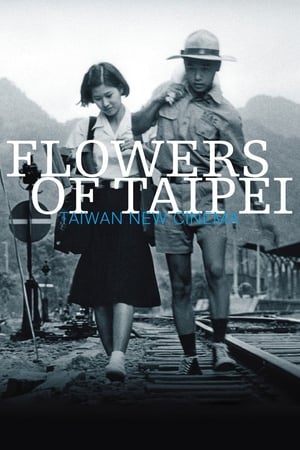
With Taiwan remaining in the grip of martial law in 1982, a group of filmmakers from that country set out to establish a cultural identity through cinema and to share it with the world. This engaging documentary looks at the movement's legacy.
A documentary produced by the United States Central Intelligence Agency (CIA) that covers the history, land reform, industry, religion, educational system, and urban activities of Taiwan.
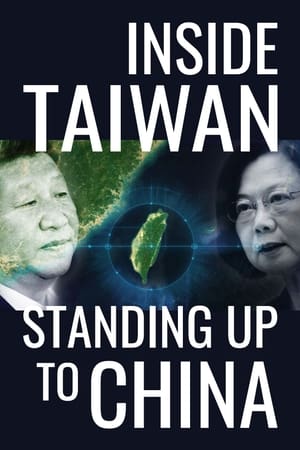
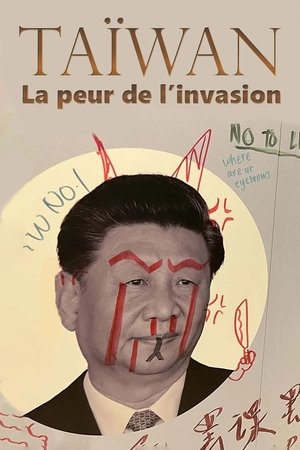
One Country, Two Systems? No Way! say the youth of Taiwan. But China under President Xi Jinping wants more than ever to bring the island of Taiwan back into the fold, just like Hong Kong. Can the burgeoning democracy on China’s doorstep, driven by digital technology, resist the Middle Kingdom’s advances? To China Taiwan is a breakaway province that must return to the fold. To its 24 million inhabitants it is a sovereign state with its own constitution and democratically elected leaders. Now that Hong Kong has been brought into line, Taiwan remains determined to stand up as a vibrant, young democracy. But it won't be easy. Since the Sunflower Movement in 2014 when the young came out to prevent an economic agreement with China, citizen groups have been fighting for the transparency of institutions.
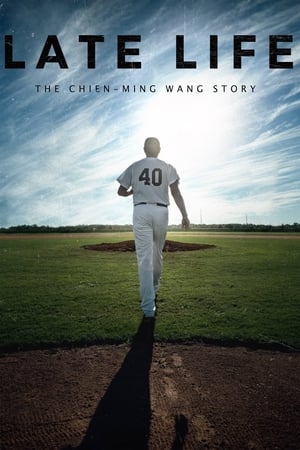
The first and only Taiwanese player for the New York Yankees, Chien-Ming Wang held many titles: American League Wins Leader, World Series Champion, Olympian, Time 100 Most Influential, and The Pride of Taiwan. He had it all - until a 2008 injury forever altered the course of his career. Late Life: The Chien-Ming Wang Story - named after the late sinking action on his signature pitch - follows the rise and fall of the international icon as he fights his way back into the Major Leagues through endless rehab programs and lengthy stints away from home, carrying the weight of the world on his battered shoulder. A poignant and intimate account of Wang’s steadfast quest, Late Life tells the story of a man who is unwilling to give up and unable to let go.
In Taiwan, there is a group of people participating in this race against time. They are hidden inside the film archive of New Taipei City’s “Singapore Industrial Park”, where the 17,000-plus film reels and over a million film artifacts have become their spiritual nourishment. Day after day, they shuttle back and forth inside, carrying their doubts, their learnings, and their faith. What they are doing is awakening these long-neglected film reels, then piecing together the no-longer-existent social atmospheres and lives of distant pasts recorded on them. And spending time in this archive has become everyday life for these film archivists and restorers.
As dawn breaks over Taipei, a whole world comes to life around the Luzhou temple night market, only to be dismantled by sunrise. In COME HUNGRY, Oscar-winner Carol Dysinger creates a city symphony out of the rhythms, sounds, colors, and flavors of this ephemeral community that revolves around Taiwanese food, traditions, and identity.
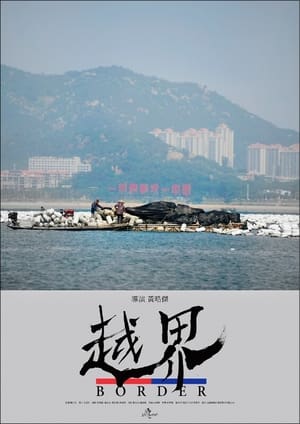
In the middle of the strait between Kinmen and Xiamen, China, there are patches of sea filled with floating styrofoam and endless sand pilfering across the border. Huge business opportunities, and even greater land reclamations have scarred the beauty of the original rural landscapes for the sake of “ The Chinese Dream"—a dream that places economic achievements above all else.
This documentary focuses on the love story between Dr. Tian and Mrs. Tian. And how fought for democratization of Taiwan.
Resulting pic blurs the line between documentary and fiction as Yanagimachi explores the lives of a couple of groups of peddlers, and they appear to act out their personal dramas for the camera.
Taiwan is an island country. Although it is surrounded by the sea, its people fear the sea since the politics, the history and the religious beliefs held on this island make people turn their backs to the sea. Oceanic literature author Liao Hung-chi and underwater photographer Ray Chin lead the audience out to the sea and into the water. They prompt us to understand the sea and to think about the possibility that the ocean might become our lives and the future of our country.
Richly illustrated with film clips and interviews, OUR TIME, OUR STORY tells the still-evolving story of the Taiwanese "new wave," from its rise in the early 1980s, as the island was democratizing after decades under martial law, through growing international recognition and domestic debate in the 1990s. Spearheaded in its early years by such filmmakers as Edward Yang, Ko I-cheng, Hou Hsiao-hsien and Wan Jen, the movement revitalized Taiwan cinema through low-budget experiments that emphasized personal stories, political reflection and stylistic invention. Said filmmakers, writers and actors like Wu Nien-jen and Sylvia Chang, even "second wave" directors Tsai Ming-liang and Lin Cheng-sheng provide fond reminiscences and retrospective insights in this compelling account of one of the most distinctive national cinemas of the last quarter-century.
In 2013, the Golden Horse Film Festival celebrated its 50th anniversary. The ministry of Culture commissioned director Yang Li-chou to make a documentary about the history of Golden Horse. What is unique to this film is that it's not an ode to celebrities but about the role cinema plays in ordinary people's lives. It's a love letter to cinema, filmmakers and audiences.
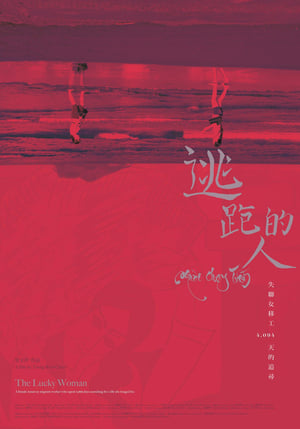
This film follows the lives of undocumented Vietnamese workers in Taiwan doing odd jobs to survive, after having been forced to flee their employers due to harsh working conditions and lack of medical care. How will living this way for more than a decade shape their lives?
Is Taiwan the scene of the next bloody war? A Chinese attack could trigger a conflict between the superpowers. How great is the danger of a Chinese invasion?
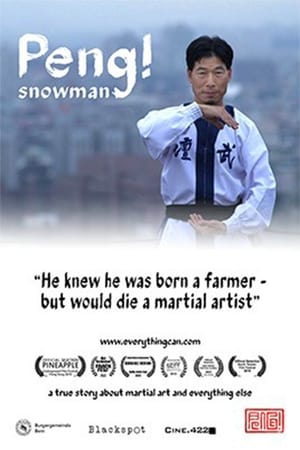
'Peng! Snowman' is a feature length documentary about a farmer's son who became one of the worldwide best martial artists. Just forget what you know about martial arts master. Peng will redefine the term: He's a funny, crazy genius! At the age of 60, Peng Wu-Chi was willing to share his incredible story for the first and last time - before he disappeared.
Martial law was lifted in Taiwan in 1987. Since then, all kinds of reform and democratization were raised. However, in May 1991, four young people were arrested by the Bureau of Investigation (MJIB). This had generated the fear in society and led to the so-called “White Terror.”