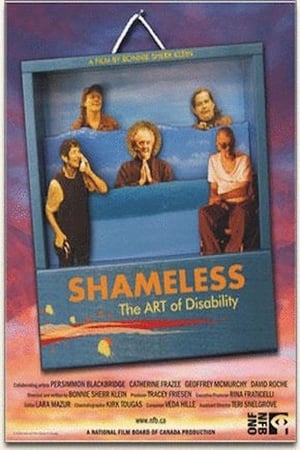
While navigating daily discrimination, a filmmaker who inhabits and loves her unusual body searches the world for another person like her, and explores what it takes to love oneself fiercely despite the pervasiveness of ableism.
‘Voices from the Shadows’ shows the brave and sometimes heartrending stories of five ME patients and their carers, along with input from Dr Nigel Speight, Prof Leonard Jason and Prof Malcolm Hooper. These were filmed and edited between 2009 and 2011, by the brother and mother of an ME patient in the UK. It shows the devastating consequences that occur when patients are disbelieved and the illness is misunderstood. Severe and lasting relapse occurs when patients are given inappropriate psychological or behavioural management: management that ignores the severe amplification of symptoms that can be caused by increased physical or mental activity or exposure to stimuli, and by further infections. A belief in behavioural and psychological causes, particularly when ME becomes very severe and chronic, following mismanagement, is still taught to medical students and healthcare professionals in the UK. As a consequence, situations similar to those shown in the film continue to occur.
Connection | Isolation presents eight intimate portraits of trans and post-gender individuals navigating the challenges of the COVID-19 pandemic. Amidst moments of connection and isolation, these participants reveal a deepening awareness of gender, their bodies, and trans community. Created by an all trans and queer crew, this hybrid documentary film interlaces portraits with reenactments, integrating archival material documenting what so many experienced and many still do.
This documentary is about Carlitos, a young man with mental disability who has a particular vision of the world and a tender sensibility. This documentary tries to show his way of perceiving the world and also his attempt to live to the fullest.
Another film about Martina Schaub, now thirty years old.
Nathan Quinell is a fully trained chef… he also happens to be legally deaf and blind. That’s never stopped him from chasing his dreams to become a full-time cook, but now Nathan must prove himself to his peers, his students and potential employers.
In recent years, Hollywood productions have turned away from sensuality. Is the sex scene on the verge of extinction or reinvention? Alongside film professionals and researchers, this documentary deciphers a trend that speaks volumes about the evolution of the industry and our societies.
Hearing Films is a portrait of Joe Sidarose, a blind film lover who experiences cinema through sound, rhythm, and feeling. His world of film is shaped by voices, music, and the spaces between them, where stories come to life in ways beyond sight.
A compelling British documentary following ten amateur athletes as they train for and compete in Ironman 70.3 Swansea. With themes of resilience, inclusion, and mental strength, the film is directed by Raymond Mouzon and edited by 18-year-old autistic filmmaker Sean Smith.
A scream amid so many silences, an attempt to rescue the human's gaze upon himself.
On the heels of a tragedy and the COVID-19 pandemic, a Dallas-based theatre troupe comprised of people with intellectual and developmental disabilities are determined to write, rehearse, and perform their 11th annual original musical.
MINDS Perform is a performing arts group consisting of members with learning disabilities. As they rehearse for a new song, they are transported into a kaleidoscopic world of music and dance. Commissioned for the Movement for the Intellectually Disabled of Singapore.
A documentary on assisted suicide, authored by actor and disability rights activist Liz Carr.
Entrepreneur Collette Divitto, who has Down syndrome, transforms workplace culture through her successful cookie company. Addressing the 83% unemployment rate among disabled people, she builds an inclusive business model built on individual strengths rather than perceived deficits. The film follows Collette's unique approach to hiring and workplace culture, showcasing the ripple effects of her leadership throughout the business community.
As part of the organization of sporting, cultural and solidarity meetings between a team of amputee footballers from Gaza and the French amputee football team, the project coordinator, filmmaker-director followed with his camera the Palestinian footballers in Gaza before their departure, and during their stay in France.
A professional company of actors with disabilities defies expectations by taking center stage in Chicago the musical.
A depiction of New York’s subway as an absurd obstacle course – revealing a system that shuts many out of a city in motion.
Christopher Reeve portrayed the Man of Steel in four Superman films and played dozens of other roles that displayed his talent and range as an actor, before being injured in a near-fatal horse-riding accident in 1995 that left him paralyzed from the neck down. After becoming a quadriplegic, he became a charismatic leader and activist in the quest to find a cure for spinal cord injuries, as well as a passionate advocate for disability rights and care.
David Vandenbrink seems like a healthy 21-year-old, bright and articulate young man. There is little to suggest that while in his mother's womb, he suffered permanent brain damage. His condition, fetal alcohol syndrome (F.A.S.), went undiagnosed for the first 18 years of his life, causing confusion, anger, and pain for both David and his non-Indigenous adoptive family. Fetal alcohol syndrome is a term used to describe a set of symptoms seen in some children born to women who drank alcohol during pregnancy. The damage can be subtle or severe, resulting in a wide range of symptoms in the areas of slowed growth, disfigurement, and damage to the brain. Associated behavioural problems include impulsiveness, poor judgment, and an inability to grasp the consequences of actions. This personal story, using video footage shot by David himself, along with the experiences of members of his family, is a hard look into the serious consequences of a little-known, but widespread, health problem.
As a visibly disabled person, filmmaker Reid Davenport is often either the subject of an unwanted gaze — gawked at by strangers — or paradoxically rendered invisible, ignored or dismissed by society. The arrival of a circus tent just outside his apartment prompts him to consider the history and legacy of the freak show, in which individuals who were deemed atypical were put on display for the amusement and shock of a paying public. Contemplating how this relates to his own filmmaking practice, which explicitly foregrounds disability, Davenport sets out to make a film about how he sees the world from his wheelchair without having to be seen himself.