La Cieca Di Sorrento (also known as Revenge of the Black Knight is a 1963 cloak and dagger film directed by Nick Nostro and based on the novel of the same name by Francesco Mastriani. Masked knights fight the cruel Tyrant Amedeo, tutor of the beautiful, rich and blind orphan Isabella. The knights are led by a young doctor who in the end will defeat Isabella's evil oppressor, give her her sight and marry her.
From the masters who create the mind-bending diversions to the tense competition at the American Crossword Puzzle Tournament, Patrick Creadon's documentary reveals a fascinating look at a decidedly addictive pastime. Creadon captures New York Times editor Will Shortz at work, talks to celebrity solvers -- including Bill Clinton and Ken Burns -- and presents an intimate look at the national tournament and its competitors.
In the 1990s, Lee Priest was once a young, extremely talented, and promising professional bodybuilder heading straight for champion status and success. He was also an outspoken and blunt personality that broke many of the rules set by the professional bodybuilding league. After many fines and suspensions, Priest received a lifetime ban from professional bodybuilding. He has since made it his mission to speak his truth regarding the sport of bodybuilding and the professional league - earning him a label as the dark horse of bodybuilding. For the first time ever, discover the life story and details of how Lee Priest went from bodybuilding's future to bodybuilding's rebel.
"Forza Bastia" is a 26-minute film documenting a UEFA Cup match between PSV Eindhoven and French club SC Bastia at the Furiani Stadium in 1978. Jacques Tati directed the piece at the request of friend Gilberto Trigano – the President of the Bastia club at that time. It was subsequently shelved and kept in storage until Tati's daughter Sophie Tatischeff eventually assembled the footage for release in 2002.
The main character Danilo was one of Petlyura’s military commanders. But 1920 began, the struggle against the Soviet power ended, it was the time for the former irreconcilable fighters to return to their peaceful occupations. The only thing is that a former Petlyura’s fighter is not sure, that he is awaited in his own home or at least they understand for what he shed his blood.
Two close friends' plan to execute a flawless crime is crushed when one of them inadvertently leaves his glasses at the crime scene.
Il Fornaretto di Venezia (US TV title: The Scapegoat) is a 1963 Italian film directed by Duccio Tessari who co-wrote screenplay with Marcello Fondato, based on novel by Francesco Dall'Ongaro. It tells the story of 16th century's Venice where a young worker is sentenced to death on the suspicion of attacking a noble.
The documentary follows a crew of snowboarders for six weeks in the Chugach mountains, and showcases what it takes to ride these unique Alaskan mountains: the waiting, the stress, the dangers, everything that goes into it and is usually never shown. It also retraces some of the history of this unknown discipline and pays tribute to the pioneers. But the film really focuses on the human aspect and why these people do what they do.
An unflinching look at the life and story of Mark Kerr between 1999 and 2001, an intelligent, articulate, and emotionally vulnerable athlete, considered by many at the time to be the most dominant ultimate fighter in the world. A former Olympic wrestler, Kerr easily dominated all his opponents, earning him the nickname "The Smashing Machine." With the promise of big money and the euphoria of his early victories, Kerr must battle his injuries and inner fears. The shock of these fights takes a heavy toll on his body and mind, and Kerr attempts to overcome these physical and psychological traumas by turning to painkillers. Kerr's addiction is shown in its raw form, with the camera capturing him desperately soliciting drugs from friends and staff, and injecting painkillers into his veins. His shocking defeat to Fujita in Japan shows us a story that is sometimes difficult and heartbreaking to watch.
Fact-based war drama about an American battalion of over 500 men which gets trapped behind enemy lines in the Argonne Forest in October 1918 France during the closing weeks of World War I.
Based on the life of Sam Manekshaw, who was the Chief of the Army Staff of the Indian Army during the Indo-Pakistani War of 1971, and the first Indian Army officer to be promoted to the rank of Field Marshal.
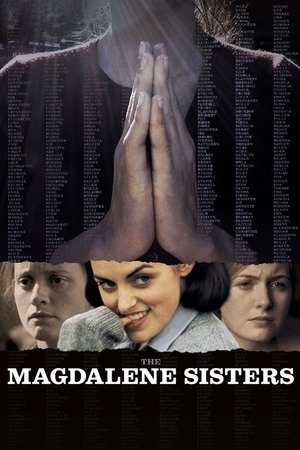
The lives of two French sisters are torn apart by the onset of World War II.
Admiral Yi Sun-sin faces a tough challenge when he is forced to defend his nation with just 13 battleships against 300 Japanese enemy ships in the Battle of Myeongryang.
Inspired by true events, this film takes place in Rwanda in the 1990s when more than a million Tutsis were killed in a genocide that went mostly unnoticed by the rest of the world. Hotel owner Paul Rusesabagina houses over a thousand refuges in his hotel in attempt to save their lives.
This 'educational documentary' features 10 gorgeous playmates competing against each other in various athletic activities, all of which involve either skimpy, very revealing bikinis or wet t-shirts. There's watersliding, pie relays, hose downs, rodeo riding and of course an impromptu mud wrestling display at the end. Chuck Woolery does a decent job of hosting it and it's actually quite entertaining aside from the awesome chicks. I'm surpised they didn't make any more of these. Probably has something to do with the fact that two of the girls get injured during the contests. The gals seem a bit of a throwback to the days of the "all-natural" beauty. And seeing the well endowed Roberta Vasquez bouncing in the relay race is a thing of beauty. If you're into hot 80's chicks, I suggest you check this out. IMDB lists this as a documentary.
Enraged at the slaughter of Murron, his new bride and childhood love, Scottish warrior William Wallace slays a platoon of the local English lord's soldiers. This leads the village to revolt and, eventually, the entire country to rise up against English rule.
Ireland, 1845. When a deadly fungus destroys potato crops throughout northern Europe, the most impoverished Irish population, whose main source of food is precisely the potato, suffers a cruel famine that will cause more than a million deaths and, in the following ten years, the mass exodus of more than two million people.
In mid-19th-century Costa Rica, President Juan Rafael Mora vows to defend his nation from American filibuster and slaver William Walker, who has seized nearby Nicaragua. Flashbacks trace Mora’s rise from reformist coffee planter to national leader, modernizing his family’s plantation with fair wages and new methods. Guided by love, loss, and his cautious brother-in-law, José María Montealegre, Mora builds trade ties with British merchant William Le Lacheur. In 1856, Costa Ricans defeat Walker, but cholera devastates the land. Betrayed by Montealegre, Mora is executed—like Walker—undone by ambition and history’s cruel turns.
A Victorian surgeon rescues a heavily disfigured man being mistreated by his "owner" as a side-show freak. Behind his monstrous façade, there is revealed a person of great intelligence and sensitivity. Based on the true story of Joseph Merrick (called John Merrick in the film), a severely deformed man in 19th century London.
Jean-Dominique Bauby, editor-in-chief of French fashion bible Elle magazine, has a devastating stroke at age 43. The damage to his brain stem results in locked-in syndrome, with which he is almost completely paralyzed and only able to communicate by blinking an eye. Bauby painstakingly dictates his memoir via the only means of expression left to him.