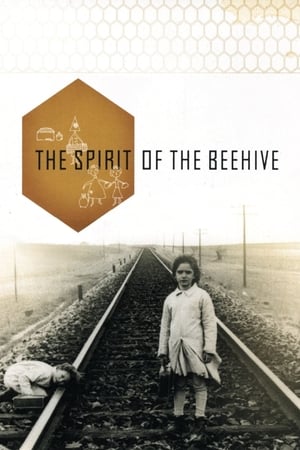
In 1940, in the immediate aftermath of the Spanish Civil War, a young girl living on the Castilian plain is haunted after attending a screening of James Whale's 1931 film Frankenstein and hearing from her sister that the monster is not dead, instead existing as a spirit inhabiting a nearby barn.
La Era
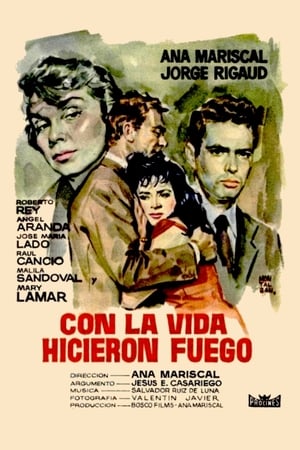
The sailor Quico Carola, alleged war hero of the Francoist side, emigrated to America and amassed a great fortune. Fifteen years later he returns to Ferrera (Asturias), his homeland, in search of a wife who makes him forget his late girlfriend. There he will see his old friends and Armandina, the widow of a Republican shot during the Spanish civil war.
Arising out of the horror of the Spanish Civil War, a candidate for canonization is investigated by a journalist who discovers his own estranged father had a deep, dark and devastating connection to the saint's life.While researching the life of Josemaria Escriva, the controversial founder of Opus Dei, the young journalist Robert uncovers hidden stories of his estranged father Manolo, and is taken on a journey through the dark, terrible secrets of his family’s past.
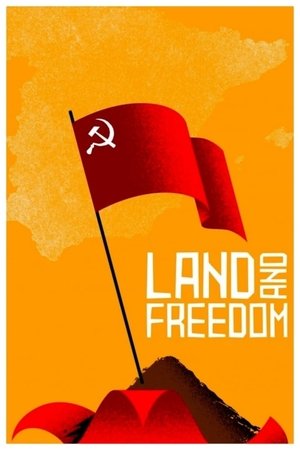
Summer 1936: young unemployed communist David Carr leaves Liverpool to join the fight against fascism in Spain. He joins an international group of Militia-men and women, the POUM (Partido Obrero de Unificación Marxista). After being wounded, he goes to Barcelona, where he joins another group of fighters.
Professor Lola Sánchez investigates the truth behind the events experienced by Rafael Sánchez Mazas, one of the founders of the Falange Española party, during the Spanish Civil War.
During the Spanish Civil War, a family of farmers must face the fascist threat. Tired of turning the other cheek, they will make an unexpected decision.
Rafael and Fermin are comrades in the republican army during the Spanish Civil War. In the last days of the conflict, Fermin is fed up with the war and thinking about going home, while Rafael writes a letter to his wife which includes a story for their son. This story, inspired by Jack London's 'White Fang', runs in parallel to events in the war and towards a shared outcome.
Robert is a war photographer who moves to an andalusian village after the Spanish Civil War, watching in the population a panorama of sadness and pain. Because of his arrival, stories that happened there in the past resuscitate.
Based on the life of Marino Ayerra, who was appointed as parson priest of Alsasua (Navarra) two days before the start of the Spanish Civil War.
Javier López Cronwell, journalist, son of an American and a Spaniard, comes to Spain to write a series of anti-communist articles. The boy is politically neutral and emotionally and personally cold. He comes into contact with his paternal grandfather and the friends of his father, who died in our Liberation War, who propose that he take the provisional ensigns as a topic for his article. He prepares his return to North America without waiting to see the 25th anniversary Victory Parade, despite the wishes of his father's friends, old ensigns who will parade to show the world that they are still in the breach.
Love story during the Spanish civil war in a psychiatric hospital.
In the last four days of his life, fear took over the figure of the poet Federico García Lorca.
Ángel Pedrosa (Álex González, Fernando Luján) returns to Bruma (Córdoba), his hometown, from where he had to flee during the Civil War. He returns to reconstruct his family's history, to forgive himself, and to remember others. Ángel stitches together the fragments of his life during Spain in the second half of 1939. His first love, the hatred of the post-war period, the intolerance and the passages he went through until he had to flee, hastily, out of his homeland to not return until many years later.
During the early moments of the Spanish Civil War, in a spanish village, Isidoro lives with his father Lucas and his horse Coco. Isidoro witnesses how his father, torn apart by their debts, wages his frustration upon Coco.
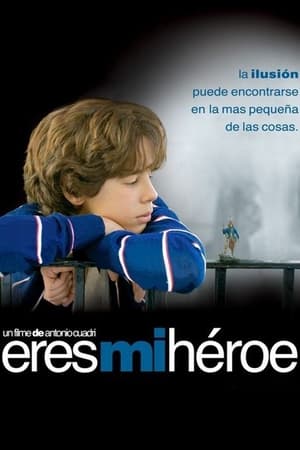
Thirteen-year-old Ramon is on the verge of many adolescent discoveries -- and the confusion that goes along with them. Shy and awkward, he's moved from town to town throughout his childhood and believes that life is about winning and losing. But he soon learns it's all about survival. Like Ramon, Spain is in transition (President Francisco Franco is about to die); it's a time of social upheaval marked by change, illusion and struggle.
An adaptation of the J.P. Sartre story "Le Mur". What goes on in his mind and what happens outside when he has left only few more hours left to live. The existential dilemmas of a prisoner condemned to death from a repressive regime for his participation in a resistance movement and his friendship with the leader of this resistance. When all seems lost and he has already given up the most unlikely coincidence changes the course of events and his life.
At the end of the Spanish civil war, Fando, a boy of about ten, tries to make sense of war and his father's arrest. His mother is religious, sympathetic to the Fascists; his father is accused of being a Red. Fando discovers that his mother may have aided in his father's arrest. Sometimes we witness Fando imagining explanations for what's going on; sometimes we see him at play, alone or with his friend Thérèse. Oedipal fantasies and a lad's natural curiosity about sex and death mix with his search for his mother's nature and his father's fate. Will Fando survive the search?
Paseo
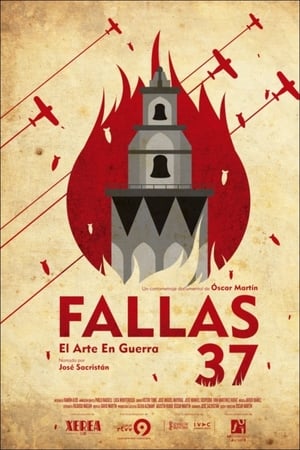
In November 1936, a few months since the beginning of the Spanish Civil War, the government of the Second Republic moves to Valencia. In this situation, several Valencian artists and intellectuals decide to build four fallas — satirical plasterboard sculptures created to be burnt — to mock fascism.