After the Chicago Cubs blow an opportunity to reach the World Series in 2003, Cubs fans blame the team's misfortune on fellow fan Steve Bartman, who interfered with a foul ball and prevented Moises Alou from making a catch.
2020 was truly a season unlike any other. Enjoy "A Season Like No Other", the 2020 Phillies Video Yearbook, narrated by Phils manager Joe Girardi.
Documentary on the life and career of Babe Ruth.
They Said We Couldn't Play is an intimate portrait of a forgotten time in Philadelphia history. It's a story about a group of Philadelphia-area athletes reminiscing about their experiences playing in America's segregated Negro Leagues. A story of prejudice, brotherhood and triumph, told by men who clearly played for the love of the game. The 75-minute documentary features interviews with Stars players and members of the Philadelphia sports community. Narrated by Phillies slugger Ryan Howard, it includes footage of these engaging characters as they interacted with ballplayers of the modern era.
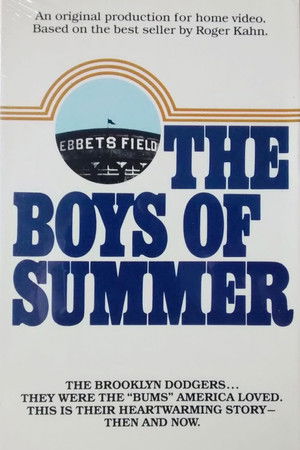
Broadcaster Joe Garagiola narrates the greatest games of baseball's golden era in this nostalgia-packed documentary. Its unique focus is legendary ball games the way most of America witnessed them . . . in the movie newsreels. The venues are America's grand old ball parks: the original Yankee Stadium, Fenway Park, Brooklyn's Ebbets Field; the Polo Grounds, Tiger Stadium and other baseball landmarks that may be gone, but come to life again in this DVD. Witness Babe Ruth at bat; Lou Gehrig's ""luckiest man"" speech; Roger Maris breaking the Babe's home-run record; Pete Gray, the St. Louis Brown's one-armed outfielder; Ted William's final at-bat when he went out in grand style, ending his career with a home run, and other classic moments in baseball history.
처음 혹은 마지막 - 한화이글스 장편 다큐멘터리
An experimental pixelated collage of highlights from the Toronto Blue Jays' 1993 World Series victory, set to ambient tunes released the same calendar year.
Celebrate the life of baseball’s most enduring legend; Satchel Paige was the single most important player in the old Negro Baseball Leagues
Born in 1918 in San Diego, Williams was a latchkey child from a broken home, raised by a mother more dedicated to the Salvation Army than to her two sons, and by a father who spent more time away from home than in it. Williams found salvation by doing the one thing he loved most: hitting baseballs. In his rookie season with the Red Sox, where he would spend his entire career as a player, Williams batted .327, socked 31 homers and led the league with 145 RBI. Over the next 21 years, despite losing five seasons of his prime to active service as a U.S. Marine Corps pilot, Williams hit 521 home runs, twice captured the Triple Crown, and became the oldest man ever to win a batting title. He finished his career with a .344 lifetime batting average, was the last man to hit over .400 in a full season, batting .406 in 1941, and was a first-ballot inductee into the Baseball Hall of Fame.
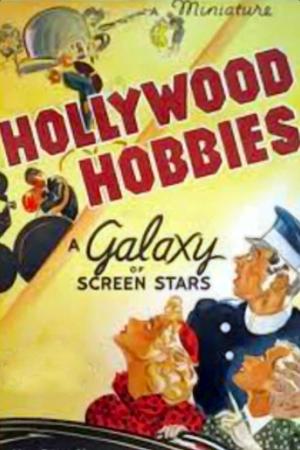
In this short film, two starstruck movie fans hire a tour guide and see a plethora of Hollywood stars.
Plataneros
A baseball loving community unites to make its MLB dream come true and hits a home run with the 1993 arrival of Colorado Rockies.
The Lotte Giants is a huge part of Korean professional baseball's history. 30 years have passed since their last win in 1992. Now, they are tired of self-dissing mixed with resentment against the club and players. But, why can't they leave even though they know? Why won't the 'Talde effect' work? Why do they get excited when spring comes? Why are they so sure the win rate will be over 50%? Now here, nevertheless, with fans moving to Sajik Baseball Stadium, the 40-year history of the Giants unfolds centered on former and current Lotte Giants players.
1969, New York City, 3 teams won World Championships, the Jets, the Mets and the Knicks.
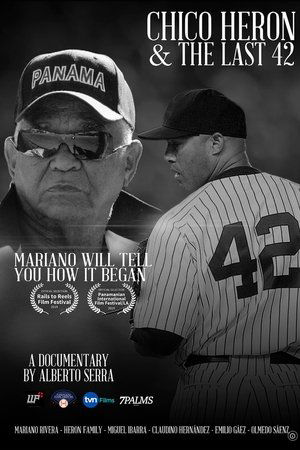
The film delves into the lives of baseball legends and tells the story of how one man, Chico Heron, came to impact so many icons that the sport now cherishes, including MLB Hall of Famer Mariano Rivera.
On Oct. 17, 1989, at 5:04 p.m. PT, soon after Al Michaels and Tim McCarver started the ABC telecast for Game 3 of the World Series between the San Francisco Giants and the Oakland Athletics, the ground began to shake beneath Candlestick Park. Even before that moment, this had promised to be a memorable matchup: the first in 33 years between teams from the same metropolitan area, a battle featuring larger-than-life characters and equally colorful fan bases. But after the 6.9 Loma Prieta earthquake rolled through, bringing death and destruction, the Bay Area pulled together, and baseball took a backseat.
This is a recap of the 2004 Boston Red Sox season that finished with them breaking a winless drought of 86 years by coming back against the New York Yankees and later sweeping the world series.
In the fall of 1993, in his prime and at the summit of the sports world, Michael Jordan walked away from pro basketball. After leading the Dream Team to an Olympic gold medal in 1992 and taking the Bulls to their third consecutive NBA championship the following year, Jordan was jolted by the murder of his father. Was it the brutal loss of such an anchor in his life that caused the world’s most famous athlete to rekindle a childhood ambition by playing baseball? Or some feeling that he had nothing left to prove or conquer in basketball? Or something deeper and perhaps not yet understood?
In 1982, Cody Webster and a small group of friends from Kirkland, Washington, sat anxiously in a dugout waiting to take the field for the championship game of the Little League World Series. Their focus was just about what you’d expect from any 12-year-old: hit the ball, throw strikes, cross your fingers and then maybe – maybe – you’ll win. Adults in the stands and watching from home saw a much broader field of play. The memories of American hostages and a crippling oil crisis were still fresh; the economic malaise of the late 1970s still lingered; and the new President was recovering from an assassination attempt even while confronting new threats from the Soviet Union. Meanwhile, back on that tiny baseball field in Williamsport, Pennsylvania, no American team had won a true international Little League World Series Championship in more than a decade. When the Kirkland players rushed from their dugout that day, they stepped onto a much bigger field than the one they saw.
In Fernando Nation, Mexican-born and Los Angeles-raised director Cruz Angeles traces the history of a community that was torn apart when Dodger Stadium was built in Chavez Ravine and then revitalized by one of the most captivating pitching phenoms baseball has ever seen. Nicknamed “El Toro” by his fans, Fernando Valenzuela ignited a fire that spread from LA to New York—and beyond. He vaulted himself onto the prime time stage and proved with his signature look to the heavens and killer screwball that the American dream was not reserved for those born on U.S. soil. In this layered look at the myth and the man, Cruz Angeles recalls the euphoria around Fernando’s arrival and probes a phenomenon that transcended baseball for many Mexican-Americans. Fernando Valenzuela himself opens up to share his perspective on this very special time. Even 20 years later, “Fernandomania” lives.