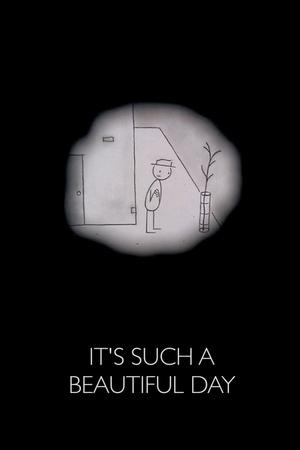
Mockumentary experimental film, which shows one day in the life of a young man. The action takes place on the Day of Soviet Cosmonautics, April 12, one of the last years of the USSR. Outside the window, it is gradually getting warmer, the onset of spring is felt, promising hope for the possibility of changes in the country. The hero of the film is fond of space. The young man, who idolizes Gagarin, is engaged in reconstruction, making the uniform in which the cosmonaut walked in the prime of his glory. Our hero is also a film enthusiast. He makes films with stories of space flights and shows them to his friends. The film is stylized as amateur films of the 1980s and was shot on a 16-mm color film made by the company" Svema", made in the Soviet Union. The quality of this film allows the viewer to fully immerse themselves in the atmosphere of the time of the film, which is dedicated to Soviet cosmonautics and Edward D. Wood Jr.
The film is a stage play hybrid showcasing dark and absurd sketches based on contemporary Hungarian news of the 2000's with campy, senseless musical interludes in-between. Highly experimental in nature that - like Marmite - will split its' crowd into ones that'll love it and others that'll loathe it. There's no middle grounds here. The topics included are: The Hungarian Olympians' doping scandal, political terrorism, the national elections... and more.
A short film made with unused footage from The Red Light Bandit and Carnaval na Lama.
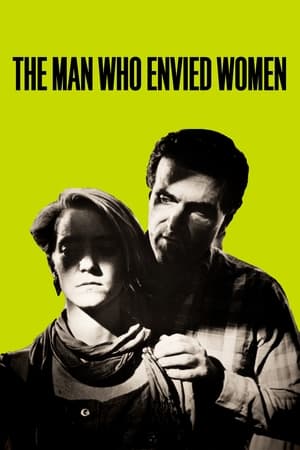
Egotistical faded star Hedy Lamarr visits a plastic surgeon to be transformed into the "14-year-old girl" she believes herself to be. She is then caught shoplifting by Mary Woronov and is put on trial, with Tavel as the judge and her five ex-husbands the jury. Hedy remains self-centered and detached throughout, posing and primping and bursting out renditions of "I Feel Pretty" and "Young at Heart."
Dislocation in time, time signatures, time as a philosophical concept, and slavery to time are some of the themes touched upon in this 9-minute experimental film, which was written, directed, and produced by Jim Henson. Screened for the first time at the Museum of Modern Art in May of 1965, "Time Piece" enjoyed an eighteen-month run at one Manhattan movie theater and was nominated for an Academy Award for Outstanding Short Subject.
An auto-documentary about a disenfranchised Everyman and his struggle to re-integrate himself into society. He fails and turns to crime.
Three actors in Hollywood live and love together. A director comes from New York to make a movie about actors and Hollywood.
Bill struggles to put together his shattered psyche.
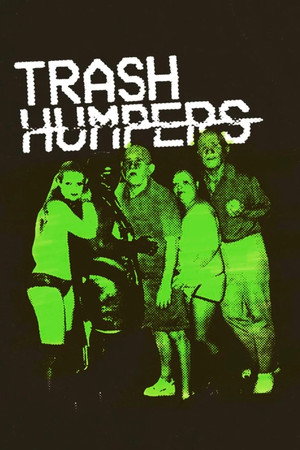
Follow a small group of elderly “Peeping Toms” through the shadows and margins of an unfamiliar world. Crudely documented by the participants themselves, we follow the debased and shocking actions of a group of true sociopaths the likes of which have never been seen before. Inhabiting a world of broken dreams and beyond the limits of morality, they crash against a torn and frayed America.
Julie, a teen who died from a PCP overdose in the early '70s, searches from beyond the grave for her younger brother Bob, who now in the '90s is an obese watch seller suffering with sucrose intolerance.
Glen doesn't dare tell his fiancée Barbara that he is a transvestite; in addition, Alan is undergoing medical treatment to become a woman named Anne; both stories are told by a psychiatrist.
A gang of women wreak havoc in the city, killing various men who have treated women poorly. And sometimes they do it just for fun.
Hoping to find a sense of connection to her late mother, Gorgeous takes a trip with her friends to visit her aunt's ancestral house in the countryside. The girls soon discover that there is more to the old house than meets the eye.
How many movies have you seen where at the end the main character wakes up, causing he and the audience to simultaneously realize that everything they witnessed beforehand was "just a dream?" This film takes that principal but instead of deceiving, the story invites you to watch the main characters dream away. As a result, "True Dreams" takes the dream sequence to a whole new level: it lets its audience in on the joke, while they watch the two main characters run around unaware of the reality/fantasy of their surroundings. This film can be viewed via Vimeo at https://vimeo.com/132642294 (password: truedreams)
Disillusioned English banker's wife Mary meets troubled Italian immigrant Bruno, with whom she is captivated by and they set off on a voyage on which they meet a variety of society's dropouts.
An experimental journey through a year in the life of the director, using his always playing playlist to cross the boundaries of fiction and documentary. Through scenes of both comedy and tragedy, realistic documentary footage and experimental sequences of the director's environment and daily life we get a sometimes estranging image of a young man and also an intriguing insight in his mindset and how this translates to the imagery on screen.
A Hollywood actor grows tired of making the same corporate movies, so he moves to Argentina to find more experimental and meaningful work.
An anthology of one-minute films created by 51 international filmmakers on the theme of the death of cinema. Intended as an ode to 35mm, the film was screened one time only on a purpose-built 20x12 meter public cinema screen in the Port of Tallinn, Estonia, on 22 December 2011. A special projector was constructed for the event which allowed the actual filmstrip to be burnt at the same time as the film was shown.
This film tell us about intricate attitudes in male collectives on navy. The film bore in poetical form with respect for differently minded heroes.
The tragicomedy of the absurd, is based on the works of Daniil Kharms (1905-1942). Trying to recreate reality 30s, who came to the flowering of creativity Harms, the director plays the style of filming, acting at that time and enters into the picture, "the aged" sound. Thus, it is possible to achieve maximum reliability of the author's text and sound to help the viewer to immerse themselves in the atmosphere in which he lived and worked classic absurdity. This is - a world of illusions, allusions and associations, reflecting a stream of consciousness of the creator living in an era of silence.