A journey into the lives of the famed Vachon wrestling family through the eyes of Paul “The Butcher” Vachon, the last living member of the dynasty.
The Chukchi reindeer breeders are peculiar people. They are nomads. Reindeers are their welfare, the purport of life. The mother-reindeer is the main divine being; it protects the Chukchi from misfortune and troubles. Nature is not friendly towards people here. Only Chukchi can survive in Tundra. A rush period for the Chukchi reindeer breeders comes in winter, when the temperature rises up to 50 degrees Celsius at night and in the sunlight of the day it doesn't exceed 40 degrees Celsius in tundra: they should separate young deers from the rest of the herd, the weak from the strong. And this, considering that the herds of the Chukchi reindeer breeders number some thousand heads...
Two years after an injury halted his career, Germán, a two-time Olympic medalist, returns to competitions with the desire to win one last medal.
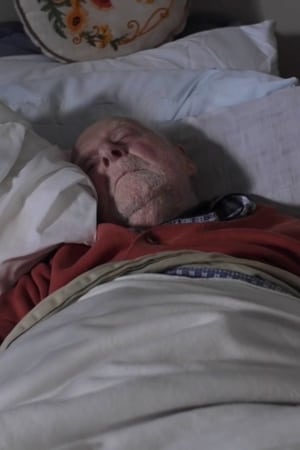
Sigrid Koetse, award-winning actor and grande dame of Dutch theater, lived most of her life in the public eye and was always surrounded by a crowd of admirers. With this short documentary, filmmaker Wytse Koetse shows how his aunt spends her days nowadays, lonely in her Amsterdam home.
This film tells a story of ethnic Koreans from Russia and the post-Soviet territories making their new home in New York City. The history of the diaspora is told through conversations with Lidiya Kan’s mother, personal stories, fragmented memories, and her family photo archive. An important character of the film is Morkovcha, the Korean carrot salad, an invention of the Russian Korean diaspora; its essence is symbolic of their mixed identity.
Arctic Tale is a 2007 documentary film from the National Geographic Society about the life cycle of a walrus and her calf, and a polar bear and her cubs, in a similar vein to the 2005 hit production March of the Penguins, also from National Geographic.
An Oscar nominated documentary about a middle-class American family who is torn apart when the father Arnold and son Jesse are accused of sexually abusing numerous children. Director Jarecki interviews people from different sides of this tragic story and raises the question of whether they were rightfully tried when they claim they were innocent and there was never any evidence against them.
As the Russian invasion begins, a team of Ukrainian journalists trapped in the besieged city of Mariupol struggle to continue their work documenting the war's atrocities.
Film capturing a family holiday on the North Antrim coast, with trips to the Giant's Causeway and the Carrick-a-Rede Rope Bridge.
This short documentary is a tribute to the unknown father. Emerging filmmaker Danic Champoux poses the question "How many men still have to uproot themselves and leave their families to get work?" as he sets out to search for his own father. He wonders about these men who are labourers, itinerants, and mostly nameless, but who are all exemplary providers. But at what cost? This film was produced as part of the Libres Courts collection of first-time documentary shorts.
In this documentary shot at Canadian Forces Base Petawawa during a troop deployment to Afghanistan, children and teens talk about the particular circumstances of having soldiers as parents. Directed by Claire Corriveau, Children of Soldiers lifts the veil on a reality shared by thousands of young Canadians, and on the difficulty of finding a balance between loyalty to the troops and staying true to themselves.
Harrow’s extraordinary and opulent pageant, and seaside holidays on the south coast.
In Vancouver, British Columbia, two teenagers attempt to create a feature length documentary about their lives. The main character James (played by himself) becomes obsessed with the project and is pushed into a more introverted, lonely existence. His best friend Quinn (played by himself) sets out to help him, but is met with the real answer as to why James is keeping himself inside: the rejection of what he thinks is the love of his life. The two of them go their separate ways, with James going deeper into a depression he’s not sure he can escape from.
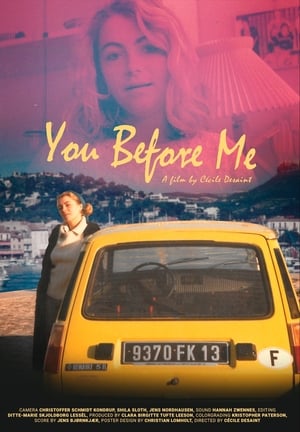
Over the course of thirteen years, the filmmaker and protagonist shares the experience of his binational family, taking us to his wife's country. "Becoming family" requires a significant cultural sacrifice, as they navigate the challenges of uprooting and integrating into a new society. The film offers a transformative glimpse into the realities of migration.
The family enjoys a sunny but windy day on the pier in Clacton-On-Sea.
Three young men bond together to escape volatile families in their Rust Belt hometown. As they face adult responsibilities, unexpected revelations threaten their decade-long friendship.
Yin Honqiang, a master carpenter from Jiangyin, has been working with wood for over 50 years. Along with his son and his grandson, they create handcrafted pieces of furniture of the highest level, what lead them to be one of the most important furniture makers in all of China. Take a seat is a close look at their way of working while keeping the tradition alive throughout generations.
We met in first grade in Ms. Locklear’s class. During the summer of 2006, we decided to search for our beloved teacher. We chose not to use the internet or the telephone, but instead to rely on face-to-face contact with people. Looking for Ms. Locklear is a documentary chronicling our search, which led us far from home and into the company of a host of characters.
Viztor o fenômeno
Miyamoto-cho is a community of Mom-and-Pop stores and family enterprises located near the center of Tokyo. Competition from supermarkets and shopping centers threatens the livelihoods of long-term residents. High land prices tempt owners to tear down old homes and replace them with apartment buildings; this in turn is changing the composition of the population. Against this backdrop, residents strive to maintain the close social ties, symbols of local identity, and community rituals that keep Miyamoto-cho from becoming just another mailing address. Theodore Bestor began his research here in 1979. His prize winning book of the same name is available through Stanford University Press. This documentary is one of a series depicting the variety of life in today's Japan in the context of human problems common to all industrial nations. A comprehensive study guide is available.