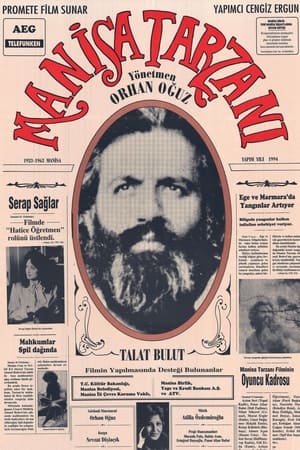
Ahmet Bedevi, also known as Tarzan of Manisa, was born in 1900 in Baghdad to become a soldier, fighting in the War of Independence and honored with a medal. He returned to a ruined and destroyed Manisa in 1923. Bedevi started working at the Municipality as a fireman and a gardener. He became the pioneer and symbol of planting activities. Because of the soft climate of the area, he first wore a vest and trousers and then he started wandering about in the town in his shorts. The people of Manisa saw his resemblance to Tarzan because of his clothes, and always cherished him with love. Tarzan of Manisa lived in the mount Spilylus, ignoring all his individual needs but working for a greener environment. He died on 31st May, 1963. However, he has never been forgotten by the locals; on the contrary, he was immortalized for the things he did for Manisa and people followed his example.
An experimental silent film made with a team of three. Humanity is being wiped out and the last people left are friends May and Pearl. The main themes of the film are friendship that gives strength and hope, as well as current concern for the future of humans and our nature. Could we start over or was this it?
Suzume, 17, lost her mother as a little girl. On her way to school, she meets a mysterious young man. But her curiosity unleashes a calamity that endangers the entire population of Japan, and so Suzume embarks on a journey to set things right.
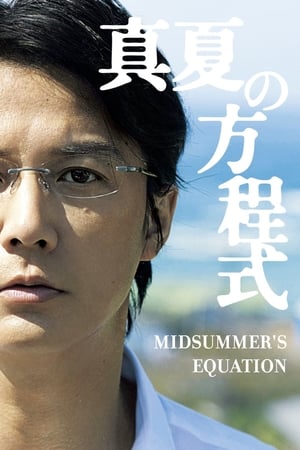
Masaharu Fukuyama reprises his role from 2008's "Suspect X," playing the physicist-cum-detective Manabu Yukawa. The scientist-sleuth arrives in an oceanside town to speak on a panel. But when a man turns up dead outside the inn where he's staying, Yukawa begins to unravel the connections that tie the victim to the activist daughter of the innkeepers, and a precocious boy who first appears on a train—and keeps popping up. It's a Sherlock Holmes mystery with an environmental twist, and one that should please fans of a classic whodunnit.
Welcome Home.
When a ship sinks during a storm, a slave from the industrial island of Plutonia is washed up on the beaches of paradise island Melonia, where the "all-powerful" wizard Prospero and his strange friends reside.
This may be the one of the most important Horizon films of recent years. Climate scientists have just discovered a phenomenon that threatens to disrupt our world. It may already have contributed to the deaths of hundreds of thousands through drought and famine. Unchecked, it will strike again. The good news is that there is a cure. The bad news is that the cure may be worse than the disease. If they are right, then in tackling the one problem, we may unleash a climate catastrophe on our planet. This is a film about stark choices and about the dawning realisation that all our predictions about the world's climate may be completely wrong. At its heart is something that scientists are calling "global dimming".
Nestled below the rugged peaks of the Northern Rockies and along the crystal-clear Kootenai River lies the small logging town of Libby, Montana - an ironic setting for a town where many hundreds of people are sick or have already died from asbestos exposure.
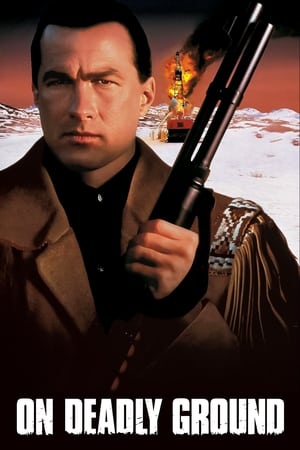
Forrest Taft is an environmental agent who works for the Aegis Oil Company in Alaska. Aegis Oil's corrupt CEO is the kind of person who doesn't care whether or not oil spills into the ocean or onto the land—just as long as it's making money for him.
“Te Pito o Te Henua” (The Navel of the World) tells the story of the community behind Rapa Nui’s largest and most colorful annual Indigenous celebration, the Tāpati Rapa Nui Festival. Honoring ancient rites and competitions, Rapa Nui families participate in nine days of athletic feats, cultural demonstrations and ceremonies paying respect to the land, water and other natural beings of the island. They also crown a Queen to represent her people for a year throughout Polynesia and on the world stage. The film traces the journey of 19-year-old candidate Vaitiare and her family as they join work to earn her the crown and represent this small but well-known island as its people fight for increased autonomy and recognition on the world stage. Through intimate character portraits, behind-the-curtain moments and heartfelt musical performances, “Te Pito o Te Henua” reveals the true meaning of Tāpati and the deep connections the Rapa Nui share with their lands and waters.
For most of the world, consumption has been the unquestioned duty of every individual. Then garbage activist Annie Leonard brought her two-hour lecture to Free Range who helped her turn it into a 20-minute animated revolution. Shown in thousands of classrooms, endlessly blasted by Fox News, viewed more than 10 million times, The Store of Stuff finally opens the door to a serious cultural dialog about the costs of consumption.
An exploration of built and natural environments along the 800-mile length of the Trans-Alaska Pipeline.
Life in Canada is reflected by people's comments on trees as a tree is shown undergoing seasonal changes.
In an attempt to help his friend Marcos with his impotence, Jaime sets up him up with another friend Josita. But the sex date fails, and so he comes in to help. What first appears to be just another sexual experience for all three evolves to a full romantic relationship.
The true story of mountain climber Aron Ralston's remarkable adventure to save himself after a fallen boulder crashes on his arm and traps him in an isolated canyon in Utah.
A television program is interupted by a news network announcing that three meteors have hit the United States, France and China. At first it seems natural but after interviews by scientists and eyewitness seems to suggest that it is not. Three more meteors are coming and the various Earth governments combine forces to stop them.
The life of a young Jesuit seminarian is turned upside down when he falls in love with a young woman while working as a volunteer at a soup kitchen.
Igor Gordić was an Olympic champion in shooting, but now he is a junky without money and in debts to mafia. Saša is his younger brother and he is getting ready for the next World Championship. Since he's not getting enough terms to practice indoors, he has decided to go out and find himself a target to practice on.
Winter 1942: Like thousands of other German soldiers, Asch and Vierbein have ended up at the Eastern front. Although Vierbein finds a new friend in Kowalski, the squadron commander captain Witterer, a true army veteran, gives them a really hard time. Witterer’s pointless orders reflect the bad habits of many former superiors. And again, Vierbein has to bear the brunt.
The third part of Paul May′s "08/15" trilogy based on the novel by Hans Hellmut Kirst takes place shortly before the end of World War II: In the spring of 1945, the German troops are practically defeated, and the battalion of Kowalski, major general von Plönnies and Asch who had risen to the rank of lieutenant in the meantime is left to its own devices to a large extent. They hope to be able to wait for the end of the war without having to encounter any combat operations. At the same time, Asch tries to prevent high-level Nazi officers from disappearing unnoticed and from cashing in on the chaotic circumstances.