One of humanity’s greatest achievements, the International Space Station is a $150 billion science laboratory hurtling around Earth at 17,000mph, its thin metal walls shielding astronauts from the most hostile environment humans have ever endured. Microgravity, the vacuum of space, extremes of temperature, micrometeorites - life here is perilous. To mark 25 years of continuous habitation onboard, Space Station We Have a Problem reveals how astronauts are only a technical glitch or software error away from disaster. From malfunctioning spacesuits and docking disasters, critical leaks and even the entire space station backflipping out of control, this is life and death played out in low earth orbit, coupled with the bravery and brilliance that each time, saves the day.
From test flights to moon landings, thousands of people have dedicated their lives to the field of space exploration. Moon Memories presents firsthand accounts of those who made it all possible, and who now inspire a new generation of scientists, engineers and explorers.
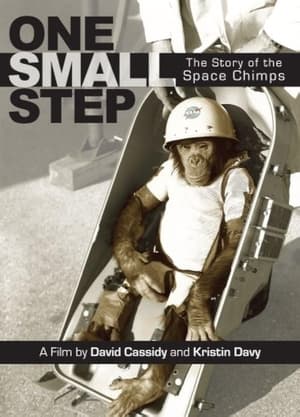
One Small Step: The Story of the Space Chimps is the dramatic and moving real-life tale of the United States Air Force chimponauts and their NASA compatriots.
July 1969. Astronauts Neil Armstrong and Buzz Aldrin are 240,000 miles from earth facing the most hazardous venture in the history of space flight; the first human landing on another world. They'll succeed, abort, or die in the attempt.
A long time ago, years before Elon Musk reached for the stars with his Space X project, a young man had his own childhood dream about a journey into space. This documentary tells the fantastic story of German astrophysicist Lutz Kayser who developed the world's first private space company. He did this under the curious and concerned eyes of secret services around the world.
Before the joint NASA/ESA Cassini-Huygens mission, humanity only knew what had been learned, decades earlier, with the previous limited, rapid "fly-by" Pioneer and Voyager missions. Cassini-Huygens spent more than 13 years in wildly varied orbits around Saturn, allowing the spacecraft to pass near many of its moons, as well as execute a soft-landing of its Huygens lander on the moon Titan. By mission end, it accumulated a mountain of imagery and scientific data that will continue to be studied for years to come. This film is a testament to the amazing efforts of the scientists who planned and executed the mission. It combines breathtaking images, movies, and a variety of animations to take the viewer into Saturn's complex system of rings and moons, as well as stepping viewers through some of the more exciting scientific discoveries made over the course of the elaborately complex mission.
Spacecraft OSIRIS-REx attempts to grab a piece of an asteroid to bring back to Earth so scientists can study it to learn about the planet's origins.
Relive humankind's incredible accomplishment of walking on the moon in this program that presents highlights of Walter Cronkite and the CBS News Team's comprehensive coverage of the thrilling nine-day Apollo 11 mission. Then, Cronkite reports on the treacherous voyage of Apollo 13, as the brave crew struggles to regain control after an explosion rips through the ship hundreds of thousands of miles above Earth.
An idea born in unsettled times becomes a feat of engineering excellence. The most complex machine ever built to bring humans to and from space and eventually construct the next stop on the road to space exploration.
"Destination Moon" is the third in the trio of documentaries about the beginnings of the space age. It documents JPL's ambitious plan to beat the Soviet Union in robotic space exploration by reaching not only for the moon, but also the inner planets. But as the hour-long episode documents, JPL would be humbled by a series of failures in attempting to merely hit the moon, let alone visit the other planets. "We didn't know what we were doing," one veteran JPL engineer confides, "and there was no one around to tell us." This film shows how JPL did learn to go to the moon and to the planet Venus, giving the United States its first "First in Space."
"Explorer 1" is the second episode of "Beginnings Of The Space Age". The 60-minute documentary reveals how JPL and the U.S. Army could have been the first to place a satellite into Earth orbit, had they only been given the chance. That opportunity was lost when the Eisenhower administration, unsure of what the Soviet reaction would be to a satellite launched (in part) by the U.S. Army military, hesitated and assigned the project to a civilian-led program called Vanguard. The Soviet Union launched Sputnik in October 1957, shocking the world and creating the "Race for Space" in the midst of the Cold War. Only after the Vanguard rocket exploded on the launch pad were JPL and the U.S. Army given its chance. The result was Explorer 1, the first successful U.S. satellite, which also achieved the first space science results.
Apollo XI : L'Aventure en direct
Examine the remarkable role NASA plays both in our country and for our planet. Covering sixty years and beyond, the film celebrates past accomplishments, investigates current initiatives, and surveys future plans. Follows NASA to the moon, to the surface of Mars, to the outer reaches of our solar system and, above all, back to our home base: Earth.
The fact that Neil Armstrong was the first man to set foot on the moon on July 19, 1969, was also the success of Wernher von Braun and a team of more than 100 NASA technicians and engineers from Germany. But the success story is shrouded in dark shadows: Many of the Germans had a Nazi past and were part of the development of the infamous V2 rocket. Some 20,000 forced laborers lost their lives during the production under the inhumane working conditions at several Nazi underground weapons factories. In a secret operation to secure German rocket technology, the Americans brought the scientists to the USA in 1945. Only decades later were classified documents released, detailing the involvement of German NASA employees with the Third Reich.
On July 16, 1969, the world watches as the three Apollo 11 astronauts attempt the impossible: to ride a controlled explosion off Planet Earth, land on another celestial body and return home. As the nine-day mission proceeds, audio from mission control captures the drama as it unfolds—each moment revealing new dangers, new decisions and new wonders. For the first time on television, this documentary utilizes “lost tapes” of the astronauts, recorded before and after the mission, along with rare film and photos. The documentary reveals the doubts and fears of the astronauts as they stand on the brink of history. The mission was nearly aborted twice, as the crew faced a mysterious alarm sounding in the spacecraft, and when fuel levels ran dangerously low. On the 50th anniversary of NASA’s most audacious achievement, Moon Landing: The Lost Tapes reveals the incredible true story of mankind’s greatest leap.
Curiosity: Life of A Mars Rover
The complex engineering challenges that make re-entry into the earth's atmosphere so dangerous. Scientists have labored for years to bring a crew safely home in what is essentially a meteorite, wrapped in a cocoon of fire, hurtling towards earth six times faster than the fastest bullet. Scientific experts from NASA explain the significance of Columbia's events as they unfolded, offer insights into what may have caused them and how those key events contributed to the shuttle’s ultimate destruction.
Discover the UFO phenomenon like never before, with insights from NASA, CNES, Oxford, compelling firsthand witnesses, and even the possible viewpoint of extraterrestrial visitors.
National Geographic's riveting effort recounts all 12 crewed missions using only archival footage, photos and audio.
Never-before-heard audio tapes recorded with Neil Armstrong during the final years of his life reveal an intimate portrait of this iconic - and famously private - man. Illustrated through previously unseen personal photographs and archival footage, this documentary special takes viewers on an emotional journey into the thoughts and experiences of the first man on the Moon.