Martin Scorsese Par Martin Scorsese
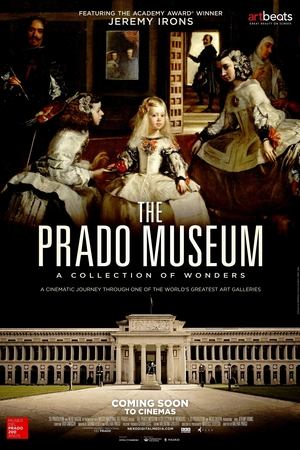
Actor Jeremy Irons embarks on an epic journey through the halls of the Prado Museum in Madrid, Spain, two hundred years after its inauguration, along corridors where thousands of masterpieces of all time tell the lives of rulers and common people, and tales about times of war and madness and times of peace and happiness; because, as Goya said, imagination, the mother of the arts, produces impossible monsters, but also unspeakable wonders.
That's Poker - Dans la peau d'un joueur
Bertolucci par Bertolucci : Leçon de cinéma
Anna Calvi - Salle Pleyel - Paris
Alfredo Rodriguez & Pedrito Martinez en live au festival Jazz sous les pommiers 2019
Moves the viewer into the perspective of a foreigner. Mexicans who live in Austria and Austrians who spend their lives in Mexico: through clichés and yearnings - these emigrants create a picture of their countries, and through determining their location, attempt to their identity. They are accompanied by two cinematographers, who also go to a "foreign" place. Their views go along with the narrators and narratives into the respective, other country.
By day, Bohdana lives an ordinary student life: metro rides, classes, music in her headphones. By night, she is thrown back to Ukraine — into memories of family, constant danger, and the echo of sirens.
Donald is shown in both animated and costumed form, interacting with emcee Dick Van Dyke and other cast members. The film not only shows Donald's life, but also depicts an extensive international tour that Donald went on in 1984 as well as showing various celebrities of the day wishing Donald happy birthday. The tour culminates in a parade in Donald's honor at Disneyland.
A Valentine's Day special featuring rock and roll music set to scenes from Disney animation.
"Living with the Taliban" offers a powerful glimpse into post-2021 Afghanistan. Through personal stories, it shows the experiences of regime supporters and those whose lives have changed, highlighting the struggle between hope and despair.
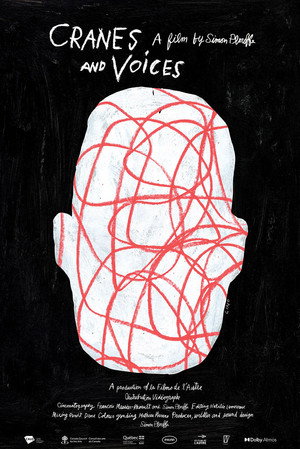
Cranes and Voices follows, on one side, people who hear voices and share their daily lives, and on the other, a collective of tenants who investigate their neighbourhood through its noises, its vibrations and its construction sites. The film moves through apartments, streets, meetings and moments of sound creation, where voices, urban noises and recorded materials are transformed into collective sound compositions and spaces for exchange. Sound appears here as an ambivalent force, at once invasive and generative, shaping the way we inhabit the city, other people and ourselves. Cranes and Voices invites us to pay attention to these singular listening experiences, to hear what they reveal about the housing crisis, about how mental health is viewed and about the ways we organise our shared spaces.
Contos de Nazaré
Vodní energie
New Left documentary
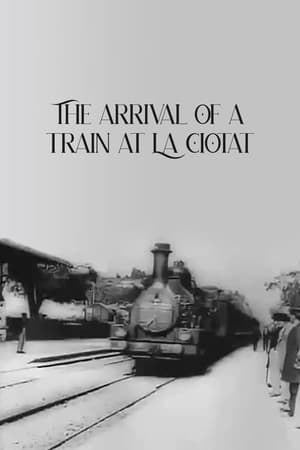
A group of people are standing along the platform of a railway station in La Ciotat, waiting for a train. One is seen coming, at some distance, and eventually stops at the platform. Doors of the railway-cars open and attendants help passengers off and on. Popular legend has it that, when this film was shown, the first-night audience fled the café in terror, fearing being run over by the "approaching" train. This legend has since been identified as promotional embellishment, though there is evidence to suggest that people were astounded at the capabilities of the Lumières' cinématographe.
An examination of the life of great Russian author Leo Tolstoy, who penned the 1877 novel Anna Karenina.
Delves into the history of the most extreme and shocking films that have ever been made. chronicles the timeline of Red Films: those films that are too extreme for the mainstream and historically have been circulated via the bootleg circuit.
This documentary explores the theatrical work of Eduardo Pavlovsky, while also examining its connection to his era and his social and political commitment. It also includes footage of rehearsals for a stage production featuring excerpts from his plays, with Tato himself performing on stage.
A young Mapuche from Bariloche claims his identity and his culture. A Guluche journalist travels through these territories trying to recover the memories of the elders about the war and the massacre of his people. A historian from Buenos Aires finds in the archives the documents that allow him to prove who financed the army and what they obtained in return.