In the 1940s, the world was in turmoil, and it was crucial to decipher the enemy's communication codes in a timely and accurate manner. Rong Jinzhen has shown amazing mathematical talent since her childhood, and because she solved the problems assigned by her math teacher, she was noticed by more people, and even walked into the door of code-breaking by mistake.
After losing his parents, a young Jewish boy wanders Eastern Europe, seeking refuge during World War II.
At the end of the 1960s, when the air is filled with rock-and-roll and student rebellions are changing the world, the older of two brothers joins a prestigious newsroom of the public radio broadcaster. Not long after, he finds himself in the middle of a dangerous conflict between journalists and the secret service.
Tells the life story of Danish author Karen Blixen, who at the beginning of the 20th century moved to Africa to build a new life for herself. The film is based on her 1937 autobiographical novel.
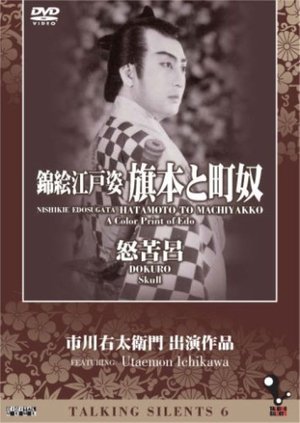
The Color Print of Edo is a 1939 black and white Japanese silent film with benshi accompaniment directed by Kazuo Mori. It is a cheerful period drama, sprinkled with comical scenes and tells the story of a loyal and handsome Edo period servant who fights to help his older brother marry the woman he loves. The star of this film, Utaemon Ichikawa, gained enormous popularity for his portrayal of a cheerful and chivalrous man.
In 1912, the Titanic embarks on its inevitable collision course with history. In the wake of the over-spending required to build the largest luxury ship in the world, White Star Line executive Sir Bruce Ismay schemes to reverse the direction of his company's plummeting stock value. Onboard the Titanic, brave German 1st Officer Petersen struggles to convince his self-important British superiors not to overexert the ship's engines.
When loyalty to country becomes loyalty to a lie, one teen risks everything to expose the truth. With the Gestapo closing in, he must decide what it really means to be a good German.
A parable about honor and true character, inspired by the reality of the 18th century. Constantin Brâncoveanu preferred to be beheaded in Constantinople alongside his four sons - Constantin, Stefan, Radu, and Matei - as well as by his counselor Ianache Vacarescu, instead of renouncing the Christian faith.
Based on the life of Rosa Bonheur, a trailblazing feminist and artist who rose to fame in 19th century France.
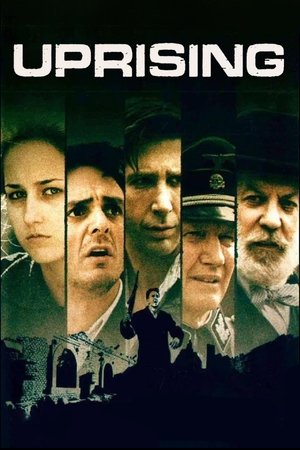
The story of Auschwitz's twelfth Sonderkommando — one of the thirteen consecutive "Special Squads" of Jewish prisoners placed by the Nazis in the excruciating moral dilemma of assisting in the extermination of fellow Jews in exchange for a few more months of life.
Under the regime of Louis XVIII. Years after Waterloo, Napoleon's loyal officers live in retirement on half-pay. Useless and idle, they have lost their prestige and keep meeting in the hope of the Emperor’s return. When Napoleon dies, they decide to plot the rise to power of Napoleon II.
Inspired by the scriptural tale. Moabitess priestess Ruth is drawn both to a Judean man and to his talk of a forgiving God. After tragedy strikes, she begins a new life in Bethlehem.
Chronicles the rise of young Shivaji Bhonsale, who challenged the might of established empires to found the Maratha kingdom and lay the groundwork for “Swarajya” (self-rule) during a turbulent period of Indian history.
Shakespeare's King Lear is reimagined as a singular historical epic set in sixteenth-century Japan where an aging warlord divides his kingdom between his three sons.
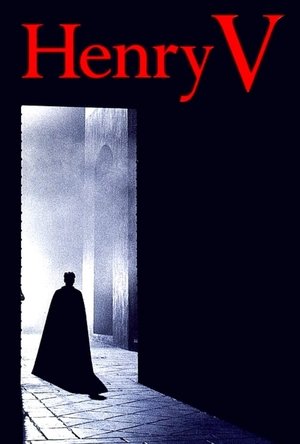
In 1415, in the midst of the Hundred Years' War, the young King Henry V of England embarks on the conquest of France.
A young Prince Asoka works to perfect his skills in battle and also deals with family conflict. During a struggle with one of his step-brothers, his mother urges Asoka to escape to stay alive. While away, Asoka meets Kaurwaki and falls in love, but must use his skills as a warrior to protect her. A dangerous and heartbreaking web of conspiracy follows, which leads Asoka to embrace a Buddhist path.
Pioneras: Solo querían jugar
Oscar Wilde is a married playwright who has occasionally indulged his weakness for male suitors. After much toil, Wilde debuts 'The Importance of Being Earnest' in London, and a chat at the theatre with Lord Alfred 'Bosie' Douglas leads to a full-fledged romance. However, this affair leads to a legal dispute with Lord Alfred's oppressive father, the Marquess of Queensberry, and, given the local anti-gay laws, Wilde is jailed. Wilde's vast intellect helps him survive until he regains his freedom.
At the turn of the sixteenth century, Michelangelo (Mark Frankel), Raphael (Andrea Prodan), and Leonardo Da Vinci (John Glover) create their masterpieces, while dealing with religious persecution, political turmoil, and the discovery of America.
Before the Liberation, during the years of the exiled Bulgarian revolutionaries in Romania, the Major and the Prime Minister once shared the same ideals, the same home, and even the same woman. Today, the Major orchestrates a conspiracy to overthrow the government led by his former friend, the Prime Minister. The head of state must be assassinated, and the Prince – dethroned. The woman is part of the plot, but she will try to prevent the fratricide.