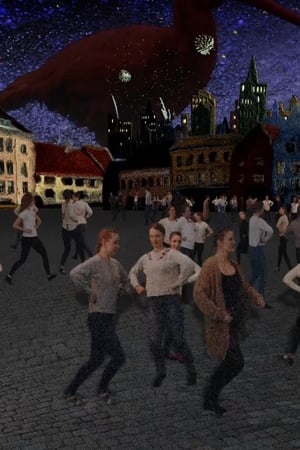
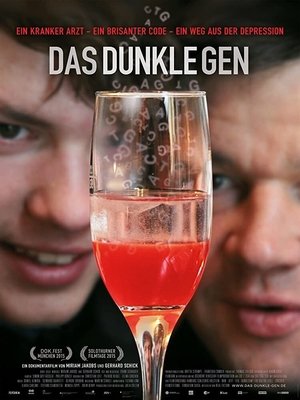
The development of nature is controlled by the genetic chain. Life goes on as the information code is stored in the gene chain. Every living being tries to indulge and laze. Unfortunately, development doesn't happen this way. The gene chain only rusts. Progress will only be made if there is an urgent need for it. The protagonist's rusty gene chain only starts working when the fear of death arises. What code is hidden in the human gene chain becomes clear during development. Mankind has debated the meaning of life for a long time, not knowing that it has long been found. What everyone is striving for is collectively creating strange patterns. After that, we become the starting point of a new gene chain again.
This animated film was made by RIKEN Omics Science Center for the "Beyond DNA" exhibition at the National Science Museum of Japan. The filmmakers attempt to illustrate how molecular machines interact with each other according to the central dogma, with an anime look. This approach helps people (especially kids) to identify these molecules more easily, and to understand how they function in the body. There are two versions of the film: one with English narration and text, and another in Japanese.
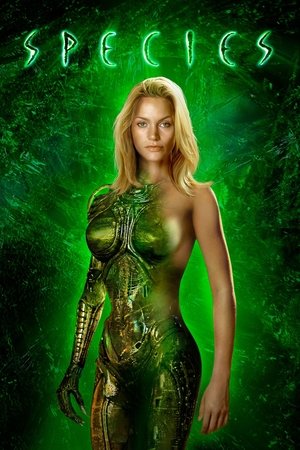
In 1993, the Search for Extra Terrestrial Intelligence Project receives a transmission detailing an alien DNA structure, along with instructions on how to splice it with human DNA. The result is Sil, a sensual but deadly creature who can change from a beautiful woman to an armour-plated killing machine in the blink of an eye.
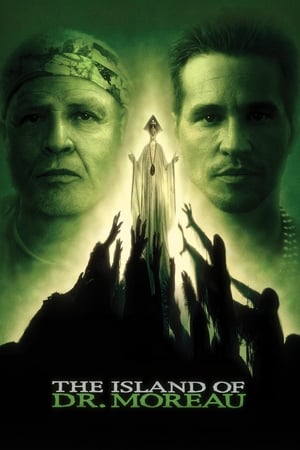
A plane crash surviving attorney stumbles upon a mysterious island and is shocked to discover that a brilliant scientist and his lab assistant have found a way to combine human and animal DNA—with horrific results.
The starship Enterprise and its crew is pulled back into action when old nemesis, Khan, steals a top secret device called Project Genesis.
In the smog-choked dystopian Los Angeles of 2019, blade runner Rick Deckard is called out of retirement to terminate a quartet of replicants who have escaped to Earth seeking their creator for a way to extend their short life spans.
World-famous geneticist Professor Hülsenbeck is a man of integrity who refuses to mix science and political gain. When his findings are being used to harm humanity, he immigrates to the USA in 1933 in protest against Nazi racial politics.
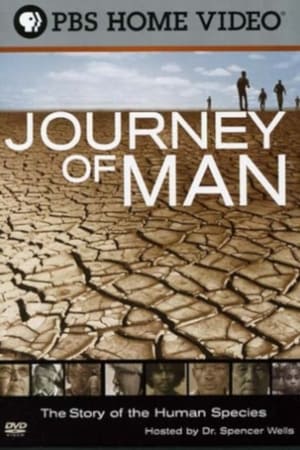
Many geneticists and archaeologists have long surmised that human life began in Africa. Dr. Spencer Wells, one of a group of scientists studying the origin of human life, offers evidence and theories to support such a thesis in this PBS special. He claims that Africa was populated by only a few thousand people that some deserted their homeland in a conquest that has resulted in global domination.
Thirty years ago, aliens arrive on Earth. Not to conquer or give aid, but to find refuge from their dying planet. Separated from humans in a South African area called District 9, the aliens are managed by Multi-National United, which is unconcerned with the aliens' welfare but will do anything to master their advanced technology. When a company field agent contracts a mysterious virus that begins to alter his DNA, there is only one place he can hide: District 9.
After a woman's at-home DNA test reveals multiple half-siblings, she discovers a shocking scheme involving donor sperm and a popular fertility doctor.
Born with a rare condition that makes him age four times faster than normal, ten-year-old Jack Powell looks like a forty-year-old man. After years of homeschooling, he enters public school for the first time, eager to make friends and live like any other kid—only to discover that growing up too fast means learning some of life’s hardest lessons early.
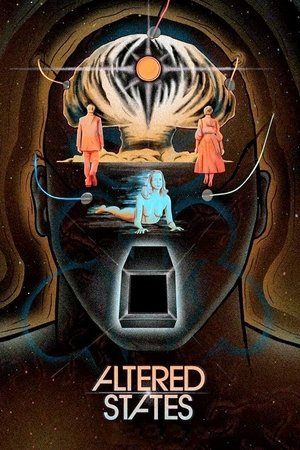
A research scientist explores the boundaries and frontiers of human consciousness. Using sensory deprivation and hallucinogenic mixtures from Native American shamans, he explores these altered states of cognizance and finds that memory, time, and reality itself are states of mind.
In the distant future, a federation marshal arrives at a research lab on a remote planet where a genetic experiment has gotten loose and begins feeding on the dwindling scientific group.
Amanda's deathbed request to her son, John, was for him to destroy all the lab notes etc. from her last experiment. She also blurts out he had a brother. At the funeral John meets Melissa, who claims to be his mother's biggest fan. Together with some of John's friends they go to Amanda's house, but none are prepared for what they find there.
Earth teems with a staggering variety of animals, including 9,000 kinds of birds, 28,000 types of fish, and more than 350,000 species of beetles. What explains this explosion of living creatures—1.4 million different species discovered so far, with perhaps another 50 million to go? The source of life's endless forms was a profound mystery until Charles Darwin brought forth his revolutionary idea of natural selection. But Darwin's radical insights raised as many questions as they answered. What actually drives evolution and turns one species into another? To what degree do different animals rely on the same genetic toolkit? And how did we evolve?
If we compare ourselves with our genetically closest living relatives, the chimpanzees, we have few physical advantages. We are far weaker, cannot move nearly as fast, and do not have the same climbing capabilities. Instead, humans excel in areas such as architecture, religion, science, language, writing, art, culture, and ideas. These achievements are due to our larger brain that contain billions of neurons. It was the rapid growth of our brain, originating about 2 million years ago, that allowed us to be the predominant species of the world. What caused this rapid growth of our cerebral cortex? Researchers worldwide have asked this question for many years, but now there finally seems to be an answer.
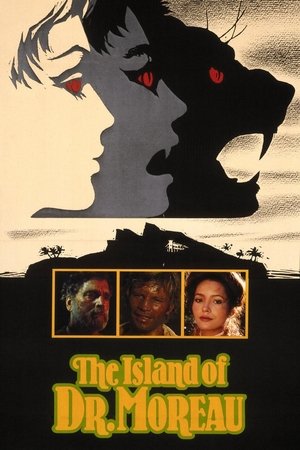
A ship-wrecked man floats ashore on an island in the Pacific Ocean. The island is inhabited by a scientist, Dr. Moreau, who in an experiment has turned beasts into human beings.
The documentary tells two very different human fates in the 1920s Soviet Union. Nikolai Vavilov was a botanical genius, Trofim Lyssenko was an agronomist who made great promises and fake inventions. Each of them tried to solve the country's nutritional problem, but only one succeeded.
Elsa and Clive, two young rebellious scientists, defy legal and ethical boundaries and forge ahead with a dangerous experiment: splicing together human and animal DNA to create a new organism. Named "Dren", the creature rapidly develops from a deformed female infant into a beautiful but dangerous winged human-chimera, who forges a bond with both of her creators - only to have that bond turn deadly.
In a television first, Fat Family Tree sets out to prove that unlocking the secrets of a fat family’s genes can help provide the answer to their lifelong weight problems. Presented by Dr Dawn Harper (Embarrassing Bodies), Fat Family Tree uses cutting edge genetics to decode the genes of an overweight family for whom all other attempts to shed the pounds have not worked. Discovering how the family’s genes have put them at risk of excessive weight gain is the first step to devising a diet to help them beat their genes. Based on the latest science, the programme’s “gene-busting” diet also promises fail safe diet tips that could help all of us lose weight.