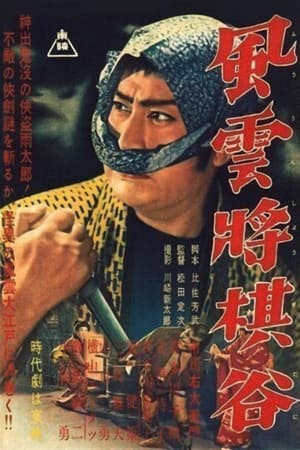
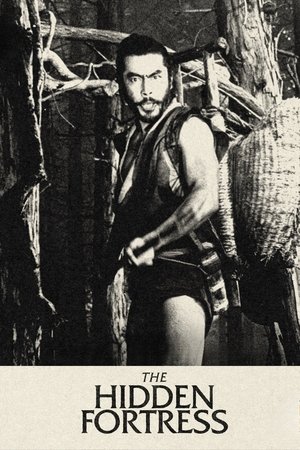
In feudal Japan, during a bloody war between clans, two cowardly and greedy peasants, soldiers of a defeated army, stumble upon a mysterious man who guides them to a fortress hidden in the mountains.
Four people recount different versions of the story of a man's murder and the rape of his wife.
The film tells about the life of the former vassal of the Ako clan - Fuwa Katsuemon Masatane.
Aspiring to an easy job as personal physician to a wealthy family, Noboru Yasumoto is disappointed when his first post after medical school takes him to a small country clinic under the gruff doctor Red Beard. Yasumoto rebels in numerous ways, but Red Beard proves a wise and patient teacher. He gradually introduces his student to the unglamorous side of the profession, ultimately assigning him to care for a prostitute rescued from a local brothel.
Returning to their lord's castle, samurai warriors Washizu and Miki are waylaid by a spirit who predicts their futures. When the first part of the spirit's prophecy comes true, Washizu's scheming wife, Asaji, presses him to speed up the rest of the spirit's prophecy by murdering his lord and usurping his place. Director Akira Kurosawa's resetting of William Shakespeare's "Macbeth" in feudal Japan is one of his most acclaimed films.
In the late 16th century, after the death of Nobunaga Oda, Hideyoshi Toyotomi takes power. The age of war is about to end, but Hideyoshi Toyotomi's rule makes life difficult for the people. Monk Senko Ikenobo is a master of flower arrangement. He prays for peace in the world and tries to give hope to the people with flower arrangement. He becomes good friends with Rikyu. Rikyu is a monk and a politician. He has the most profound influence on chanoyu. Rikyu is forced to commit hara-kiri by Hideyoshi Toyotomi’s order. Monk Senko Ikenobo challenges Hideyoshi Toyotomi.
三屋清左衛門残日録
三屋清左衛門残日録 完結篇
The Color Print of Edo is a 1939 black and white Japanese silent film with benshi accompaniment directed by Kazuo Mori. It is a cheerful period drama, sprinkled with comical scenes and tells the story of a loyal and handsome Edo period servant who fights to help his older brother marry the woman he loves. The star of this film, Utaemon Ichikawa, gained enormous popularity for his portrayal of a cheerful and chivalrous man.
This is one of the many films based on the legend of Chuji Kunisada, a wandering gambler and a defender of the weak in the Edo period. In other words, he was the Japanese Robin Hood. In this film Kunisada (Chiezo Kataoka) arrives to a small town terrorized by an evil gang. He insists that he is not Kunisada, as the word is Kunisada has been executed, but of course the audience know better. Sonny Chiba plays an unusual supporting role as a helpless young man unable to defend himself from the gangsters. He does, however, get to play taiko drums and dance with Junko Fuji (who makes her film debut here). Chiba's father, an old judge who helps Kunisada, is played by Takashi Shimura. The film hardly anything exceptional, but it's a pretty decent jidai geki / yakuza drama.
Chushingura has been made into a movie several times before, but this time it will be presented in a widescreen version with all natural colors and a new look. Written by Masato Ide and directed by Tatsuo Osone. This is a magnificent scroll of images that depicts on a grand scale the triumph of the Genroku era that shook the citizens of Edo, the peaceful capital of Japan. The top stars of the film, shinpa, shingeki, and kabuki worlds at the time of production were lavishly cast, and a huge budget was invested to create a large set for this highly acclaimed and moving epic.
In a poor district of Edo lives a young samurai named Soza. He has been sent by his clan to avenge the death of his father. He isn't an accomplished swordsman however, and he prefers sharing the life of the residents, teaching the kids how to write etc. When he finally finds the man he is looking for, he will have to decide whether he follows the way of the samurai or chooses peace and reconciliation.
A look at the relationship between a young blind samurai and his wife, who will make a sacrifice in order to defend her husband's honor.
In the Edo period, a nameless ronin accepts an assignment to go to a mountain pass and wait. Near the pass he stops at an inn where a collection of characters gather, including a gang set on stealing shogunate gold that's soon to come over the pass. When the Ronin's assignment becomes clear, to help the gang, he's ordered to kill the inn's residents, including a woman he's rescued from an abusive husband. He's reluctant to murder innocent people; then he learns that the gold shipment is a trap and he's part of a double cross. How he sorts through these divided loyalties tests of his samurai honor, and perhaps of his love for a woman.
During the Edo period, a gifted swordsman was exiled from his clan when he questioned the misconduct of his leader. Years after, his dying wife wish was for him to go back to his clan.
Set during Japan's Shogun era, this film looks at life in a samurai compound where young warriors are trained in swordfighting. A number of interpersonal conflicts are brewing in the training room, all centering on a handsome young samurai named Sozaburo Kano. The school's stern master can choose to intervene, or to let Kano decide his own path.
A skilled country doctor's talents are such that he can even perform operations as difficult and novel as removing a patient's kidney for the first time in Japan. Unfortunately for him, however, his wife's addiction to gambling is of such a magnitude that he is down to selling his underwear to make money. The image sticks and he becomes known as the 'underwear doctor.' On the other hand, his successful surgery's patient is so grateful he himself wants to become a physician.
The fate of Tokugawa’s world hangs in the balance as Yagyu Jubei is sent on a mission to discover what happened to 10 of the shogun’s spies that never returned. Matsukata Hiroki, one of the last surviving members of the Golden Age of Japanese Cinema proves that he has not lost a step as he portrays an older and wiser Yagyu Jubei in a movie that brings the best of samurai filmmaking into the 21st century. Summoned from semi-retirement by Shogun Iemitsu, Jubei is asked to take to the road and investigate a clan rumored to be preparing explosives for a rebellion. With help from a beautiful female ninja they head into the Shirakawa domain where the fighting skills of both are tested time and again as they strive to destroy a conspiracy that could bring a new Warring States Era. In the 1960's Yagyu Jubei was the signature role of the great Konoe Jushiro, father of Matsukata Hiroki. This brings the character full circle.
Masked avenger Kurama Tengu and his young sidekick try to stop a mysterious adversary from assassinating a group of young warriors who want to bring down the Shogunate...
In the mountainous region of Koshu, Taikahara, there was an intense power struggle between the prominent families, Tamaki and Kakukura. Facing the steward of Kakukura, Kurokawa Senjiro, was Tamaki Daisaburo, who was skilled with a handgun. Daisaburo had granted protection to the charcoal maker, Miyoshi, safeguarding a few mountains passed down from their ancestors. Daisaburo's elder brother, Iori, who had completed his training in Edo, saved Kakukura's only daughter, Koyumi, on his way back home. However, while Daisaburo rushed to Iori's aid after Koyumi was attacked by Kurokawa and his men, their family home was set ablaze.