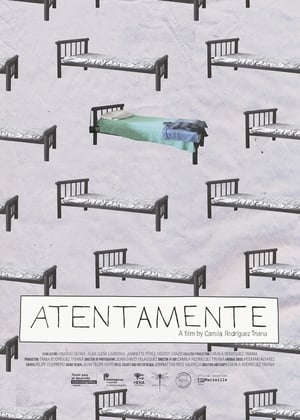
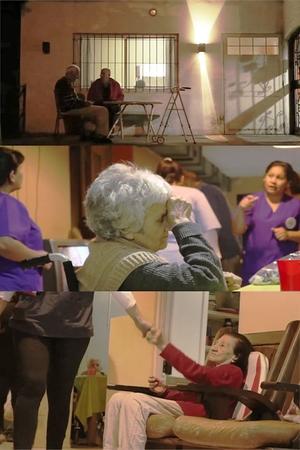
ATENTAMENTE is a film that, through the sensation of the time passing by and the presence of the death that wanders into a nursing home, allows us to feel the life through the illusion that love brings along. Libardo and Alba, a couple of elders who met each other at the nursing home where they live, they fall for, they become boyfriends and start to struggle in order to find fifty thousand pesos to rent a room for one night at a hotel so they can have a privacy moment, since at the nursing home where they live is not possible to have that. While struggling they must face each other, face their fears, their limitations, their pains, their time as well as their fragility so they can construct that moment in which they meet love. A struggle that seems to be easy, but for them is an odyssey against time, against their limitations and their own ghosts.
The intimate life of the mythical Candy Dubois, from her childhood in a correctional facility to her success with the "Blue Ballet" in the great "BIM BAM BUM".
Juan Méndez Bernal leaves his house on the 9th of april of 1936 to fight in the imminent Spanish Civil War. 83 years later, his body is still one of the Grass Dwellers. The only thing that he leaves from those years on the front is a collection of 28 letters in his own writing.
In a world where farming is mechanized and farm animals are fed with products coming from across the globe, a young shepherd is trying to keep his practice sustainable by using ancestral ways to raise his flock.
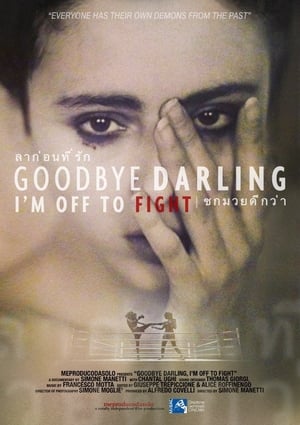
Goodbye Darling, I'm Off to Fight
Details fade from the mind, just like memories. Clarity in memory becomes blurred, and our bodies are the marked spaces once inhabited by others. When nothingness becomes memory, what do we remember? Reflecting on the past, present, and future, different bodies will connect, sharing their feelings and emotions through touch. Skin, with its textures and uniqueness, becomes the link to the absent other, and in the need for details, we seek to remember what has been forgotten.
Light Upon Light: A Documentary on Hijab is an intimate and deeply personal exploration of the diverse, raw, and untold stories of hijabi women. Through open and vulnerable conversations with 7 women, the film dismantles stereotypes, highlights the challenges imposed by society, and celebrates the profound beauty of the hijab beyond a mere clothing choice. It captures the individuality of each woman’s story—how they came to wear the hijab, the struggles they’ve faced, and the strength they’ve found in it. More than just fabric, the hijab is a journey, often misunderstood, and influenced by the way the world perceives it. By amplifying voices that are often unheard, the documentary creates a space for empathy, challenges misconceptions, and invites a deeper understanding of what it truly means to wear the hijab; inspiring everyone to see hijab in a new light.
Sjaak and Clara founded the very first food bank in the Netherlands in 2002. Since handing over their responsibilities at the food bank, they have continued their mission unabated. They still run a soup kitchen and the Social Café Onder de Oranjeboom (Under the Orange Tree), where vulnerable members of society can find a hot meal, support, and a good conversation. For many years, this dedicated couple has been committed to helping people in Rotterdam living in poverty.
Hansel's grandfather's wife died. They have lived together for over fifty years. For three years he has been living alone, cannot find a place for himself and constantly misses her.
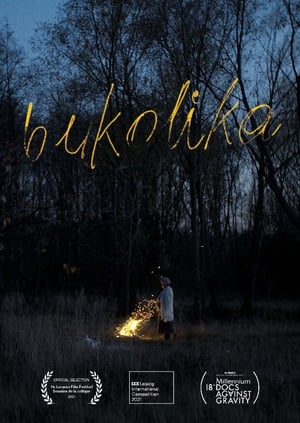
Danusia and her daughter Basia live far away from the modern world, in tune with the rhythm and laws of nature, among animals and the spirits of the dead. The peace and sense of security offered by their enclave come at a price - the women increasingly long for contact with other people. Bucolic is an affectionate observation of people who live in a different way. It evokes a curiosity about their world and a desire to take a closer look.
A Texan begins a cross-country journey in hope of finding the empty loft she keeps seeing in visions.
Rotterdam 2040 is a film about the city’s future, departing from the principle of Gyz La Rivière that you can’t look ahead without considering your past (something that hasn’t always been Rotterdam’s strongest feature). At high speed, La Rivière reconstructs the history of Rotterdam from the time before the bombings until now, and expands the developments to the year 2040 (100 years after the bombing and the 700th anniversary of the city). La Rivière made a specific choice to expose his personal vision, which is sometimes radical or a little absurd. So no experts and no talking heads, but an assault of old and new imagery, held together by La Rivière as the narrator of the film. Although Rotterdam 2040 deals with architecture and urban renewal, it is actually a film about people. The subjective experience of the city by its (future) occupants mainly determines the parade of architectural blunders and suggestions for the future. All tongue-in-cheek of course.
TWO OR THREE THINGS I KNOW ABOUT EDWARD HOPPER is an immersive experience in 3D, that takes its viewers on a journey into the world of Hopper, sharpening their senses for some aspects of his unique work.
A Place of Our Own
A student's increasingly intimate line of questioning causes his interview with a local horror host to take a vulnerable turn.
In the midst of the chaos of México City, a group of eight bachelor millennials who call themselves ´The Hermits´, open the doors to their tiny apartments in the historic Ermita Building, in the yet-to-be gentrified neighborhood of Tacubaya, and share their life experiences in a time when precarity changes the way in which we love, feel and relate to each other. As we explore the homes of these eight neighbors, we also witness their personalities intersect in a Whatsapp chat, a virtual space that functions as a supporting system that helps them face the adversities that living alone in this city brings.
After the recent loss of his wife Angèle, grandpa René tries to stay positive, finding comfort in simple joys like his cacti and cat Musti—but the weight of impermanence lingers.
A cellar. A forgotten amphora. The ashes of a woman. Her granddaughter, daughter-in-law and son characterise her, entwining their memories and experiences. They reflect about filial love, gender and isolation through her overbearing nature.
A house. A shelter. A man the last one left in the homeland. A woman returns to her community every year. The daughters and husband who have lost all traditions. A rapper who raps in the old language. In 1990 Susanna marries Udo. Their wedding is the last one celebrated between two Saxons in their village. After that the couple emigrated like half a million of Transylvanian Saxons. After 30 years in Germany the relationship between Susi and Udo has gone stale and they haven't taught their native language to their daughters that feel just German. Georg on the other hand is proud of his identity. He hopes with his rap to spread the young generations about the heritage to make them proud of being a Saxon. This is the choral story of a family who is learning to change in order not to disappear.
Made in Japan, Last Room is both fiction and documentary. The occupants of the love-hotels and capsule-hotels tell their own intimate, dreamlike stories, interspersed with journeys through the archipelago's landscapes. Soon, these personal stories resonate with a collective history: that of Gunkanjima, the abandoned ghost island of Nagasaki, and then that of Japan as a whole.