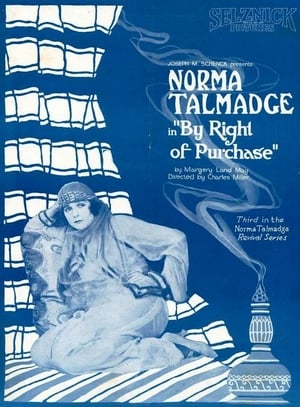
When his ne'er-do-well brother embezzles the commissary funds of their cavalry unit stationed in the Sudan, a British soldier takes the blame for him. He winds up deserting his post and joining up with a traveling vaudeville troupe. He falls in love with a pretty young woman in one of the show's acts but finds that a local Arab sheik has his own plans for the young girl.
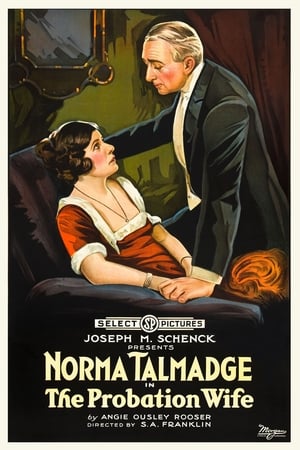
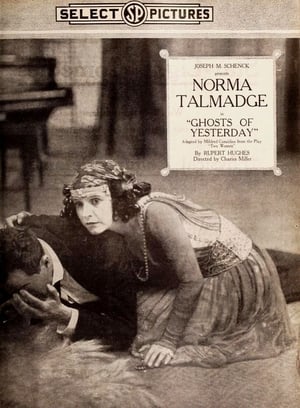
In order to provide for her widowed mother, Louise Mordyke, Ethel marries Arthur Woodridge, a wealthy philanthropist who is considerably older than she. Although she respects her husband, Ethel resumes an affair with Howard Rosedale, the husband of her cousin Helen. Helen hires a detective, who discovers the lovers at a roadhouse. Rushing from the inn, Ethel is caught in a thunderstorm, after which she contracts pneumonia and dies, repentant but unconfessed. Arthur grieves so deeply that Louise and Helen fear for his sanity, and when Louise learns that he is contemplating suicide, she reveals the truth about Ethel's infidelity. Arthur, incredulous, denounces her. Following Howard's sudden death, however, Helen confirms the story. Louise and Arthur marry, and Helen weds an old friend.
In a futuristic city sharply divided between the rich and the poor, the son of the city's mastermind meets a prophet who predicts the coming of a savior to mediate their differences.
Hoping to consolidate their adjoining ranches, Don Fernando and Don Diego betroth their children, Ramón and Dolores, although Ramón is in love with Suzanna, the daughter of a peon on his father's ranch, and Dolores is interested in Pancho, a toreador. When Suzanna learns that she was kidnapped in infancy and is really Don Diego's daughter, she keeps silent; but Ramón finally rebels and steals Suzanna from the altar as she is about to marry Pancho. There are explanations, Ramón marries Suzanna, and Dolores marries Pancho. Suzanna (1923) has been mastered from a good quality but incomplete 35mm print.
Billie Dove, as Elena, pulls out all stops as a Russian princess and a woman-of-the-streets in Paris in an exotic romance and hand-wringing drama set in two countries and the way-stations in between.
When housewife Trina wins the lottery, her comfortable life with her dentist husband John slowly deteriorates, in part by her own increasing paranoia and partly by the machinations of villainous acquaintance Marcus.
A movie star helps a young singer-actress find fame, even as age and alcoholism send his own career into a downward spiral.
The story of a poor young woman, separated by prejudice from her husband and baby, is interwoven with tales of intolerance from throughout history.
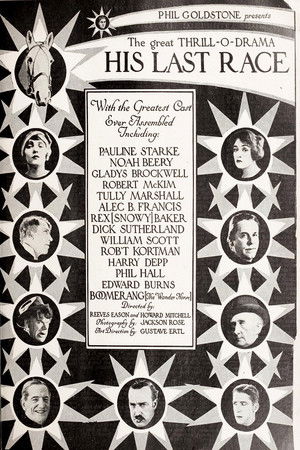
Mistaken for a famous jockey, a young man uses it to his advantage -- until he actually has to race a horse.
Mere years could not kill the overwhelming love which lay dormant in Lorenz's heart, though Florence was now the wife of another.
William S. Hart directs and stars in a film that is a typical Western of the era. He plays Jim, a prospector who lands in the town of Broken Hope, and the name pretty much describes its inhabitants. Jim meets and falls in love with Jennie (Margery Wilson), whose father (Walt Whitman) is gravely ill. Jim rounds up a reluctant doctor from another town to tend to the old man, but he dies anyway. The doctor, however, gains Jennie's trust and she runs off with him. Only then does he tell her he's already married. She leaves immediately, but is too proud to go home so she finds work as a dance hall girl at Tacoma Jake's saloon. Jim, meanwhile, finds gold near Broken Hope, which raises its inhabitants' attitudes considerably. But the bad element is still there, and Jim is chasing after a group of kidnappers when he enters Tacoma Jake's saloon and sees Jennie. Jim not only overcomes the bad guys, he gets the girl, too.
Teddie Barker, an employee of the Searchlight Insurance Company, falls in love with Clara Brummer. Her father does not, at first, acquiesce to the engagement, but after persuasion agrees and attends the marriage of his daughter, and promises a dowry of £5,000 when the young man attains the position of branch manager in his company.
A gang of crooks evade the police by moving their operations to a small town. There the gang's leader encounters a faith healer and uses him to scam gullible public of funds for a supposed chapel. But when a real healing takes place, a change comes over the gang. Lost film, only the most famous scene has survived.
A grease monkey discovers a defect in an auto engine being turned out by his employer. But since our hero discovers this only after losing an important race, his boss chalks up the loss to Fairbanks' supposed cowardice.
Smarrita!
Forsaken and broke, Wanda figures out a way to get money. She puts sunglasses on a sleeping homeless person in the park, cuts a hole in the bottom of the derby she's holding, then hides under the bench and picks up the coins dropped by passersby who take pity on the "blind man." She is approached by a handsome young man whom she tries to impress.
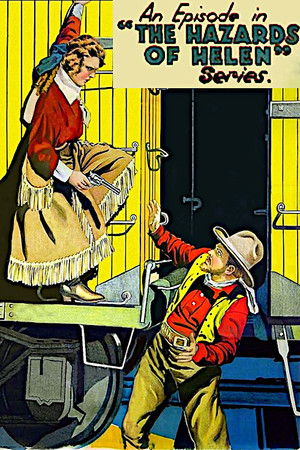
A train that is carrying the formula for a valuable form of granulated gasoline disappears before it reaches its destination. Railroad investigators and the authorities try to determine where it is and who took it.
Myra Coningsby, a newlywed who is determined not to be a submissive wife but ultimately learns to find a balance in her marriage after a dramatic incident involving a faked drowning.
Popular actress Violet Ray endures an abusive, alcoholic husband, Jim, for the sake of their deceased child's memory. She finds solace in an innocent friendship with Mabel Wright, a 10-year-old florist's daughter who brings her violets daily. A persistent suitor, Alec Lang, urges Violet to leave Jim for him. After Mabel is hit by a car and hospitalized, her father delivers a final bunch of violets and a message to Violet. This act of devotion rekindles Violet's sense of duty and "wifely love," prompting her to reject Alec and commit to remaining true to her daughter's memory while at Mabel's bedside.
This mostly lost film is often confused with director Paul Wegener third and readily available interpretation of the legend; Der Golem, wie er in die Welt kam (1920). In this version of the golem legend, the golem, a clay statue brought to life by Rabbi Loew in 16th century Prague to save the Jews from the ongoing brutal persecution by the city's rulers, is found in the rubble of an old synagogue in the 20th century. Brought to life by an antique dealer, the golem is used as a menial servant. Eventually falling in love with the dealer's wife, it goes on a murderous rampage when its love for her goes unanswered.