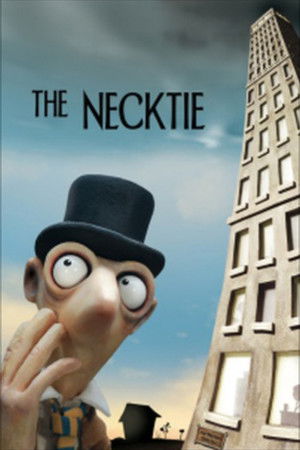
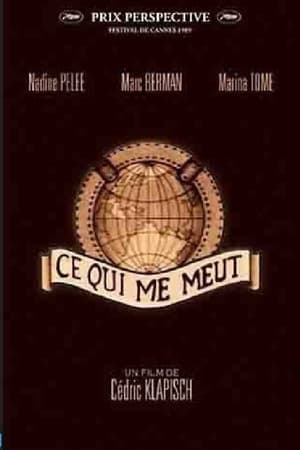
A solitary man works in a tall office building. The only moment in his drab life that's out of the ordinary each year seems to be opening the birthday card and gift from his mother. Usually it's a tie, but one year it's an accordion. It goes into the closet with his many ties. A year or two later, he discovers what happens to the papers he processes every day. His discovery sends him first to the building's top floor, then to his closet.
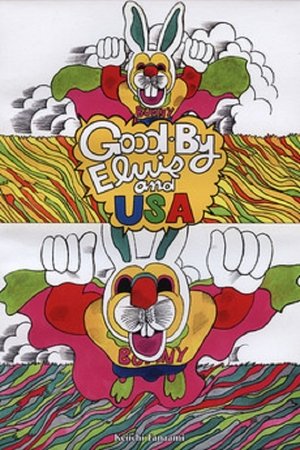
A trippy pop-art collage of phallic objects, naked women and American icons, most notably Elvis Presley.
Réflexion
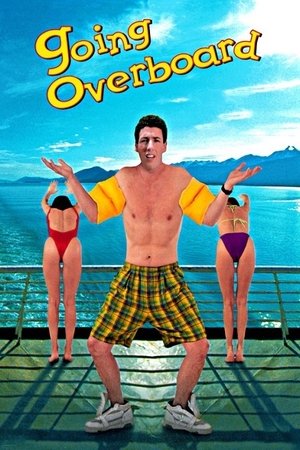
A struggling young comedian takes a menial job on a cruise ship where he hopes for his big chance to make it in the world of cruise ship comedy.
A man is trapped in a sinister flat, where nothing seems to obey the laws of nature.
Rigadin and his rival use camera/projector systems to reach their objectives.
My Aunt, My Cousin
A Pop Art extravaganza by Fred Mogubgub from the late-1960s, innovative in the use of the quick cut, this film is a parade of pop icons of its time. Features a pre-Playboy, pre-N. O. W. Gloria Steinem.
Enter Hamlet is a collage of images in cartoon form of a word put in balloon in each jump-cut scene as that word is said by the narrator Maurice Evans during his “To be or not to be…” soliloquy recording.
Thelma and Patsy find themselves in a spooky house inhabited by a nut who is a mechanical genius and has made a robot who does everything. The inventor manipulates the robot's control board from a hidden room. The girls are soon in a panic. Patsy gets into an argument with the robot and loses the match of wits. Blackie Burke, an escaped convict, is using the house as a hideout, and this adds to the problems the girls already have.
One of the two earliest horror films ever made. This film is presumed lost. In this black comedy scene, the bottom falls out of a coffin, the corpse tumble out, and is jolted back to life. Short sequences like this, as well as street scenes and dancing geisha girls were the main subjects of early Nippon cinema, pioneered by Shiro Asano and Shibata Tsunekichi from 1897 onwards. In creating dramatic, scenes, film-makers naturally chose the most striking or bizarre. Another undocumented film, recalled by cameraman Shiro Asano.
With script and direction by Pablo Villaça and starring the comedian Geraldo Magela, Morte Cega has as main character a failed filmmaker named Francis (Maurício Canguçu, producer and one of the main actors of the theatrical success "Believe, a Spirit Downloaded Me"). One night, Francis has a frightening dream about Magela, known throughout the country for playing the character O Ceguinho. Determined to make a short film based on this dream, Francis uses his producer friend, Martinho (Carlos Magno Ribeiro, who acted in Villaça's first short, A_ética), to get to the comedian. From then on, the meeting brings unexpected results for everyone involved.
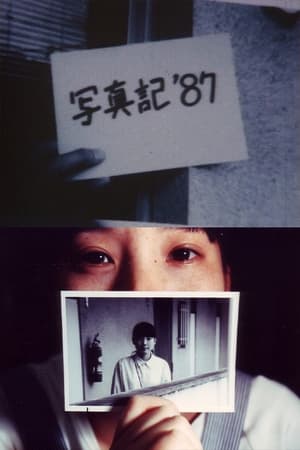
I turned my gaze to the various events in daily life and made this filmic diary in a manner as if confessing my feelings. Of course, since I was making the film, I wanted to depict these feelings and events with tricky techniques. I used various methods to shoot photographs of a relative's wedding, the landscape I see from window of my house, commemorative travel photographs and the like frame-by-frame.
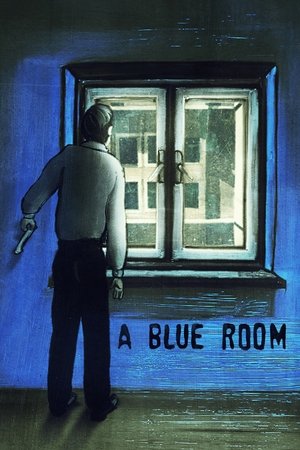
A man wakes up in a blue room. He's stuck and he can't escape. A window is his only connection to the outer world. It filters the reality in a very mysterious way.
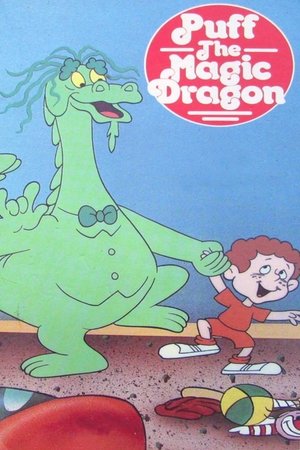
Jackie is a boy who is so trapped by his fears and doubts that he could not communicate with anyone. Then, a magic dragon named Puff comes to help Jackie by taking his soul force on a wonderous voyage to his island of Honah Lee. Along the way, they have adventures that nurture Jackie's imagination and courage in unorthodox ways.
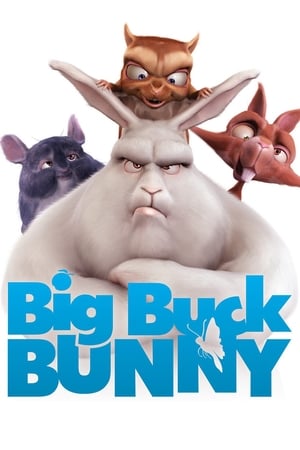
Follow a day of the life of Big Buck Bunny when he meets three bullying rodents: Frank, Rinky, and Gamera. The rodents amuse themselves by harassing helpless creatures by throwing fruits, nuts and rocks at them. After the deaths of two of Bunny's favorite butterflies, and an offensive attack on Bunny himself, Bunny sets aside his gentle nature and orchestrates a complex plan for revenge.
Believed to be the first film to feature cannibals.
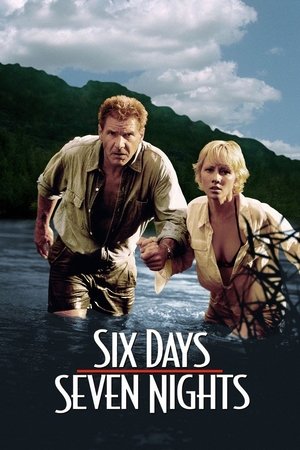
In the South Pacific, in Polynesia, on the island of Makatea, Quinn Harris, a taciturn pilot, leads a quiet life, content to earn a living by transporting goods in his De Havilland Beaver. His life is exactly as he wants it to be—until he meets Robin Monroe, a sophisticated and determined woman, the assistant editor of a New York magazine, on vacation for a week with her boyfriend, Frank Martin. An urgent work assignment in Tahiti, the neighboring island, forces Robin to reluctantly hire Quinn to fly her there. But a violent storm forces them to make an emergency landing on a deserted island. This unlikely pair avoids each other at first, until they are forced to team up to escape the island... and evade the pirates who are after them. Danger and temptation are never far away...
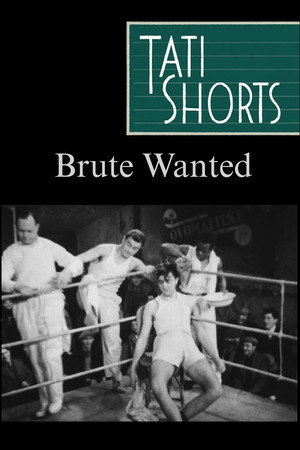
A tall, shy and reserved young actor accidentally signs himself up for a wrestling match.
Presented as if it were an archive from the beginning of the 20th century, like a Pathé newsreel, this film tells the story of the life of Etienne-Jules Marey, the 19th century pioneer of photography and cinema, famous for studying animal and human locomotion.