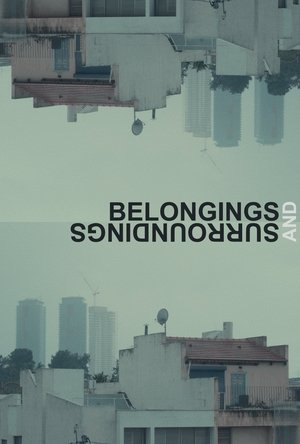
A love story recounted not by them, but by their belongings and surroundings.
Features four distinct, bizarre, existential tales about people whose lives are in transition, who are each asking questions about themselves, their environments, and about God(s).
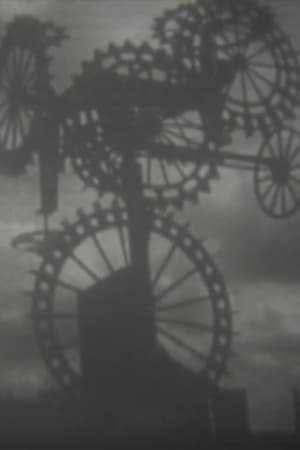
Sky and walls, a liana of water pipes, dilapidated backyards, cracks in walls, cracked walls full of lost, enigmatic children's signs, rusty railway station grounds, deserts, within them the figures, not conformed to the environment in their sightlessness and obsessive deformation to themselves. clinging to legalities of mechanisms that had become senseless and fused with them, that had perhaps once served them, hovering as if in a dream of condensed emptiness, without moving from the spot, they stumbled and rolled with the machines through sun-hardened, burnt-down landscapes, deflected only by objects, by congealed meteorites.
Like "Sackgasse", a brilliantly filmed and edited impression of a big city, underpinned by groovy jazz rhythms.
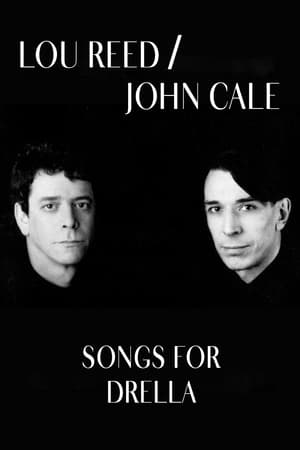
Songs for Drella is a concept album by Lou Reed and John Cale, both formerly of The Velvet Underground, and is dedicated to the memory of Andy Warhol, their mentor, who had died unexpectedly in 1987. Drella was a nickname for Warhol coined by Warhol Superstar Ondine, a contraction of Dracula and Cinderella, used by Warhol's crowd. The song cycle focuses on Warhol's interpersonal relations and experiences, with songs falling roughly into three categories: Warhol's first-person perspective (which makes up the vast majority of the album), third-person narratives chronicling events and affairs, and first-person commentaries on Warhol by Reed and Cale themselves. The songs on the album are, to some extent, in chronological order.
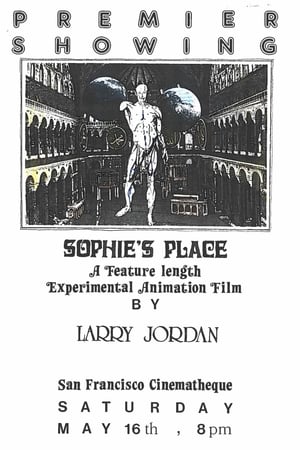
Five years in the making, Lawrence Jordan's feature-length "alchemical autobiography" Sophie's Place takes as its inspiration the story of the Greek goddess of wisdom, Sophia. Writes Jordan, "I must emphasize that I do not know the exact significance of any of the symbols in the film any more than I know the meaning of my dreams... I hope that the symbols and the episodes set off poetic associations in the viewer. I mean them to be entirely open to the viewer's own interpretation."
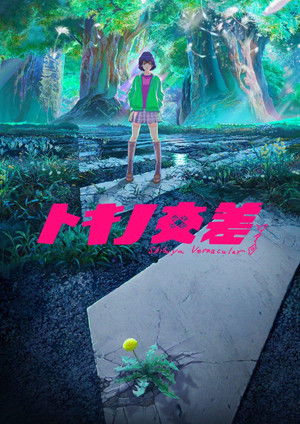
A four-dimensional short anime will start at the very beginning of Shibuya Crossing, that is, 10,000 years in the past. The anime is part of a collaborative project helmed by Yoshitoshi Shinomiya. It features a hybrid of animation and live-action. The short was screened on Shibuya's Crossing screens and a YouTube-friendly version was posted as well. (Source: ANN)
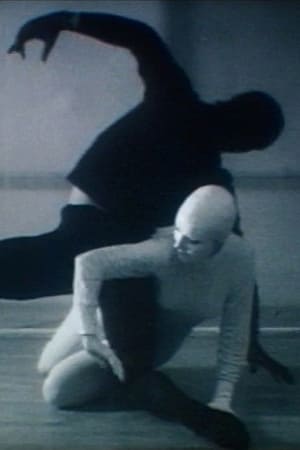
"This film was part of my thesis presentation at Chelsea College of Art in 1969. It expresses my interest in the human form and how two human forms can come together in various ways. My morphology teacher was also a dancer and he is the one in black moving with the white me in the cube. The film also includes photos I took, a number with multiple exposures, and drawings I did from the photos and from the work of Eadweard Muybridge, whose studies in motion inspired me." - Penny Slinger
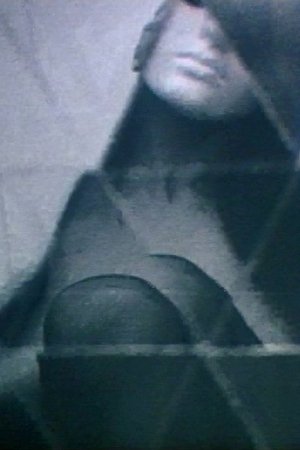
"A film featuring my work as shown in my 1969 diploma exhibit at Chelsea College of Art. It explores my Mummy Case, then the series of works that are based on a model’s image reflected in a series of mirrors. It shows the game I created where the pieces are glass and mirror geometric forms, moved in relation to each other on three layers. Finally the film passes through some of the Headbox sculptures and Face prints I made, using lifecasts and photographs of my face." - Penny Slinger
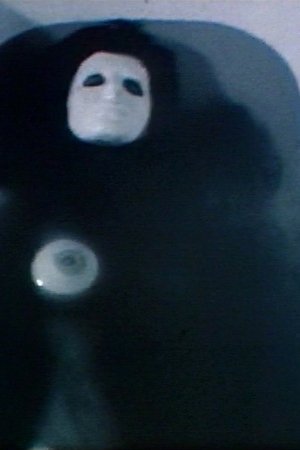
"From the 1969 exhibition, Bride in the Bath is shown in its sculptural form – a life cast of a model's body lying back in a bath and draped in black silk coated in resin. The footage is cut with film I shot of a model lying back in a bath in which black, then white ink is poured. The final images are shot in color from the position of looking down on oneself in the bath and reflected back in a mirror. All are part of my exploration of the female body in water, the body in the bath." - Penny Slinger
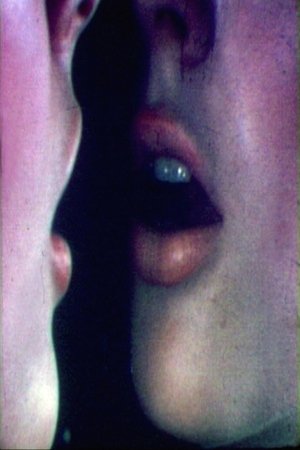
"In this experimental film from 1969 the seeds are seen of my exploration of the mouth motif, which reached its full expression in the ‘Opening’ exhibit of 1973. I blow on and kiss a mirror, I apply lipstick, I transform into a white statue and paint blood red lips… then I become a mask in a distorted mirror, a face with many lips…In the last sequence I circle my face with a light and transform into the mask." - Penny Slinger
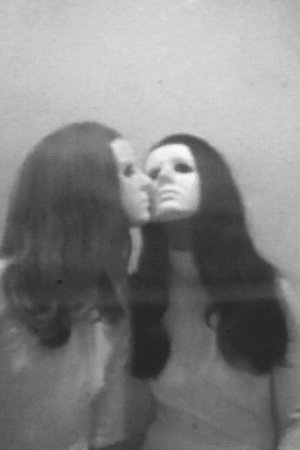
"1969 period. In the beginning of this experimental film a figure in white ascends spiral staircases and escalators and moves away from the camera down endless tunnels and corridors. A model in a black leotard is painted white, turned into art. Another is filmed as she ascends to a rooftop, then confronts herself in a mirror in a corner of a room. As Alice went through the glass, so in the last section there are two women reflecting each other instead of just the one." - Penny Slinger
You and AI at the end of the world.
In the stillness of night, a lone man is trapped in a state of sleep paralysis. As darkness closes in, he must confront the ghosts of his past.
A day in the city of Berlin, which experienced an industrial boom in the 1920s, and still provides an insight into the living and working conditions at that time. Germany had just recovered a little from the worst consequences of the First World War, the great economic crisis was still a few years away and Hitler was not yet an issue at the time.
16mm film (color, sound); 16 min.
"Assassination" - Adaptation of Hermann Hesse's novel "Demian". A young man's detachment from and revolt against the superficial ideals of the world of appearances and eventually awakens into a realization of self. Max Demian is his childhood friend and mentor.
A man’s female friend who just came back from London spends time on the river shore.
A particular day of a samurai
Video project dubbed "an Opera without Words" made by the experimental, avant-garde band Tuxedomoon.