In 2010, the iconic Tote Hotel – last bastion of Melbourne’s vibrant music counterculture – was forced to close by unfair laws. Filmed over 7 years, “Persecution Blues” depicts the struggle of more than 20,000 fans – and the bands who inspire them – to preserve their history and protect their future, and puts the audience on the front line of an epic-scale culture war.
The documentary project The Term was conceived in May 2012. When the directing trio commenced mapping the Russian sociopolitical landscape, Vladimir Putin had just settled into the Kremlin for his third term. The original experimental format of “documentary bulletins,” which were published daily online, allowed for wide-ranging content; in the feature film version, however, the filmmakers focused solely on the members of various opposition groups. Nevertheless, the work’s neutral position remains and viewers have to interpret the objectively presented situations for themselves. The main characteristics of this strongly authentic movie include close contact with the protagonists, precise editing, and an effectively controlled release of information.
Joni Mitchell has been called the queen of folk music and one of the biggest pop stars of the 60s and 70s. Even today, her lyrics and unique guitar style continue to inspire new generations of singers and songwriters.
Behind the gas masks of Hong Kong’s democracy movement, the often very young activists are just as diverse as the youths of the rest of the world. But they share a demand for democracy and freedom. They have the will and the courage to fight – and they can see that things are going in the wrong direction in the small island city, which officially has autonomy under China but is now tightening its grip and demanding that ‘troublemakers’ be put away or silenced. Amid the violent protests, we meet a 21-year-old student, a teenage couple and a new father.
Award-winning director Yoav Shamir (Defamation, Checkpoint) sets out on an entertaining and insightful international quest, exploring the notion of heroism through a multi-faceted lens. From ordinary heroes to freedom fighters, primates to humans, behavioral scientists to geneticists, even Ayn Rand to Raelians, Shamir leaves no stone unturned, and along the way unveils the fundamental truths of human nature.
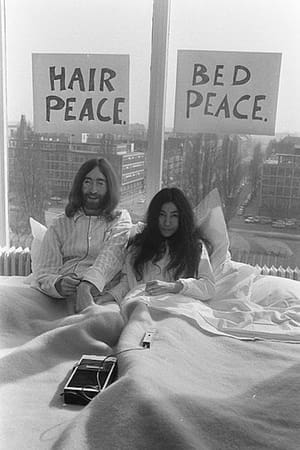
John and Yoko in the presidential suite at the Hilton Amsterdam, which they had decorated with hand-drawn signs above their bed reading "Bed Peace." They invited the global press into their room to discuss peace for 12 hours every day.
A month after the Wall Street occupation, a number of protesters follow their example and set up their tents in front of the Ljubljana stock market. The protesters are united in the critique of representative democracy and global financial capitalism under the slogan ‘nobody represents us’. Their organisation is based on the principles of direct democracy. In absence of other social alternatives, a community starts to emerge in the camp in front of the stock market where everyone has an equal say, and everyone is united in their diversity. After the initial euphoria the great idea of direct democracy clashes against the contemporary individual; antagonisms surface, similar to those of the system which the protesters fight against. The story about the Slovenian version of the ‘occupy’ movement is portrayed with the stories of a few protagonists, who despite several defeats do not lose hope in a different world.
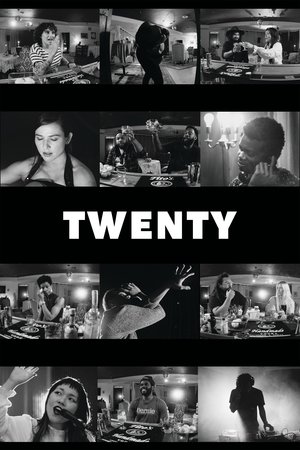
Set in a speakeasy in Atlanta, “Twenty” is a feature documentary about fifteen young people making it through 2020. The film is an observational time capsule that lays bare the raw reflections of a group of people surviving a year that will be seared into our generational memory.
A documentary that chronicles the life of South African leader Nelson Mandela. Mandela is probably best known for his 27 years of imprisonment, and for bringing an end to apartheid. But this film also sheds light on the little-known early period of Mandela's life.
As the 'one country two systems' policy in Hong Kong has slowly eroded, resentment among the territory's citizens has steadily grown. What began as a series of spontaneous protests against an extradition law in March 2019 has now escalated in to a full-blown popular uprising that shows no signs of abating. ABC Four Corners reports from the frontline of the action, capturing extraordinary footage of the growing tension and violence.
Louis meets the Phelps family — the people at the heart of the controversial Westboro Baptist Church. The Phelps have rabid anti-homosexual beliefs, and often campaign at the funerals of American soldiers. They believe that every tragedy in the world is God's punishment for homosexuality.
A documentary chronicling the "youth movement" of the late '60s on Los Angeles' Sunset Strip and San Francisco's Haight-Ashbury district.
The campaign for women's suffrage steps up as Emmeline Pankhurst is arrested at the gates of Buckingham Palace.
From the onset of the AIDS epidemic, author Larry Kramer emerged as a fiery activist, an Old Testament-style prophet full of righteous fury who denounced both the willful inaction of the government and the refusal of the gay community to curb potentially risky behaviors. Co-founder of both organization Gay Men's Health Crisis and the direct action protest group ACT UP, Kramer was vilified by some who saw his criticism to be an expression of self-hatred, while lionized by others who credit him with waking up the gay community — and, eventually, the government and medical establishment — to the devastation of the disease.
The story of the short life, and brutal gang rape and murder in Delhi in December 2012 of an exceptional and inspiring young woman. The rape of the 23 year old medical student by 6 men on a moving bus, and her death, sparked unprecedented protests and riots throughout India and led to the first glimmers of a change of mindset. Interwoven into the story line are the lives, values and mindsets of the rapists whom the film makers have had exclusive and unprecedented access to interview before they hang. The film examines the society and values which spawn such violent acts, and makes an optimistic and impassioned plea for change.
At the forefront of most of Hong Kong's demonstrations, 'frontliners' (aka 'the valiant', yung mo in Cantonese) are the black-clad, masked, often armed youth willing to use violence against the HK government and its heavily-armed police force. Willis Ho's remarkably revealing doc approaches from the inside, giving them voices and offering understanding, not judgment.
From Washington to Saigon, Rome to Mexico, Paris to Prague, a wave of protests shook the world. 68 looks back at the looks back at the Vietnam War, the Prague Spring and the Soviet Invasion, the Paris riots, Dubcek, Che Guevara, De Gaulle, Cohn-Bendrik and more. A dive into the chaos of a turbulent year, featuring fantastic colour footage and the music of Jimi Hendrix, Janis Joplin, Jim Morrisson and Bob Dylan.
Grand Saline, Texas, was a sleepy, unremarkable town—until a white preacher lit himself on fire to protest the town's racism in 2014. The subject of this film is deceptively straightforward: A minister commits suicide by setting himself on fire. He leaves behind a letter that frames his decision as a religious response to the intolerable racism of America's past and present, particularly in his Texas hometown. The aftermath is befuddling: There are townspeople who can recall incidents of racial violence and hate speech, and those who have never seen anything of the kind. Black folk in surrounding towns who share rumors and fears about acts of violence, and white folk who say you can't believe everything you hear. Fellow ministers who share the desire to be liberated from a racist past, and churchgoers who believe only mental illness could explain such a suicide.
A variety of locals react to a napalm plant and an ensuing protest in Redwood City CA during the Vietnam War.
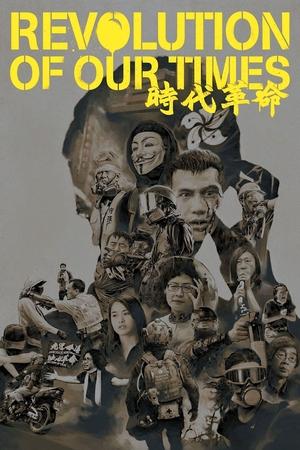
Throughout Hong Kong’s history, Hongkongers have fought for freedom and democracy but have yet to succeed. In 2019, a controversial extradition bill was introduced that would allow Hongkongers to be tried in mainland China. This decision spurred massive protests, riots, and resistance against heavy-handed Chinese rule over the City-State. Award-winning director Kiwi Chow documents the events to tell the story of the movement, with both a macro view of its historical context and footage and interviews from protestors on the front lines.