Aoluguya, Aoluguya is the first film in Gu Tao’s Ewenki Trilogy. A tale that unfolds in the Aoluguya forest, featuring such unique characters as a mother who dulls her sadness over the absence of her son, Yuguo, with alcohol; her brother; and Maria, the tribal chieftain who watches over them.
Xilin Gol grassland in Inner-Mongolia is one of few natural grasslands with high-quality pasture in China. When a rich coalfield is discovered under the ground of this beautifully natural scene, the nomadic herdsmen reluctantly migrate into the cities and wave farewell to their grassland. The water levels lower, plants die, and only sandstorms remain on the prairie.
A small rural township called Red White was seriously devastated by the May 12th Earthquake in China 2008. A 62-year-old Taoist survived even though his temple was largely torn by the disaster. This documentary tells the story of how the Taoist practices the widely believed Chinese traditional religion and the local people’s daily life during the township’s post-quake reconstruction.
The story happened near the Shuangjing subway station in Beijing. The female stall owner was aggrieved by the selective enforcement of urban management and expressed that she would fight to the end for fairness. When the urban management team forced her to close, she burst into tears and complained of social injustice. Even in the urban management team, she had to ask for fairness. But in the face of institutional chaos, she finally chose to compromise and continue the cat and mouse game. The old man is a Christian, is he helpless in obedience to fate? How many people's melody played by the Huqin sounded in the smog of Beijing?
In the summer of 2007, Gan Xiaoer led an independent film projection team, using projectors and self-made screens, to tour villages in Henan province to show his feature film "Raised from dust" for 8 times, and recorded the process. The 81-minute version of Church Cinema records only one stop, the Qiliying Church, where "Raised from dust" was shot.
Hakka, a special and little-known ethnic group in Hainan, is a branch of the Chinese Hakka system that has been neglected. They are far from the mainland, and they are rarely mentioned. The relatively closed environment has allowed the Central Plains culture to be completely preserved. After that, it has formed a special change with the ethnic minorities such as Li Miao. However, this unique traditional culture is now fading away in the erosion of modern civilization.
The story took place in 2008. Henan Guo Hui, who was a harvester, went to the provinces to harvest wheat for him. He and his father then invited a driver and set off. I went to Shanxi, Shaanxi, and also included Henan. They met other mairs to talk about the earthquake in Sichuan and talk about the difficulties of collecting wheat. Bargaining with the farmers, thinking of the law less to give the leader a little commission, sometimes to think of the way to get money, sometimes to think of ways to escape the control of the leader. The driver complained that the car owner was too bad, and the owner complained that the driver had eaten too much. In the middle of the road, I also encountered the need to collect the toll, and finally met the young and confused.
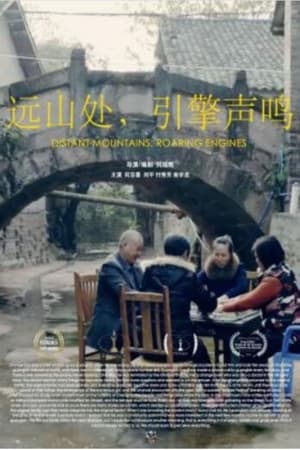
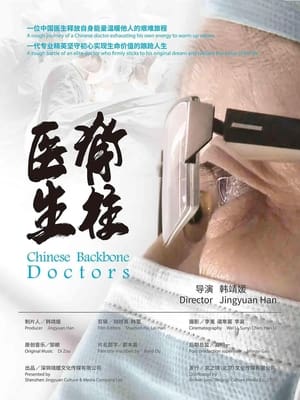
Chen came from a family of herbal doctors, who have treated numerous orthopaedics dseases, severe and minor. Chen's house, hardly a big one, have accommodated patients from different ethnic groups and from different villiages near and far. The patients found themselves recovering sooner under the care of Chen than that of doctors from large hospitals, and the charges for their treatment were rather small. Year after year, Dr. Chen dedicated himself to this charitable work... This movie attempts to show the medical conditions in remote rural areas in China as objectively as it can. Dr. Chen, as a thread, links togther the real lives of the locals presented by a group portrait of them. Also, It reveals that the traditional doctor-patient relationship has survived the aggressive modern civilization in this area, so has the culture of helpfulness common to an "aquaintance society".
Daqi Village is located in Shichao Township, Wuchuan Gelao and Miao Autonomous County, Zunyi City, Guizhou Province. The village has 985 households with 4119 people, including 435 households with 1803 persons. It is one of the 2,760 deeply impoverished villages in Guizhou Province.
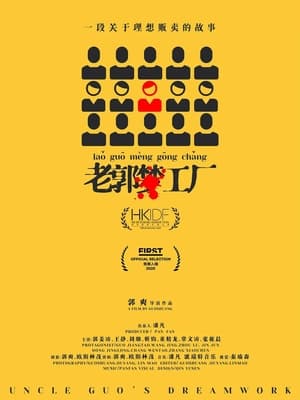
For the dream of music, Pan, the folk singer, left home for Guangzhou. Two years ago, he released his first album, 《Hi, Pan》. The ideal life seems to be closer and closer for Pan. However, as time goes by, his thoughts have changed gradually. Music is not just as simple as music.
The old man who has no dreams, forgets the dream of the dream, said that the dream of being educated, the child who is chasing dreams in the streets, can we really have a dream? In front of the new crisis that has aroused the new crown virus, I came to Yunnan with a camera, I hope I can reactivate my movie and a few musician friends who have already realized it is facing new challenges. In Kunming City, a child of a roadside stall, every day, like a beast is usually playing in the road of the car, only six years old, he has not started to go to school, and his parents did not take care of him. . And when they said their dreams, the dream of teaching with strong people, and it is incorporated with this. The dream of spiritual medicine may not exist at all, but it is really a tragedy, and the tragedy is staged daily.
I came to the "90 km-long traffic jam, road transport of coal (news)," the Shenmu and Fugu, Coal makes this town less than one million people among the Chinese economy in the forefront. And arrived here three days later, Pass me a tramp pointing to the front for me, "in front of you can find a dream." I gave up being shocked shoot spectacular traffic jam events. I start shooting those who rub shoulders with Seoul before, Children, adolescents, youth, middle-aged, elderly. We talked about the harsh reality of the real Titanic, We are also talking about the illusory ideals, My ideal also quietly began to grow from here.
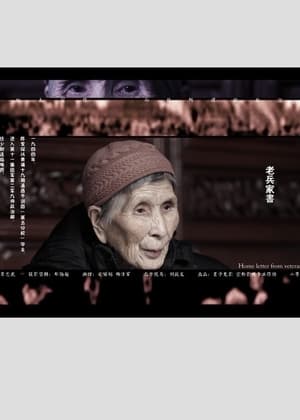
Veteran's Letters to Home
In order to finish her homework, the girl decided to shoot a fake documentary. In the process, she came closer to her grandmother's world and found herself.
Zou Xueping continues to interview old people in her village, this time with the help of local children. They start collecting names and money to erect a memorial for the victims of the famine.
Carriage
This is my second documentary film, and it is fully composed of old people. One woman, nearing 80, is living out the last two years of her life. From when she is still using a cane to walk, to when she becomes paralyzed. This is my grandmother. We also see other elderly people from the village, their daily activities, the tales of their starvation from 50 years ago.
It is the director's second documentary of "my village" series since she got involved with the "Folk Memory Project". She returned to her hometown to shoot footage, recording the realities she encountered in her search for memories. Her biggest question is: after experiencing the disaster of the tragic famine fifty years ago, the villagers now are not short of food, and are living a better life than before, but is the spirit of this village still starving?
The location of Hunan's southwestern Hunan, the local economy is not active, the people either go out to work or go up the mountain to mine. Due to the constant mining disasters, despite the government's efforts to rectify and regulate, many people still illegally mine. Miners often do not pay attention to the protection of mines. Many years later, many miners have pneumoconiosis. The film started shooting in 2010 until 2018, with a filming period of nearly ten years, until the death of Zhao Pingfeng, the protagonist of pneumoconiosis, leaving young children and mentally handicapped wife.
After "Old Tang Tou", Xu Tong continued to film the family of Old Tang Tou's son, Tang Laosan, in Northeast China. Tang Laosan was sent to prison for a murder case, and Tang Laosan's son, Xiaobao, unexpectedly encountered such a change in the year of his high school entrance exams, which made the fates of father and son both unpredictable.